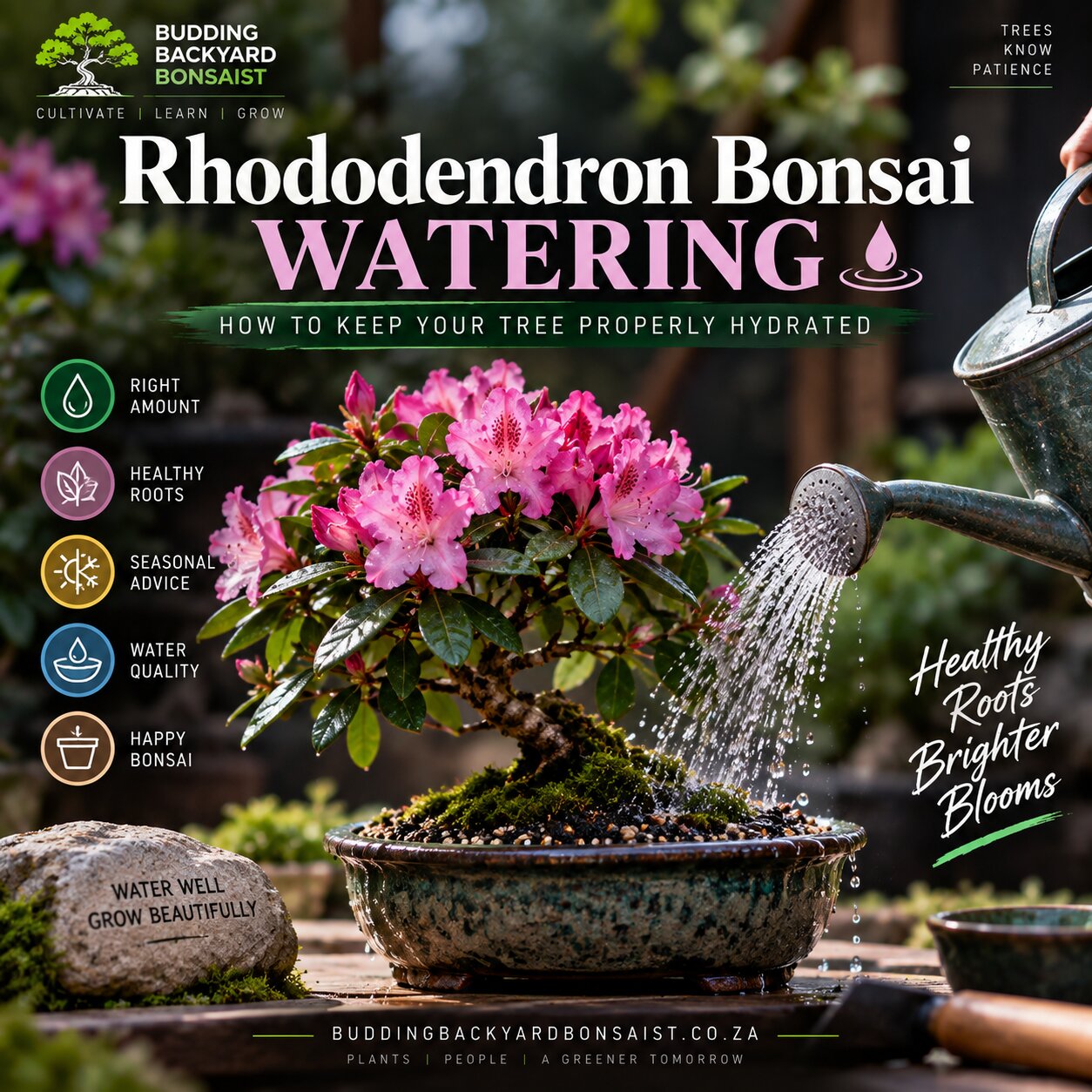
Rhododendrons are admired in bonsai for their spectacular flowers, compact foliage and ability to develop beautiful branching structures. However, their fine root systems and preference for consistently moist growing conditions mean watering requires particular attention. Getting rhododendron bonsai watering right can make the difference between a vigorous flowering tree and one suffering from damaged roots, wilting foliage or declining health.
There is no universal schedule that tells you to water every morning or every second day. Temperature, season, pot size, soil composition, wind and the individual tree all influence how quickly moisture disappears.
Successful watering therefore begins with observing the tree and its growing medium rather than following the calendar.
Understanding Rhododendron Bonsai Watering Needs
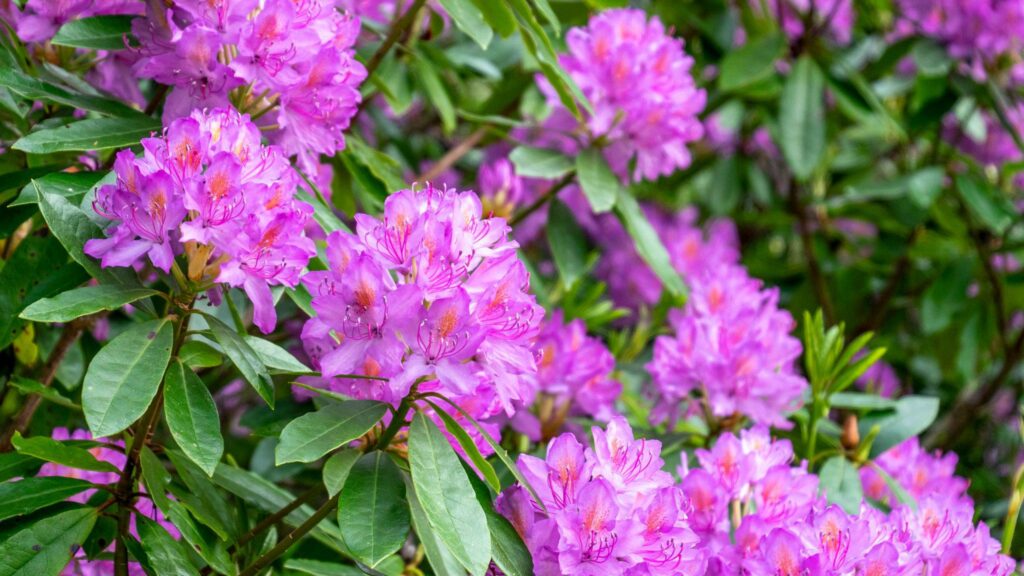
Rhododendrons generally prefer evenly moist conditions and should not be allowed to dry out completely. Their shallow, fibrous root systems can become stressed when the growing medium remains dry for extended periods.
At the same time, permanently waterlogged soil creates another problem. Roots require oxygen, and a saturated growing medium with poor drainage can create unhealthy conditions around them.
The objective of rhododendron bonsai watering is therefore balance: provide sufficient moisture while allowing excess water to drain freely from the container.
Check the substrate regularly by touching the surface and inspecting beneath it where possible. When it begins approaching the point where watering is required, thoroughly water the entire root area rather than giving the tree a small splash.
How to Water a Rhododendron Bonsai Properly
When your bonsai requires water, apply enough to saturate the entire growing medium.
Water slowly across the soil surface rather than concentrating everything in one location. Continue until water flows freely through the drainage holes beneath the container. This method helps ensure that moisture reaches the complete root system instead of only wetting the upper layer.
For effective rhododendron bonsai watering, remember these important principles:
- Check soil moisture rather than relying on a fixed daily schedule.
- Water thoroughly until excess moisture exits the drainage holes.
- Never routinely leave the bonsai standing in stagnant water.
- Check smaller and shallower containers more frequently during warm weather.
- Pay additional attention after windy or exceptionally hot days.
- Reduce frequency when cooler conditions slow moisture loss.
- Make sure the growing medium drains effectively after watering.
A well-draining bonsai substrate makes this process considerably easier because it can retain useful moisture without remaining excessively saturated.
Rhododendron Bonsai Watering During Summer
Summer can make rhododendron bonsai watering particularly demanding.
Higher temperatures increase evaporation from the container while the tree simultaneously loses moisture through its foliage. Because bonsai containers hold substantially less growing medium than garden beds, conditions can change surprisingly quickly.
Trees growing outdoors may consequently require daily inspection and, under particularly hot or windy conditions, more frequent attention.
Don’t assume that yesterday’s watering means sufficient moisture remains today. Check the tree.
Placement can also influence water requirements. Rhododendrons generally benefit from protection against intense afternoon heat, particularly in warmer climates. Providing appropriate shade can reduce stress and prevent the substrate from drying excessively quickly.
Watering Rhododendron Bonsai During Winter
Cooler weather changes the equation.
Growth slows, evaporation decreases and the substrate may remain moist for considerably longer. Continuing a summer watering routine throughout winter could therefore result in excessive moisture around the roots.
Winter rhododendron bonsai watering should still prevent the root ball from completely drying, but inspections become more important than frequency.
Rainfall must also be considered. Outdoor bonsai exposed to repeated winter rain may already contain plenty of moisture, particularly if temperatures remain low.
Always inspect the growing medium before adding more water.
Does Rain Mean Your Bonsai Has Been Watered?
Not necessarily.
Light rain can make the soil surface appear wet without penetrating deeply enough to hydrate the entire root system. Dense foliage can also redirect some rainfall away from the container.
After rainfall, check the substrate instead of assuming nature has completed your rhododendron bonsai watering for you.
Heavy or prolonged rain creates the opposite concern. If the pot remains saturated for extended periods, inspect the drainage holes and ensure excess water can escape properly.
This is another reason suitable bonsai soil and adequate container drainage are so important.
What Water Should You Use for Rhododendron Bonsai?
Water quality deserves special consideration with rhododendrons because they favour acidic growing conditions.
In areas where tap water is particularly hard or alkaline, repeated use may gradually influence the chemistry of the growing medium. Rainwater can therefore be useful when it can be collected safely and stored appropriately.
However, water quality varies considerably between locations. Growers should understand their local supply rather than assuming all tap water will cause problems.
Consistency remains the priority. Delaying necessary rhododendron bonsai watering because your preferred water source isn’t available could create greater stress than using an alternative supply when the tree urgently requires hydration.
Signs Your Rhododendron Bonsai May Need More Water
A severely dry rhododendron may begin displaying wilting or drooping foliage. Leaves can lose their usual firmness, while prolonged dehydration may cause more serious damage.
Ideally, you shouldn’t wait for visible symptoms before watering.
Regularly checking the substrate allows you to respond before the tree reaches that stage. Learning how quickly your individual bonsai consumes moisture throughout different seasons is one of the most valuable skills you can develop.
Remember that wilting isn’t automatically proof of underwatering either. Root problems and excessive moisture can sometimes produce symptoms that appear similar, which makes checking the substrate essential before reaching for the watering can.
How Pot Size and Bonsai Soil Affect Watering
Container design has a major influence on rhododendron bonsai watering.
A shallow bonsai pot contains relatively little substrate and may dry faster than a deeper training container. Root density, drainage-hole placement and soil composition can further change moisture retention.
A heavily organic mixture may hold water considerably longer, while a more open granular substrate can drain rapidly and require more frequent monitoring.
This is why copying another grower’s watering timetable rarely works perfectly. Their climate, pot, substrate and tree may differ substantially from yours.
Your bonsai ultimately tells you when it needs water through the condition of its growing medium.
Building a Reliable Rhododendron Bonsai Watering Routine
Effective rhododendron bonsai watering isn’t about memorising how many times per week to use the watering can. It is about developing the habit of checking your tree and responding to its current conditions.
Inspect moisture frequently during warm weather, adjust your approach as the seasons change and always water the entire root system thoroughly when required. Just as importantly, make sure excess water can escape freely.
Once you understand how your particular tree, pot and substrate behave, rhododendron bonsai watering becomes far more intuitive. That consistency provides the healthy root environment your bonsai needs to support strong foliage, beautiful flowers and continued development for years to come.