
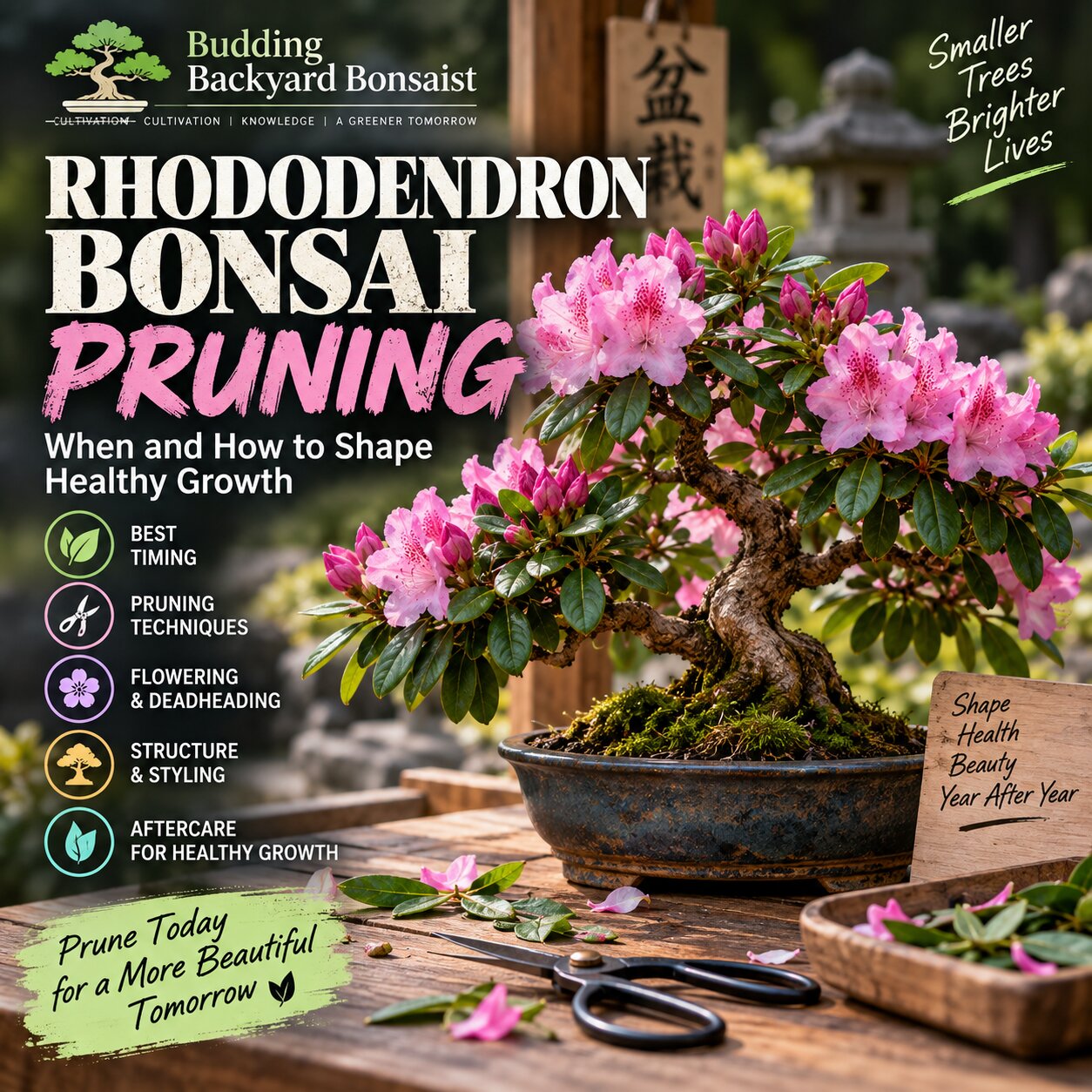
Rhododendrons are prized as bonsai for their spectacular flowers, compact foliage and ability to develop dense branching. Maintaining that structure, however, requires careful rhododendron bonsai pruning throughout the tree’s development. Unlike species that tolerate aggressive cutting almost whenever convenient, rhododendrons benefit from pruning that respects their flowering cycle and natural growth habits.
Timing becomes particularly important when flowers are part of the display. Pruning at the wrong stage can remove developing buds and leave an otherwise healthy bonsai without its expected seasonal colour.
Successful rhododendron bonsai pruning therefore combines structural development with an understanding of when the plant grows, flowers and prepares buds for the following season.
Why Prune a Rhododendron Bonsai?
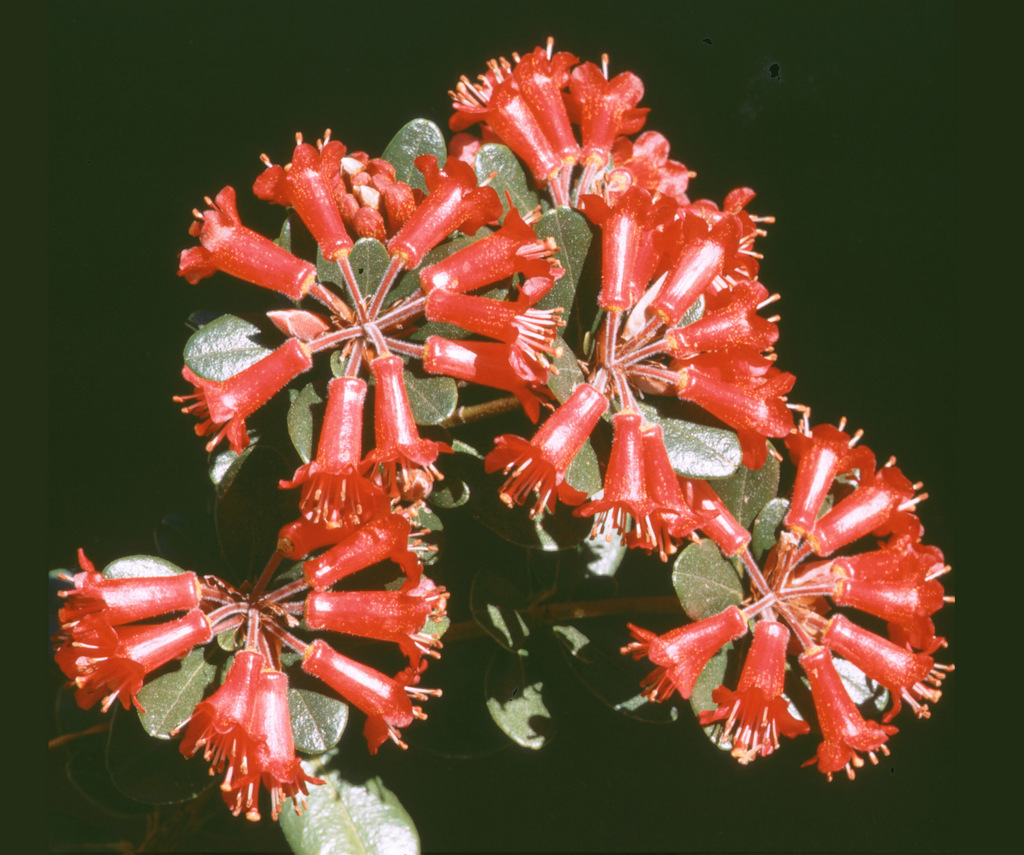
Pruning serves several purposes beyond simply keeping the bonsai small.
Branches need sufficient light and airflow, particularly within dense canopies. Uncontrolled shoots can shade weaker interior growth, distort the intended silhouette and direct too much energy towards vigorous areas.
Regular rhododendron bonsai pruning allows the grower to maintain proportions while encouraging ramification. It can also prevent long shoots from creating coarse areas that appear out of scale with the trunk and container.
The objective is not constant cutting. Good pruning encourages the tree to develop a convincing mature form while retaining enough healthy foliage to support growth.
When to Prune Rhododendron Bonsai
The ideal pruning period depends on what type of work you intend to perform.
For flowering rhododendrons, one of the most useful opportunities arrives immediately after flowering. Spent blooms can be removed and excessive new growth addressed before the plant progresses too far into producing buds for its next flowering cycle.
Light maintenance can continue during active growth when necessary, but extensive pruning late in the season risks removing flower buds.
Major structural work requires greater consideration. Heavy rhododendron bonsai pruning can place considerable stress on a tree, particularly when combined with repotting, root pruning or other demanding procedures.
Whenever possible, avoid stacking multiple major stresses onto a weak or recently disturbed specimen.
Removing Spent Rhododendron Flowers
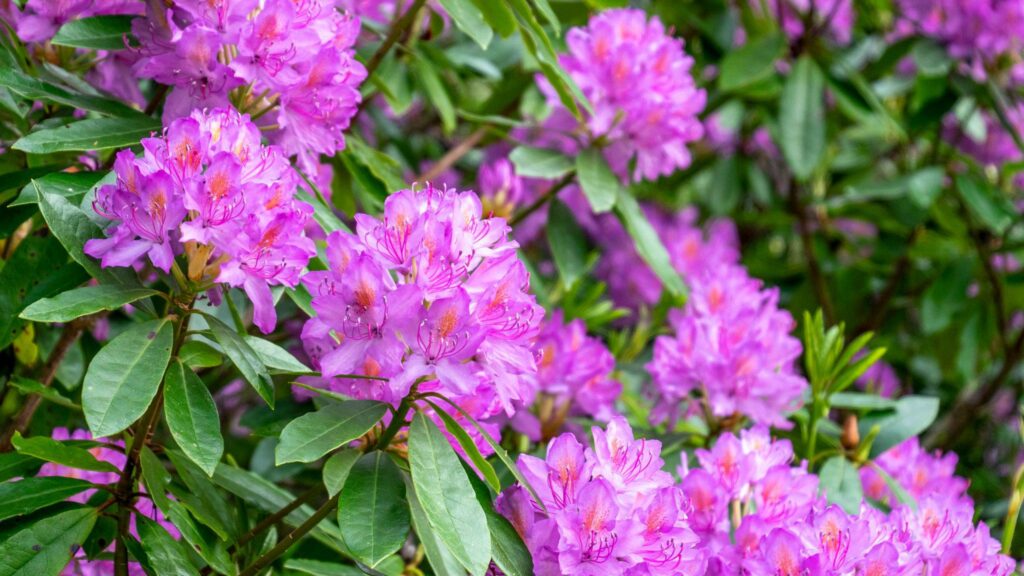
Deadheading is particularly valuable for flowering bonsai.
Once blooms have faded, removing them prevents the plant from investing unnecessary resources into seed production when seeds are not required. It also makes the canopy easier to inspect before pruning.
Care is necessary because new shoots and buds may occur close to the old flower cluster.
Rather than pulling aggressively, inspect the structure and remove spent flowers without damaging surrounding growth. This is also an excellent opportunity to assess which shoots need shortening as part of your rhododendron bonsai pruning routine.
Flower removal and pruning can consequently become part of the same post-flowering maintenance session.
Pruning New Rhododendron Growth
New shoots can quickly extend beyond the intended silhouette.
Allowing some extension before cutting can help strengthen particular branches, while established areas may require earlier control to maintain proportions. Bonsai development is therefore not about cutting every shoot to exactly the same length.
When performing rhododendron bonsai pruning, consider the strength and purpose of each branch.
A weak branch may need additional foliage and growing time. A vigorous upper branch could require greater control. Shoots growing directly inward, crossing other branches or creating unwanted congestion are usually stronger candidates for removal.
This selective approach helps create natural rather than mechanically uniform ramification.
Structural Rhododendron Bonsai Pruning
Older bonsai occasionally require more substantial intervention.
Branches may become too thick, grow in undesirable directions or occupy positions that no longer complement the intended design. Structural pruning allows the grower to reconsider the tree’s framework.
Before removing a major branch, examine the bonsai from several angles. Consider whether the branch contributes to depth, balance or movement before reaching for the cutters.
Useful targets for structural pruning include:
- Dead, damaged or diseased branches
- Branches crossing or rubbing against each other
- Strong inward-growing shoots
- Unwanted vertical growth disrupting the design
- Excessive branching emerging from a single point
- Growth obscuring important trunk features
- Overly vigorous branches dominating weaker areas
Large cuts should be made deliberately because they may remain visible for considerable time.
Can Rhododendrons Bud Back After Pruning?
One reason rhododendrons can work particularly well for bonsai is that many respond positively to pruning and can produce new growth from older wood.
This ability provides considerable design flexibility.
However, back budding should never be treated as guaranteed on every branch. Species, cultivar, health, growing conditions and branch vigour can all influence the response.
During severe rhododendron bonsai pruning, retaining some useful foliage where practical provides additional security. Removing large quantities of foliage from an already weak plant simply to force new buds introduces unnecessary risk.
Strong horticultural health should always come before styling ambitions.
Using the Right Bonsai Pruning Tools
Clean, sharp tools produce better cuts and reduce unnecessary damage.
Standard bonsai scissors work well for young shoots and fine branches. Larger branches may require concave cutters, which can create a wound that is easier to manage visually as it heals.
Tools should be cleaned regularly, especially when moving between different plants.
Blunt scissors can crush stems rather than cutting them cleanly, while contaminated tools can potentially transfer pathogens.
Good rhododendron bonsai pruning technique begins before the first cut is made. Inspect the plant, decide what needs changing and select the appropriate tool rather than improvising midway through the work.
Pruning Rhododendron Bonsai for Ramification
Fine branching helps create the impression of an old tree reduced in scale.
Developing ramification takes time. New shoots are allowed to extend before being shortened according to the design and vigour of the branch. Repeating this process over multiple growing cycles gradually produces finer secondary and tertiary branching.
However, extremely dense ramification is not always desirable.
Rhododendrons require sufficient light and airflow inside the canopy. Excessively congested growth can create shaded interior areas and potentially contribute to pest or disease problems.
Part of rhododendron bonsai pruning therefore involves subtraction. Removing unnecessary shoots can improve the quality of the branches that remain.
Pruning for Different Bonsai Styles
Pruning decisions should support the intended style of the tree.
An informal upright rhododendron may require carefully positioned branches that reinforce movement through the trunk. Cascade and semi-cascade specimens need growth that strengthens their descending visual direction without allowing the upper canopy to dominate.
Clump-style rhododendrons require particular attention to balance. One trunk or section can easily become disproportionately vigorous and weaken the visual relationship between the others.
Whatever the style, rhododendron bonsai pruning should enhance the tree’s existing character rather than forcing it into an unsuitable structure.
The flowers themselves should also remain part of the design. A beautifully ramified tree can still appear unbalanced when its eventual flowering mass has not been considered.
Aftercare Following Rhododendron Bonsai Pruning
After substantial pruning, give the bonsai time to recover.
Keep its normal requirements for moisture, light and protection in mind rather than suddenly changing the entire care routine. Rhododendrons generally favour reliable moisture but should not remain in poorly aerated, permanently waterlogged substrate.
Monitor freshly pruned specimens for signs of stress and avoid immediately performing another major procedure.
Very large wounds may require appropriate wound management depending on the species, size of the cut and growing conditions.
Most importantly, observe how the plant responds. Rhododendron bonsai pruning is not simply a technique performed according to a calendar. The tree’s vigour should determine how aggressively you work.
Developing Better Rhododendron Bonsai Through Pruning
Beautiful rhododendron bonsai are built over years rather than during a single styling session.
Pruning gradually establishes branch structure, controls vigorous growth, improves ramification and prepares the canopy for future flowering. The best results come from balancing those design objectives with the biological needs of the plant.
Post-flowering maintenance is particularly valuable because it provides an opportunity to remove spent blooms and assess new growth before the next generation of flower buds becomes established.
With careful timing and selective cuts, rhododendron bonsai pruning becomes much more than keeping a plant miniature. It allows growers to guide the tree towards a mature, balanced form while preserving the spectacular flowers that make rhododendrons such rewarding bonsai subjects.