
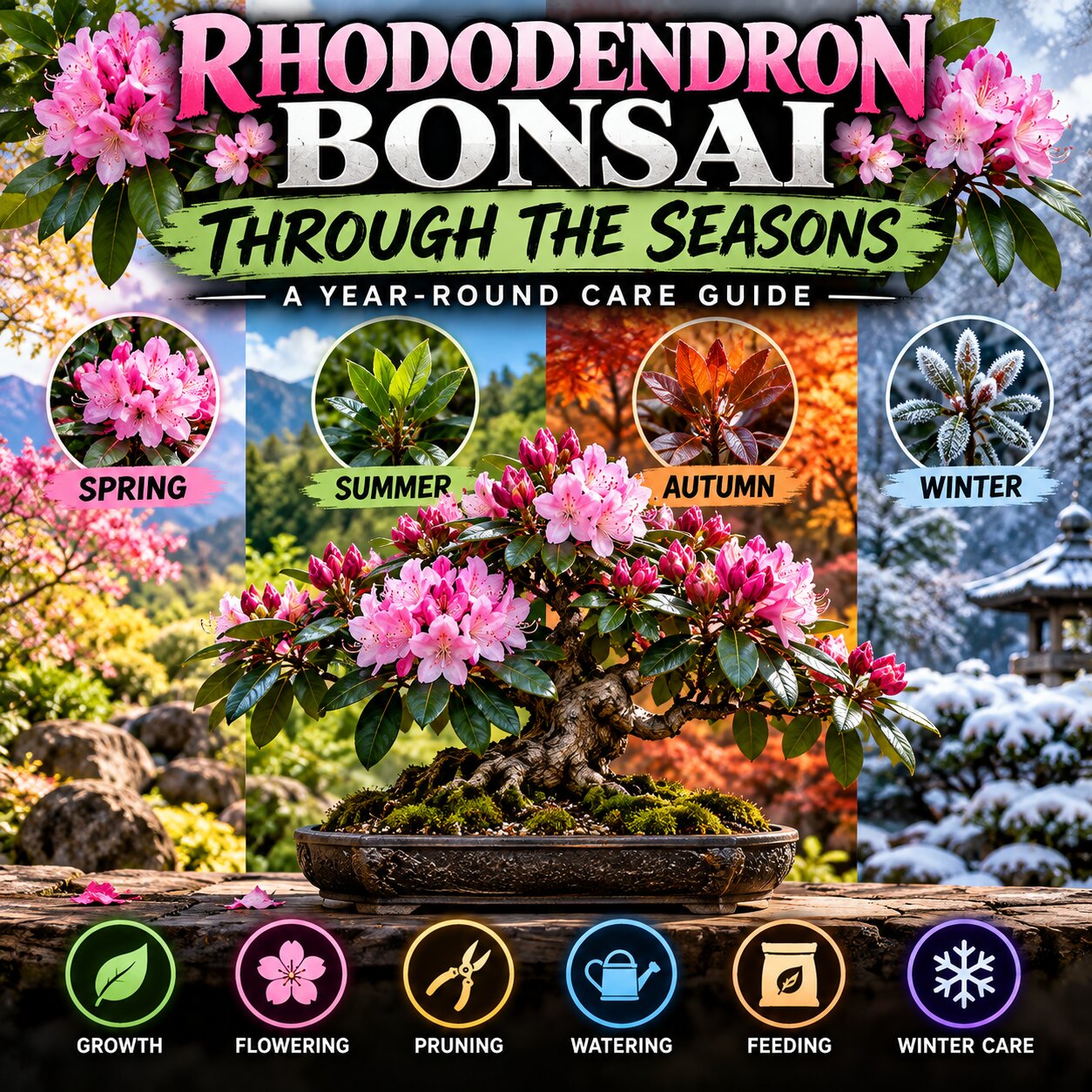
Growing rhododendrons as bonsai means working closely with the natural rhythms of the plant. Their requirements change throughout the year as they move through flowering, active growth, bud development and winter dormancy. Understanding rhododendron bonsai through the seasons helps growers know when to prune, feed, repot and simply leave their trees alone.
Seasonal timing becomes especially important with rhododendrons because many species develop their flower buds well before the flowers actually appear. Carrying out the right task at the wrong time could mean sacrificing the following season’s display.
For bonsai growers, the objective is therefore to coordinate horticultural care and bonsai development with the tree’s natural cycle.
Rhododendron Bonsai in Spring
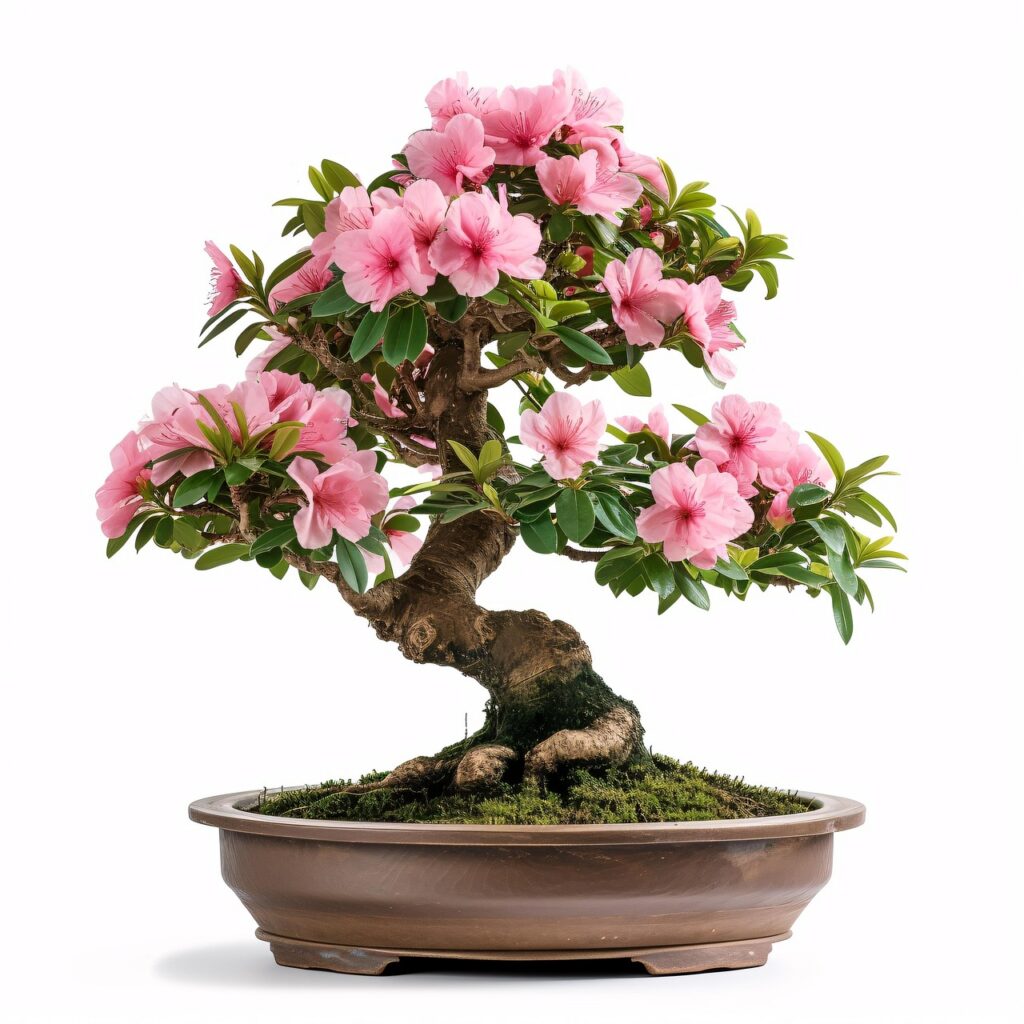
Spring is one of the most exciting periods when caring for rhododendron bonsai through the seasons. Dormant plants begin returning to active growth, buds swell and many varieties prepare for their spectacular floral displays.
Water requirements gradually increase as temperatures rise and growth accelerates. The substrate should remain consistently moist without becoming permanently waterlogged. Rhododendrons have fine root systems that can suffer if allowed to dry completely.
Spring is also an important period for repotting when necessary. Depending on the species, climate and individual tree, this task is usually coordinated carefully with the plant’s growth and flowering cycle.
Rhododendrons prefer acidic growing conditions, making an appropriate bonsai substrate particularly important. Kanuma is widely associated with azalea and rhododendron cultivation because of its acidic characteristics and ability to retain moisture while still providing drainage.
The Spectacular Flowering Season
For many growers, flowering is the reward for caring for rhododendron bonsai through the seasons.
A mature bonsai covered with flowers can temporarily transform from a carefully structured miniature tree into an explosion of colour. During this period, structural work generally takes a secondary role to enjoying and protecting the flowers.
Keep a close eye on watering. Flowering plants can use significant amounts of moisture, particularly during warm or windy weather.
Once flowers begin fading, remove spent blooms carefully. This prevents the plant from unnecessarily directing resources towards seed production and provides an opportunity to inspect the developing growth underneath.
The period immediately following flowering is also particularly important for shaping many rhododendron bonsai.
Rhododendron Bonsai in Summer
Summer brings vigorous vegetative growth and requires a different approach to rhododendron bonsai through the seasons.
New shoots extend and leaves mature while the tree replenishes energy following flowering. Selective pruning can help maintain the desired silhouette and encourage branching.
This is also an important time to watch sunlight exposure.
Rhododendrons generally appreciate bright conditions but may struggle with extreme afternoon heat, particularly when grown in shallow bonsai containers. Providing protection during the hottest part of the day can help prevent leaf scorch and excessive moisture loss.
Watering becomes critical during hot weather. Check the substrate frequently rather than relying on a rigid schedule.
Summer feeding can support healthy growth, although fertiliser strength and frequency should reflect the condition and developmental goals of the individual tree.
Preparing for Future Flowers
One of the most important lessons when growing rhododendron bonsai through the seasons is understanding when flower buds develop.
Many rhododendrons begin forming buds for the following flowering season during the warmer months. Once these buds have developed, careless pruning can remove next year’s flowers.
This creates an important distinction between maintaining the bonsai’s shape and repeatedly cutting new growth.
Learn to recognise the difference between vegetative and flower buds on your particular rhododendron. As the season progresses, flower buds often become noticeably plumper than ordinary leaf buds.
Once those future flowers are established, pruning decisions need to become increasingly selective.
Rhododendron Bonsai in Autumn
Autumn represents a transition period for rhododendron bonsai through the seasons.
Growth begins slowing as temperatures decrease, and the tree starts preparing for its dormant period. Evergreen rhododendrons retain much of their foliage, while deciduous varieties provide a more obvious visual indication of the changing season.
Watering requirements generally decline, but the substrate should still not be allowed to dry completely.
This is also a useful time to inspect the tree thoroughly. Check branches, wiring, pests and the condition of the soil. Wire applied earlier in the year should be monitored carefully to ensure it isn’t cutting into expanding branches.
Heavy structural pruning is usually avoided when valuable flower buds have already developed unless sacrificing flowers is part of a longer-term bonsai design decision.
Protecting Rhododendron Bonsai in Winter
Winter is the quietest stage of rhododendron bonsai through the seasons, but dormant doesn’t mean forgotten.
Cold tolerance varies considerably between rhododendron species and cultivars. A plant capable of surviving winter comfortably in the ground may still require additional protection when grown as a bonsai because its root system is contained within a shallow pot.
The objective is to protect the roots from severe temperature fluctuations while still allowing species that require dormancy to experience their natural seasonal cycle.
Watering should be reduced as growth slows, but roots must not be allowed to remain completely dry for extended periods.
Winter also provides an excellent opportunity to study the structure of deciduous specimens when leaves are absent.
Following the Natural Rhythm of Your Bonsai
Successfully caring for rhododendron bonsai through the seasons isn’t about following exactly the same calendar every year.
Climate, species, cultivar and local growing conditions all influence timing. Spring may arrive earlier one year than another, while flowering periods can shift according to temperature and weather.
Instead of relying exclusively on dates, observe what your bonsai is doing.
Watch the buds. Examine new growth. Monitor moisture. Notice when growth begins slowing.
The tree itself provides many of the signals needed to determine what should happen next.
Understanding rhododendron bonsai through the seasons ultimately means learning when to intervene and when to allow nature to take control. Follow that rhythm, and your rhododendron can reward you with healthy development, refined structure and spectacular flowers year after year.