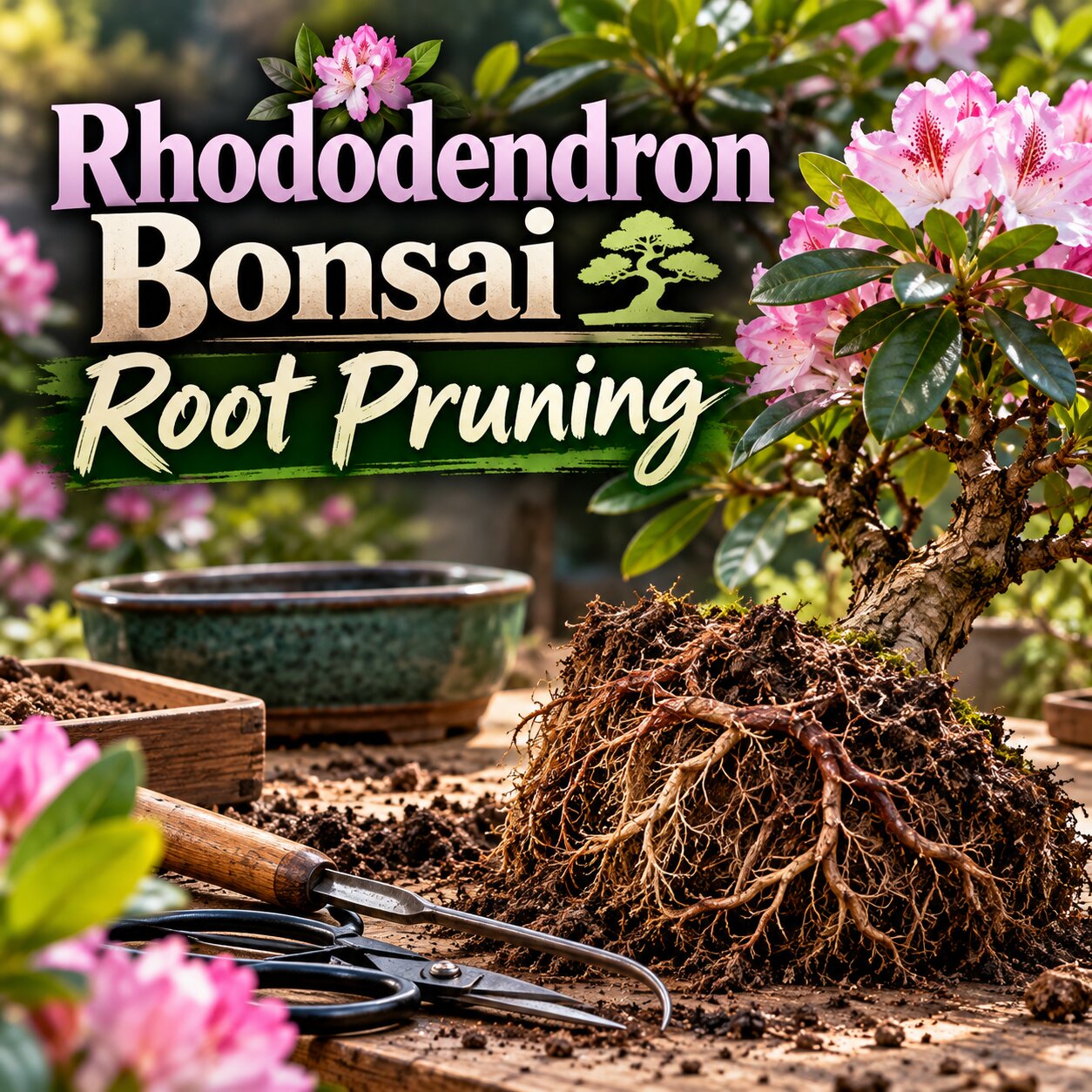
Healthy roots are essential to a healthy bonsai, but eventually those roots can occupy too much of the available space inside the container. Rhododendron bonsai root pruning allows growers to manage this underground growth while maintaining a compact root system capable of supporting the tree.
Root pruning is normally associated with repotting rather than performed as a separate procedure. Once the rhododendron is removed from its container, the grower can inspect the root mass and determine how much work is necessary.
Important considerations include:
- Remove dead, damaged, or rotting roots first
- Avoid unnecessarily aggressive root reduction
- Preserve healthy fine feeder roots
- Use clean, sharp tools
- Return the bonsai to an appropriate acidic growing medium
Rhododendrons often develop dense networks of fine roots. These feeder roots are particularly important because they absorb water and nutrients. Root pruning should therefore be controlled rather than treated as an opportunity to simply cut away large portions of the root ball.
Timing also matters. Major root work places stress on any bonsai, and performing it when the plant is already struggling can increase the risk of recovery problems. The exact timing can vary according to climate and the rhododendron being cultivated, so growers should consider local seasonal conditions and the health of the individual specimen.
After root pruning and repotting, careful aftercare becomes essential. The bonsai needs protection while new roots establish themselves, with particular attention paid to watering. Fresh bonsai substrate may behave differently from the compacted soil that was removed.
Rhododendron bonsai root pruning is not about forcing the tree to remain small. It is about maintaining a balanced root system that can continue supporting healthy foliage, flowering, and future development.
What happens beneath the soil may be invisible most of the year, but it remains fundamental to everything we see above it.