
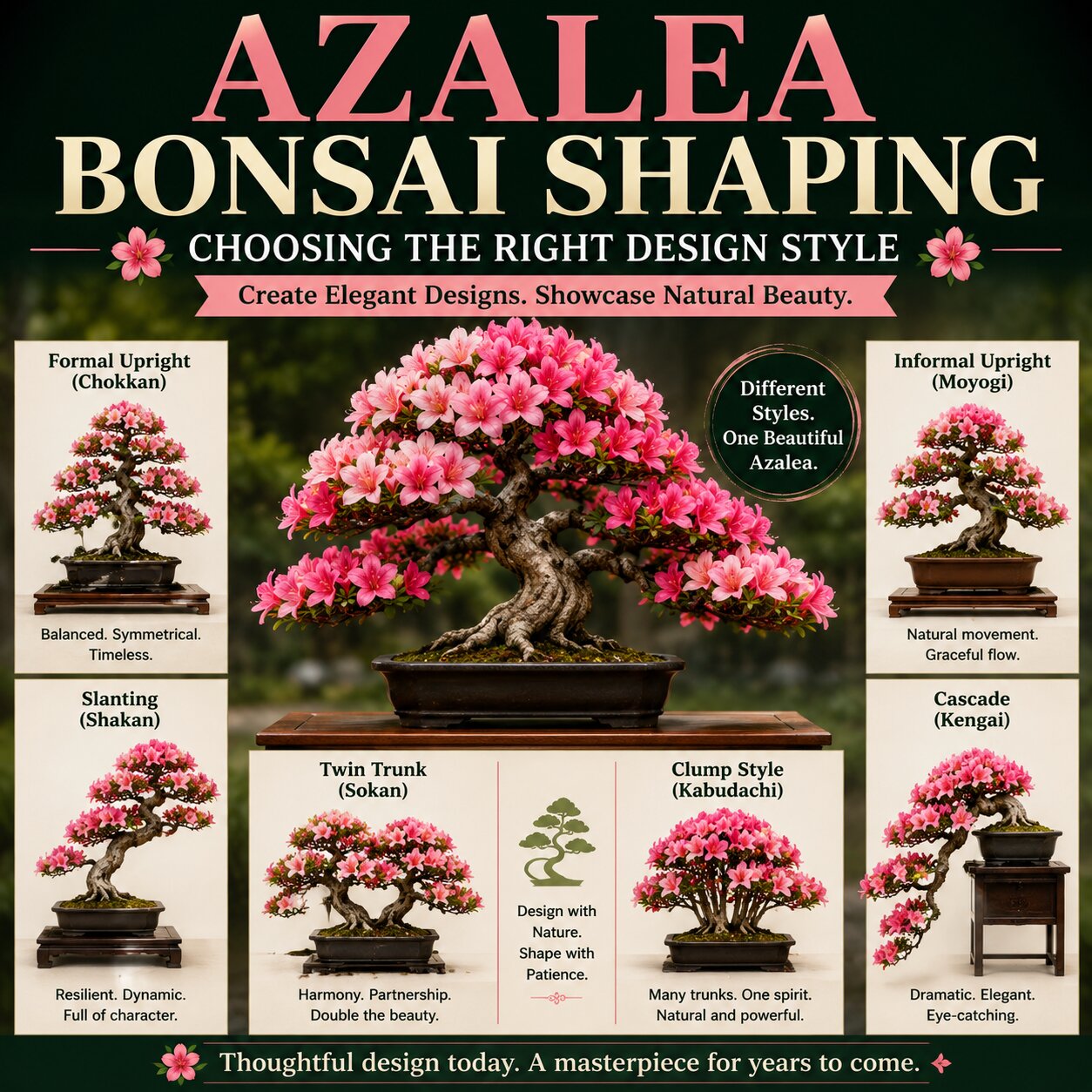
Azalea bonsai shaping is about more than simply controlling growth. It is the art of creating a miniature tree that reflects the beauty and balance found in nature. With their naturally fine branching, textured trunks, and spectacular spring flowers, azaleas lend themselves to a variety of bonsai styles, allowing enthusiasts to create displays that are both elegant and visually striking.
When shaping an azalea bonsai, the goal should be to complement the tree’s natural character rather than force it into an unsuitable design. Understanding the different bonsai styles can help you create a tree that looks harmonious throughout the year, whether it is covered in blossoms or displaying its intricate branch structure.
Let the Tree Guide the Design
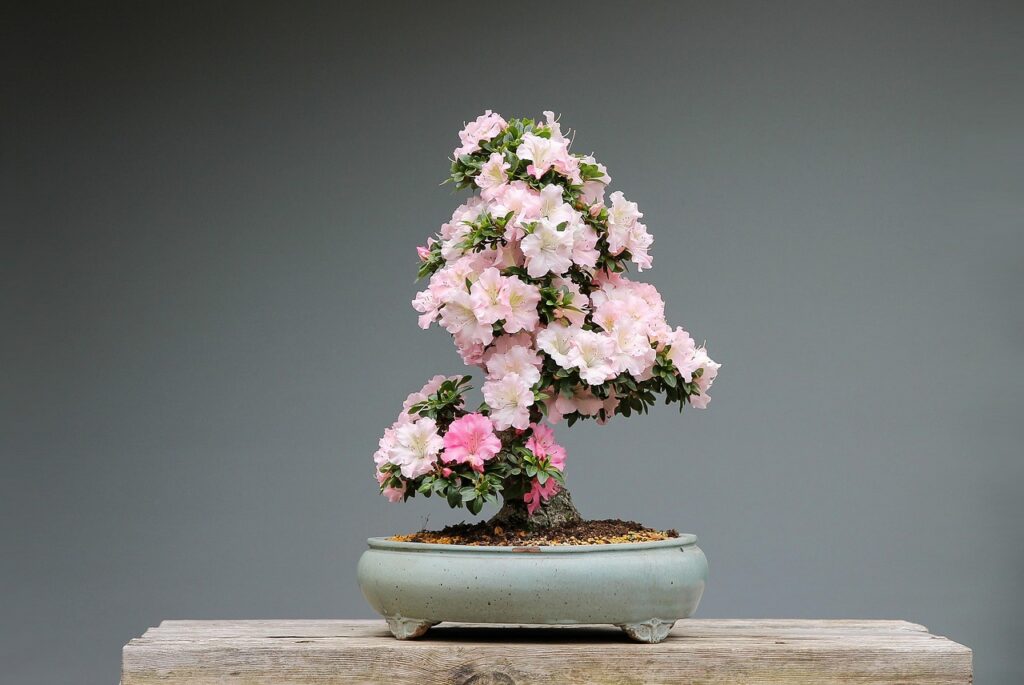
Every azalea has its own unique personality. Some develop graceful curves, while others produce sturdy upright trunks or multiple stems from the base. Rather than selecting a style before examining the tree, study its natural movement and allow it to inspire your design.
Working with the tree’s existing structure often produces a more convincing bonsai than trying to reshape it dramatically. Small adjustments over several growing seasons usually achieve more natural-looking results.
Patience is one of the most valuable tools in azalea bonsai shaping, allowing the design to evolve alongside the tree itself.
Popular Styles for Azalea Bonsai
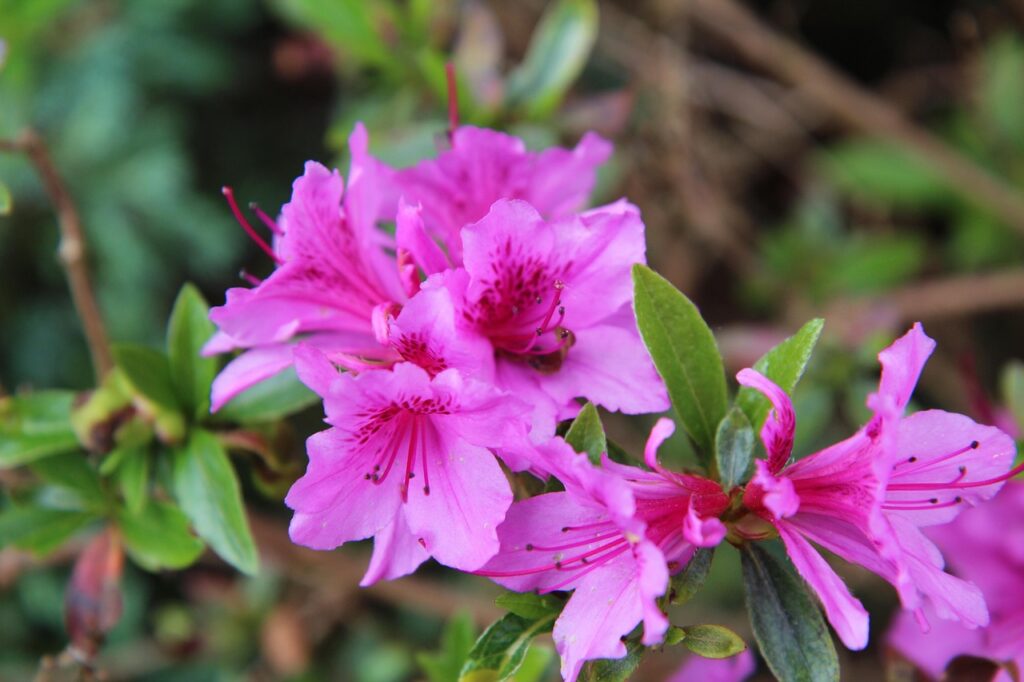
Several bonsai styles work particularly well with azaleas because they complement the species’ natural growth habits and stunning flowers.
Some of the most popular choices include:
- Formal Upright (Chokkan) for balanced, symmetrical designs.
- Informal Upright (Moyogi) featuring gentle curves and natural movement.
- Slanting (Shakan) to create a sense of resilience against the elements.
- Twin Trunk (Sokan) highlighting two trunks growing in harmony.
- Clump Style (Kabudachi) showcasing multiple stems from a shared root system.
- Cascade and Semi-Cascade for older specimens with suitable branch structure.
Each style offers a unique way to showcase both the tree’s branching and its spectacular floral display.
Balancing Flowers and Structure
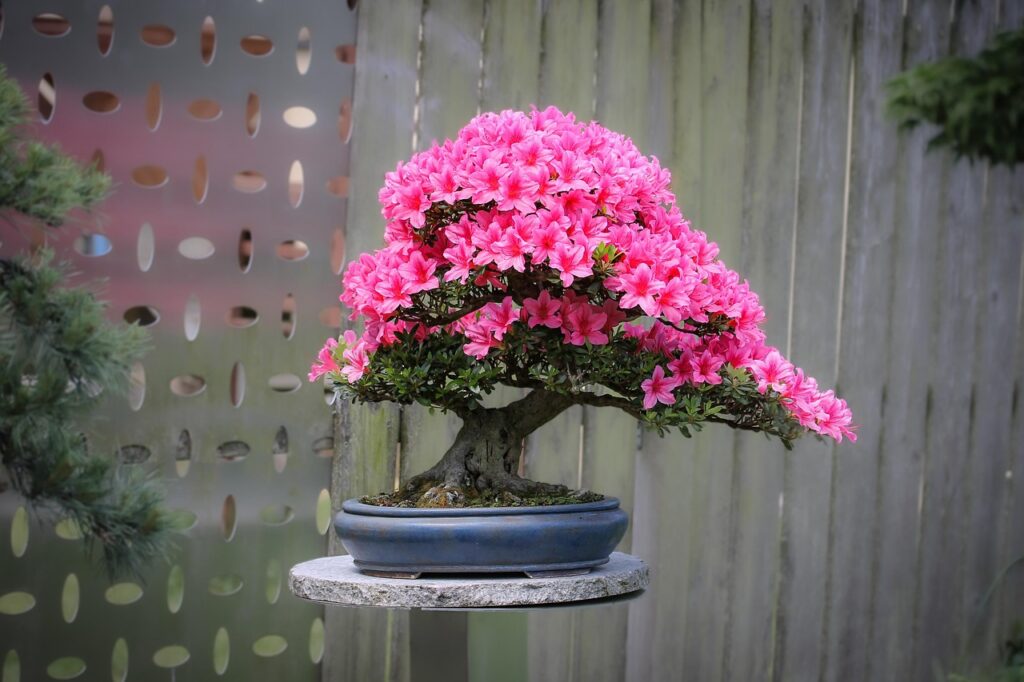
One of the greatest challenges in azalea bonsai shaping is designing a tree that looks beautiful throughout every season. While the flowers are undoubtedly the main attraction during spring, the branch structure should remain visually appealing once the blooms have faded.
A well-designed azalea features open spaces between branches, creating depth and allowing flowers to stand out rather than forming a solid mass of colour. The silhouette should appear balanced from every viewing angle, with the trunk remaining the foundation of the composition.
Carefully considered branch placement also ensures that future growth continues to enhance the overall design.
Creating a Bonsai with Lasting Character
The finest azalea bonsai are shaped over many years, with each season adding maturity and refinement to the design. Rather than chasing perfection, focus on developing a tree that tells its own story through movement, balance, and natural elegance.
By selecting a style that complements your azalea’s unique characteristics, you can create a bonsai that remains captivating whether it is in full bloom or quietly displaying the graceful structure that makes this species so rewarding to cultivate.