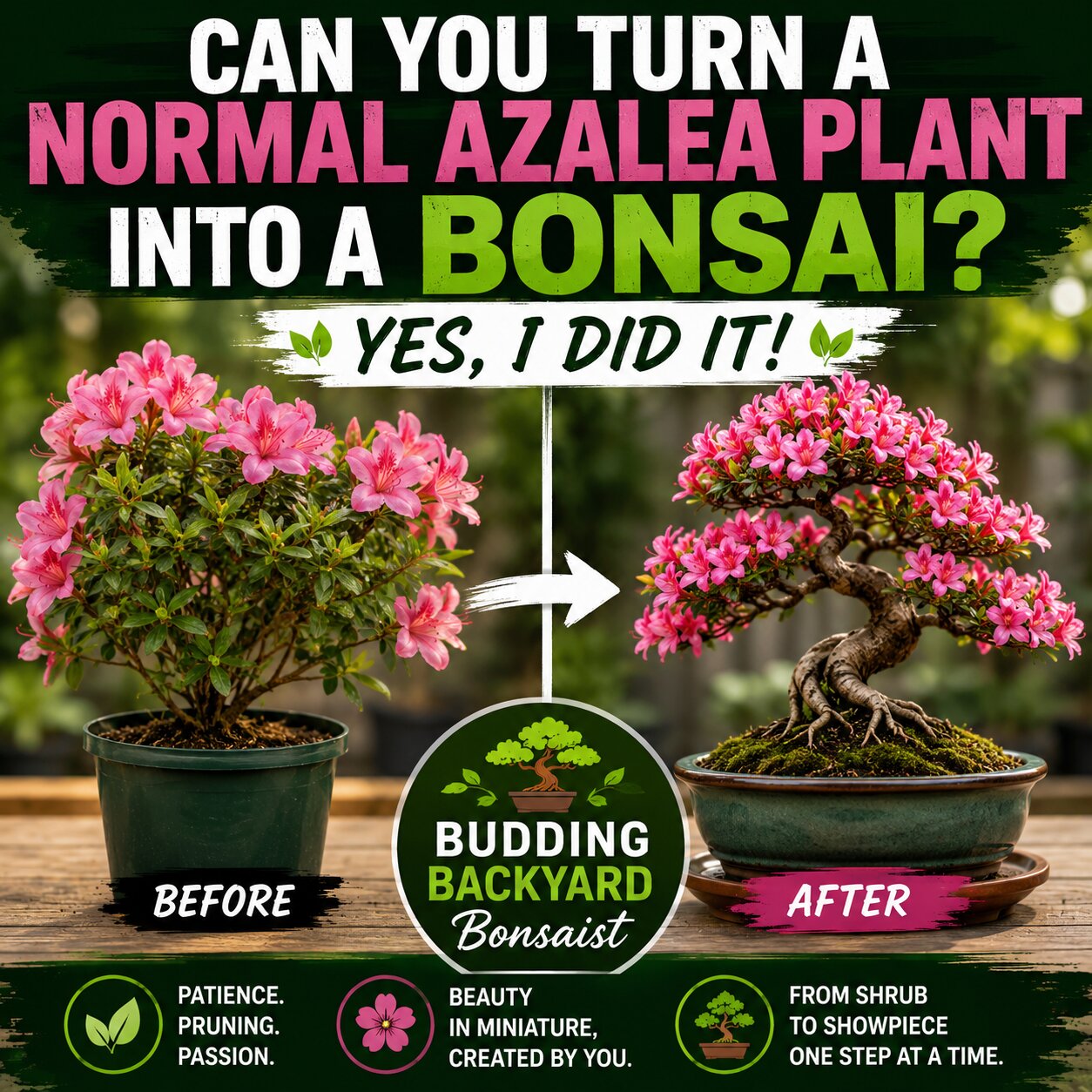
Many people believe bonsai trees have to be purchased from specialist growers or started from expensive nursery stock. The truth is that almost any woody plant with the right characteristics can become a bonsai with patience, proper pruning, and consistent care. Azaleas are among the best examples of this.
If you’ve ever wondered whether you can turn a normal azalea plant into a bonsai, the answer is a resounding yes. I know because I did exactly that. What began as an ordinary garden azalea has gradually transformed into a miniature tree that captures all the beauty of its full-sized counterpart while fitting comfortably into a bonsai pot.
The process doesn’t happen overnight, but it is one of the most rewarding journeys an azalea bonsai enthusiast can undertake.
Choosing the Right Azalea
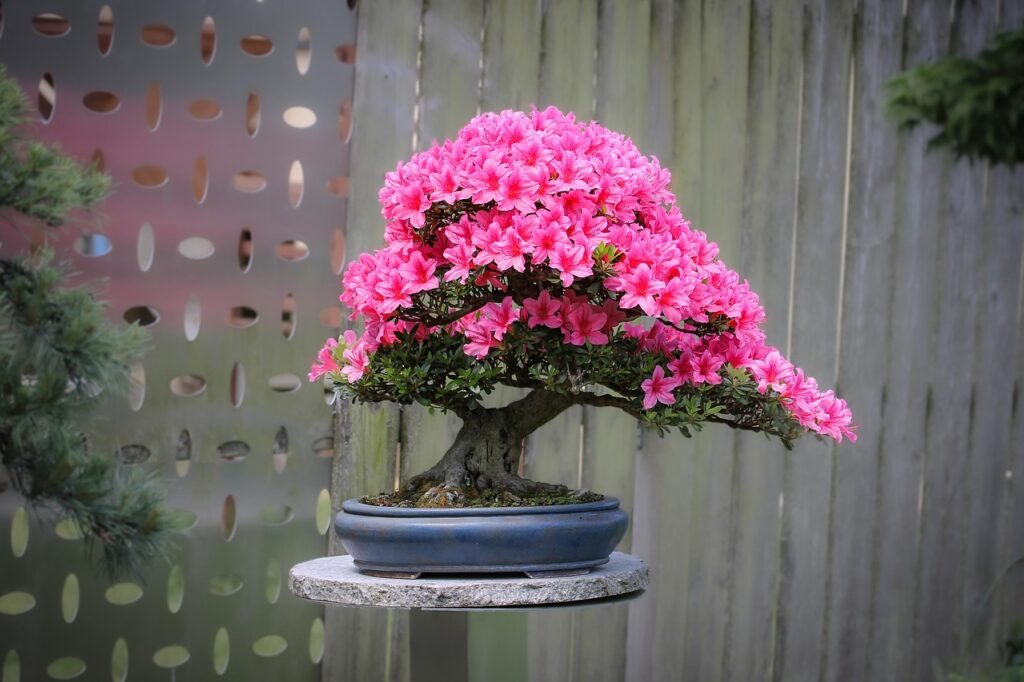
Not every azalea will make an outstanding bonsai, but many common nursery varieties are excellent candidates. Healthy plants with interesting trunks, low branches, and vigorous growth offer the best starting point.
When selecting an azalea, don’t worry too much about the overall shape of the shrub. Instead, look beneath the foliage. A thick trunk with natural movement often matters far more than a perfectly shaped canopy because branches can always be pruned and regrown.
It’s also worth checking the base of the trunk. Surface roots, known as nebari, contribute greatly to the appearance of a mature bonsai. Even if these are not immediately visible, careful repotting may reveal an attractive root flare hidden beneath the soil.
A healthy plant will always recover from training far better than one already weakened by disease or poor care.
The First Transformation
Turning a garden shrub into a bonsai usually begins with decisive pruning. This can feel intimidating because you’re removing much of the plant you’ve spent time growing or have just purchased.
The goal is to identify the future trunk line and remove unnecessary branches that distract from the design. Dead, crossing, damaged, or poorly positioned branches are generally removed first before shortening the remaining structure.
Root work often follows during the appropriate repotting season. Large roots are reduced gradually while encouraging a compact fibrous root system that will eventually fit inside a shallow bonsai container.
After this first transformation, the plant may look surprisingly bare. This is perfectly normal. The real beauty begins to emerge as fresh growth develops in response to careful pruning.
Training the Tree Over Time
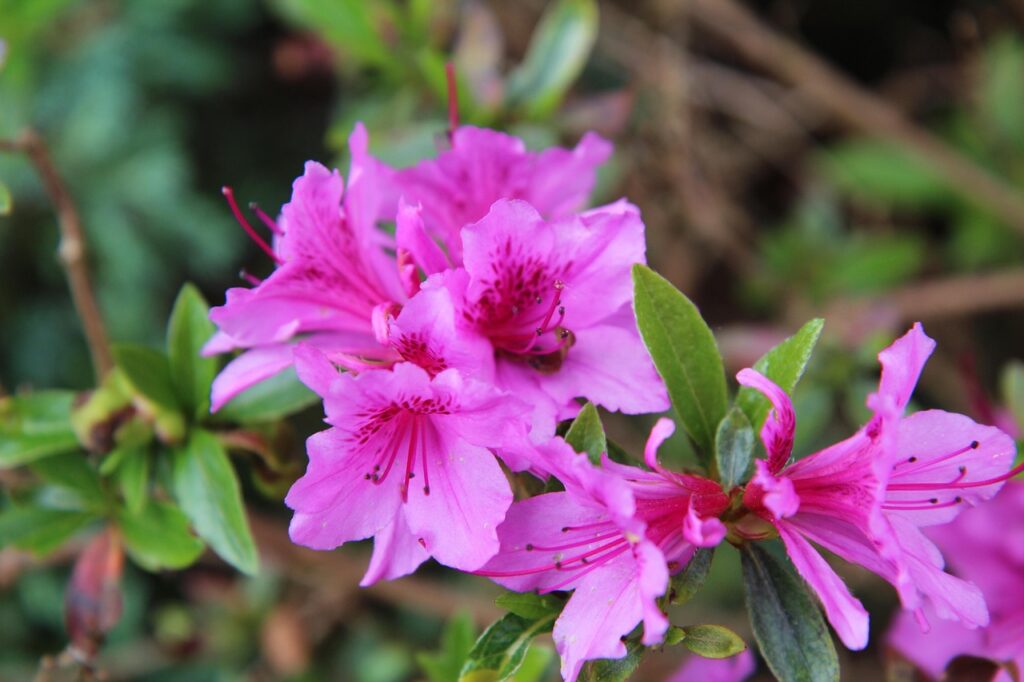
Creating a bonsai is not about forcing a plant into shape within a few weeks. It is about guiding natural growth over several years.
Each growing season presents new opportunities to refine the silhouette. New shoots are allowed to extend before being pruned back, gradually increasing ramification and creating the dense branching associated with mature bonsai.
Azaleas respond particularly well to clip-and-grow techniques. While wiring can be used where necessary, careful pruning often produces more natural branch movement.
Flowering should also be managed thoughtfully. Although the blooms are one of the greatest attractions of azalea bonsai, allowing excessive flowering can temporarily reduce the energy available for structural development. Balancing health, growth, and flowering is part of the long-term process.
Challenges Along the Way
Like every bonsai project, transforming a normal azalea into a bonsai comes with its challenges. Beginners often prune too aggressively, repot at the wrong time, or expect dramatic progress within a single season.
Patience becomes one of the most valuable tools in the process. Some branches may die back unexpectedly, while others grow far more vigorously than anticipated. Learning how your particular azalea responds is part of becoming a better bonsai artist.
Watering also becomes increasingly important after moving the tree into a bonsai container. Shallower pots dry more quickly than garden soil, making regular observation essential.
Fortunately, azaleas are forgiving when properly cared for, making them an excellent species for those developing their bonsai skills.
The Satisfaction of Creating Your Own Bonsai
There is something uniquely satisfying about looking at a finished bonsai and remembering the ordinary shrub it once was. Every pruning decision, repotting session, and growing season becomes part of the tree’s story.
Rather than purchasing a finished specimen, creating your own bonsai allows you to develop both the tree and your own skills together. Each year brings noticeable improvements, making the journey just as rewarding as the destination.
My own azalea proved that a normal garden plant can become a beautiful bonsai with enough patience and careful training. It serves as a reminder that bonsai is not about buying perfection but about creating it over time.
At Budding Backyard Bonsaist, we’re passionate about helping enthusiasts discover the art of bonsai from the ground up. Whether you’re starting with nursery stock, garden plants, or established bonsai, our growing collection of guides will help you transform ordinary trees into extraordinary living works of art.