
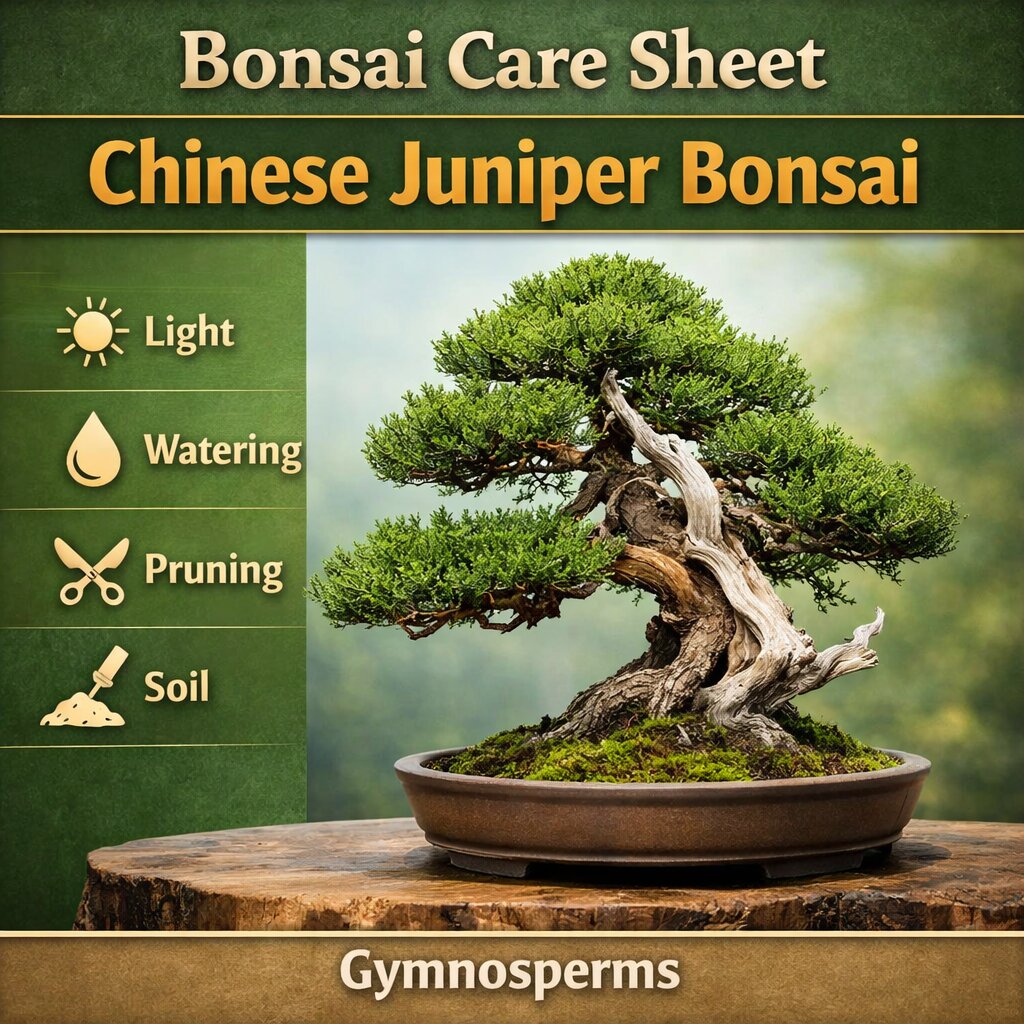
The Chinese juniper bonsai is one of the most iconic and widely cultivated bonsai trees in the world. Known for its rugged trunk, flexible branches, and dense evergreen foliage, the Chinese juniper bonsai has become a favourite among both beginners and experienced bonsai artists. Its natural resilience and ability to tolerate pruning, wiring, and shaping make it an excellent species for learning and refining bonsai techniques.
Native to East Asia, the species Juniperus chinensis thrives in a wide range of climates and growing conditions. When trained as a Chinese juniper bonsai, it develops the dramatic curves, textured bark, and layered foliage pads that define traditional bonsai aesthetics. Many famous bonsai specimens displayed in exhibitions and botanical collections around the world are Chinese juniper bonsai trees, particularly cultivars such as Shimpaku and Itoigawa.
One of the reasons the Chinese juniper bonsai is so popular is its adaptability. It tolerates strong sunlight, periods of drought, and the intensive shaping techniques used in bonsai cultivation. This durability allows growers to gradually sculpt the tree over many years while maintaining its health and vitality.
In this Chinese juniper bonsai care sheet, we will explore the essential care requirements needed to keep your tree healthy and thriving. From watering and soil selection to pruning, wiring, and seasonal maintenance, understanding the needs of a Chinese juniper bonsai will help you develop a beautiful and long-lived bonsai specimen.
Table of Contents
TL:DR Quick Chinese Juniper Bonsai Care Overview
The Chinese Juniper Bonsai is one of the most reliable and versatile evergreen bonsai species for both beginners and experienced growers. Known for its rugged trunk, flexible branches, and dense foliage pads, the Chinese Juniper Bonsai adapts well to pruning, wiring, and long-term styling. Because it is naturally hardy and tolerant of strong sunlight and moderate drought, it is widely used in traditional bonsai cultivation around the world.
This quick overview provides the essential care requirements for maintaining a healthy Chinese Juniper Bonsai. While the tree is forgiving compared to many other bonsai species, proper light exposure, well-draining soil, and careful watering are essential for maintaining compact growth and vibrant foliage.
| Care aspect | Chinese Juniper Bonsai |
|---|---|
| Scientific name | Juniperus chinensis (commonly used bonsai cultivars include Shimpaku and Itoigawa) |
| Common name | Chinese Juniper |
| Bonsai type | Evergreen conifer |
| Light | Full sun. Requires strong direct light for compact foliage and healthy growth. |
| Watering | Water thoroughly, then allow the soil to partially dry before watering again. Avoid constantly wet soil. Moderately drought tolerant once established. |
| Soil | Fast-draining bonsai soil mix such as akadama, pumice, and lava rock. Slightly acidic to neutral soil preferred. |
| Fertiliser | Balanced fertiliser such as 10-10-10 during spring and summer. Reduce feeding in late autumn and winter. Avoid heavy feeding during extreme heat. |
| Pruning | Regular pinching and trimming to maintain foliage pads. Structural pruning during active growing seasons. Avoid heavy pruning during winter dormancy. |
| Wiring | Wire in spring or early autumn. Monitor regularly as branches thicken and bark can scar if wire is left on too long. |
| Difficulty | Easy to moderate. Suitable for beginners with basic bonsai care knowledge. |
| Rarity | Very common in bonsai cultivation and widely available in nurseries and bonsai suppliers. |
| Climate sensitivity | Prefers temperate climates. Protect from prolonged freezing temperatures and extremely harsh frost. |
| Growth habit | Water thoroughly, then allow the soil to partially dry before watering again. Avoid constantly wet soil. Moderately drought-tolerant once established. |
Chinese Juniper Bonsai Care Guide
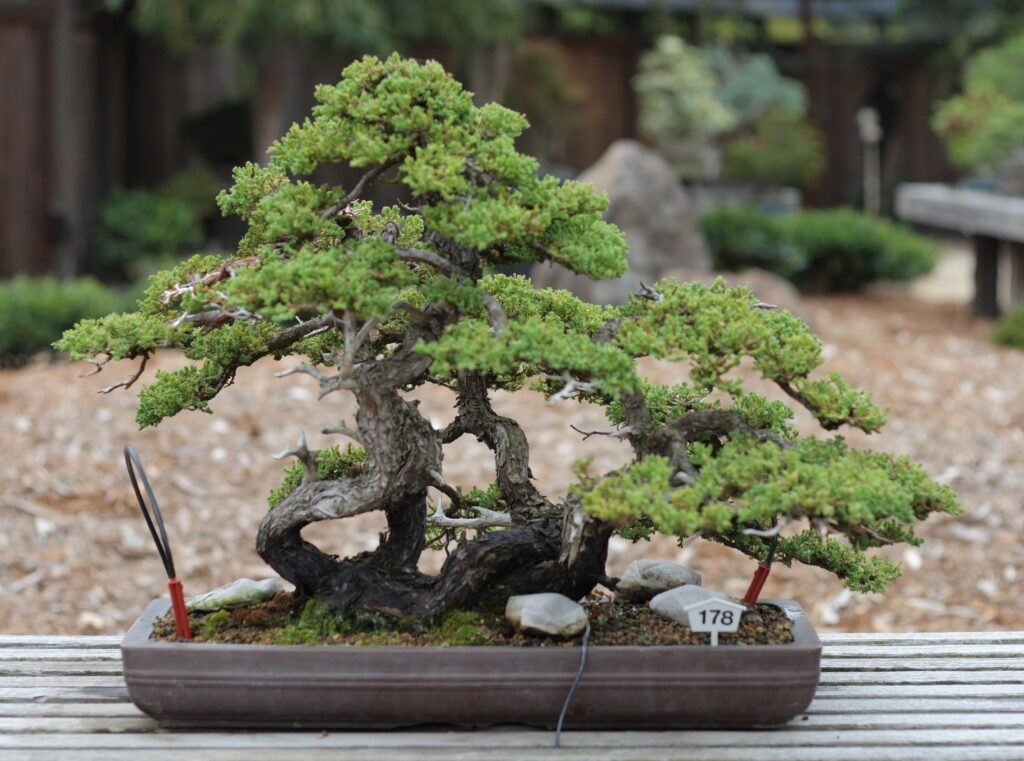
The Chinese Juniper Bonsai is one of the most widely cultivated evergreen bonsai species in the world. Valued for its rugged appearance, flexible branches, and dense foliage pads, the Chinese Juniper Bonsai is capable of producing dramatic bonsai designs that resemble ancient trees shaped by wind and time. Its resilience and adaptability make it a favourite among both beginners and experienced bonsai artists.
Native to East Asia, Juniperus chinensis thrives in sunny environments and well-drained soils. When cultivated as a Chinese Juniper Bonsai, the tree responds well to pruning, wiring, and long-term styling techniques. Well-known cultivars such as Shimpaku and Itoigawa are especially prized in bonsai culture because of their fine scale foliage and elegant growth habits.
Although the Chinese Juniper Bonsai is considered a hardy species, proper care is still essential to maintain healthy growth and strong structure. Adequate sunlight, careful watering, good soil drainage, and regular maintenance will help ensure the tree develops into a vigorous and visually striking bonsai specimen.
Light
The Chinese Juniper Bonsai requires full sunlight to grow properly. Ideally, the tree should receive at least six to eight hours of direct sunlight each day. Strong sunlight encourages compact foliage growth and helps maintain the rich green or bluish colour that many Chinese juniper cultivars display.
Insufficient light often leads to weak growth and elongated shoots. When kept indoors for long periods, Chinese junipers can quickly decline due to a lack of adequate sunlight. For this reason, the Chinese Juniper Bonsai is best grown outdoors where it can benefit from natural light cycles and seasonal changes.
In very hot climates, light afternoon shade may help prevent excessive heat stress, but the tree should still receive strong sunlight for most of the day.
Watering
Watering the Chinese Juniper Bonsai correctly is essential for maintaining root health. The soil should be watered thoroughly until water drains from the bottom of the pot. After watering, allow the soil to partially dry before watering again.
Chinese junipers prefer slightly drier conditions compared to many other bonsai species. Constantly wet soil can lead to root rot and fungal problems. A well-draining bonsai soil mix helps prevent water from accumulating around the roots.
During hot summer weather, watering may be required daily depending on the pot size and soil mixture. In cooler seasons, watering frequency should be reduced to match the tree’s slower growth.
Pruning
Regular pruning helps maintain the shape and structure of the Chinese Juniper Bonsai. Instead of cutting large sections of foliage, bonsai growers typically use a technique called pinching, where small growing tips are removed to encourage dense branching.
Structural pruning can be performed during the active growing season to remove unwanted branches or to improve the overall design of the tree. Dead, damaged, or crossing branches should also be removed to maintain healthy growth.
Avoid removing too much foliage at once, as junipers rely on their foliage to maintain energy production through photosynthesis.
Shaping
Shaping is an important part of developing the character of a Chinese Juniper Bonsai. The species naturally produces flexible branches that can be guided into traditional bonsai styles such as informal upright, cascade, or windswept designs.
Over time, shaping techniques help create layered foliage pads and dramatic trunk movement. These design features give the tree the aged and natural appearance that bonsai artists seek to achieve.
Because Chinese junipers respond well to long-term styling, shaping should be approached gradually, allowing the tree to recover between major adjustments.
Soil
The Chinese Juniper Bonsai requires fast-draining soil to prevent water retention around the roots. A typical bonsai soil mix consists of akadama, pumice, and lava rock. This combination provides good drainage while still retaining enough moisture for healthy root development.
Junipers tolerate a wide range of soil conditions but generally prefer slightly acidic to neutral soil. Poor drainage is one of the most common causes of health problems in juniper bonsai.
Refreshing the soil during repotting helps maintain proper aeration and ensures the roots receive sufficient oxygen.
Repotting
Repotting the Chinese Juniper Bonsai is typically done every two to four years depending on the age and growth rate of the tree. Younger trees tend to grow faster and may require more frequent repotting than older, established specimens.
The best time to repot is usually early spring before the tree begins its main growth cycle. During repotting, excess roots can be carefully trimmed to encourage a compact root system.
After repotting, the tree should be protected from intense sunlight for a short period while it recovers and establishes new root growth.
Wiring
Wiring is commonly used to guide the branches of a Chinese Juniper Bonsai into desired shapes. Aluminium or copper bonsai wire is wrapped around branches and gently bent to create movement and structure.
Spring and early autumn are typically the best seasons for wiring because the branches remain flexible during these periods. Regular monitoring is important because juniper branches can thicken quickly.
If wire is left on too long, it can mark or scar the bark. Removing the wire before this happens helps preserve the tree’s natural appearance.
Fertiliser
The Chinese Juniper Bonsai benefits from regular feeding during the active growing season. A balanced fertiliser such as 10-10-10 or a specialised bonsai fertiliser can be applied during spring and summer.
Fertilising supports healthy foliage growth and strengthens the tree’s ability to recover from pruning and styling. Feeding should be reduced during late autumn and winter when growth slows.
Overfertilising should be avoided, particularly during periods of extreme heat, as it may stress the tree.
Propagation
Propagation of Chinese Juniper Bonsai is most commonly done through cuttings. Semi-hardwood cuttings taken during late spring or summer can root successfully when placed in well-draining soil under humid conditions.
Rooting hormones are often used to increase the success rate of propagation. With proper care, these cuttings can develop into strong young plants that can later be trained as bonsai.
Propagation allows growers to create new bonsai material while preserving desirable characteristics from the parent plant.
Seasonal Care
Seasonal changes influence the growth and care requirements of the Chinese Juniper Bonsai. During spring and summer, the tree experiences active growth and requires regular watering, fertilising, and pruning.
Autumn is a good time to perform light shaping and wiring as growth begins to slow. During winter, the tree enters a dormant phase and requires less watering and minimal maintenance.
Although Chinese junipers tolerate cold conditions, protection may be necessary in regions that experience severe frost or prolonged freezing temperatures.
Pests
Like many bonsai species, the Chinese Juniper Bonsai can occasionally suffer from pests. Common pests include spider mites, scale insects, and aphids, which may feed on the foliage and weaken the tree.
Regular inspection of the foliage and branches helps detect pest problems early. If pests appear, treatment with horticultural oil or insecticidal soap is usually effective.
Maintaining good air circulation and healthy growing conditions helps reduce the likelihood of pest infestations.
Diseases
The Chinese Juniper Bonsai is generally resistant to many diseases but can occasionally develop fungal problems if growing conditions are poor. Root rot is one of the most serious issues and is usually caused by excessive moisture or poorly draining soil.
Other potential problems include juniper blight or fungal infections affecting the foliage. Removing affected branches and improving airflow around the tree can help prevent disease spread.
Keeping the tree in proper sunlight, using well-draining soil, and avoiding overwatering are the most effective ways to maintain the health of a Chinese Juniper Bonsai.
How to Identify a Chinese Juniper Bonsai
Identifying a Chinese Juniper Bonsai involves observing several botanical characteristics, including foliage structure, reproductive features, and bark development. Because Juniperus chinensis can display multiple growth forms and foliage types, proper identification requires examining the tree closely rather than relying on a single visual trait.
A mature Chinese Juniper Bonsai often shows both juvenile needle foliage and mature scale foliage, rugged bark that develops with age, and berry-like cones produced by female trees. These features, combined with the tree’s overall structure and growth habit, help distinguish it from other juniper species commonly used in bonsai.
Below are some of the most reliable characteristics used to identify a Chinese Juniper Bonsai.
Leaf Identification
One of the most distinctive features of a Chinese Juniper Bonsai is the presence of two different leaf types. Juvenile leaves appear as sharp, needle-like structures known as awl-shaped leaves. These needles typically grow in whorls and are more common on younger branches or areas that have been recently pruned.
As the tree matures, it begins producing scale-like foliage. These scale leaves lie flat against the stems and create the dense, textured foliage pads that bonsai artists often develop during styling. Mature scale foliage is generally softer and more compact than the juvenile needles.
It is common for a Chinese Juniper Bonsai to display both foliage types simultaneously. Shaded interior branches or vigorous new growth often produce juvenile needles even on older trees.
Flower Gallery
The Chinese Juniper Bonsai produces very small reproductive structures that are often overlooked because they lack the large flowers seen in many other plant species. As a gymnosperm, the Chinese juniper produces cones rather than traditional flowers.
Male trees develop small pollen cones that are typically yellowish or tan in colour. These cones release pollen during early spring, which is then carried by wind to female plants.
Female trees produce seed cones that eventually develop into the familiar berry-like structures often associated with junipers.
Fruit Identification
The “fruit” of a Chinese Juniper Bonsai is actually a fleshy cone rather than a true fruit. These cones are small, round, and often appear bluish or purple with a whitish waxy coating known as bloom.
Berry-like cones typically measure around 7 to 12 millimetres in diameter. They take approximately 18 months to mature after pollination, gradually darkening in colour as they develop.
These cones are usually only present on female trees. When visible, they provide a useful identifying feature for distinguishing mature Chinese Juniper Bonsai specimens.
Seeds and Pods
Inside the berry-like cones of the Chinese Juniper Bonsai are several small seeds. Most cones contain between two and four seeds, which develop as the cone matures.
The seeds are protected by the fleshy outer layer of the cone and are dispersed naturally by birds and other wildlife that consume the berries. In cultivation, these seeds can also be collected and used for propagation, although cuttings are generally preferred for bonsai development.
Because seed production occurs only on female trees, not all Chinese juniper bonsai will produce seeds.
Bark Textures
The bark of a Chinese Juniper Bonsai becomes increasingly distinctive as the tree ages. Young trees typically have smoother bark that ranges from grey to light brown in colour.
As the tree matures, the bark begins to peel in thin longitudinal strips, revealing reddish-brown layers beneath the surface. This peeling texture contributes to the rugged and aged appearance that makes junipers so desirable in bonsai cultivation.
Older Chinese Juniper Bonsai specimens can develop deeply textured bark and dramatic trunk character, especially when combined with techniques such as jin and shari that highlight the natural aging process of the tree.
Bonsai Styles Suited to Chinese Juniper Bonsai
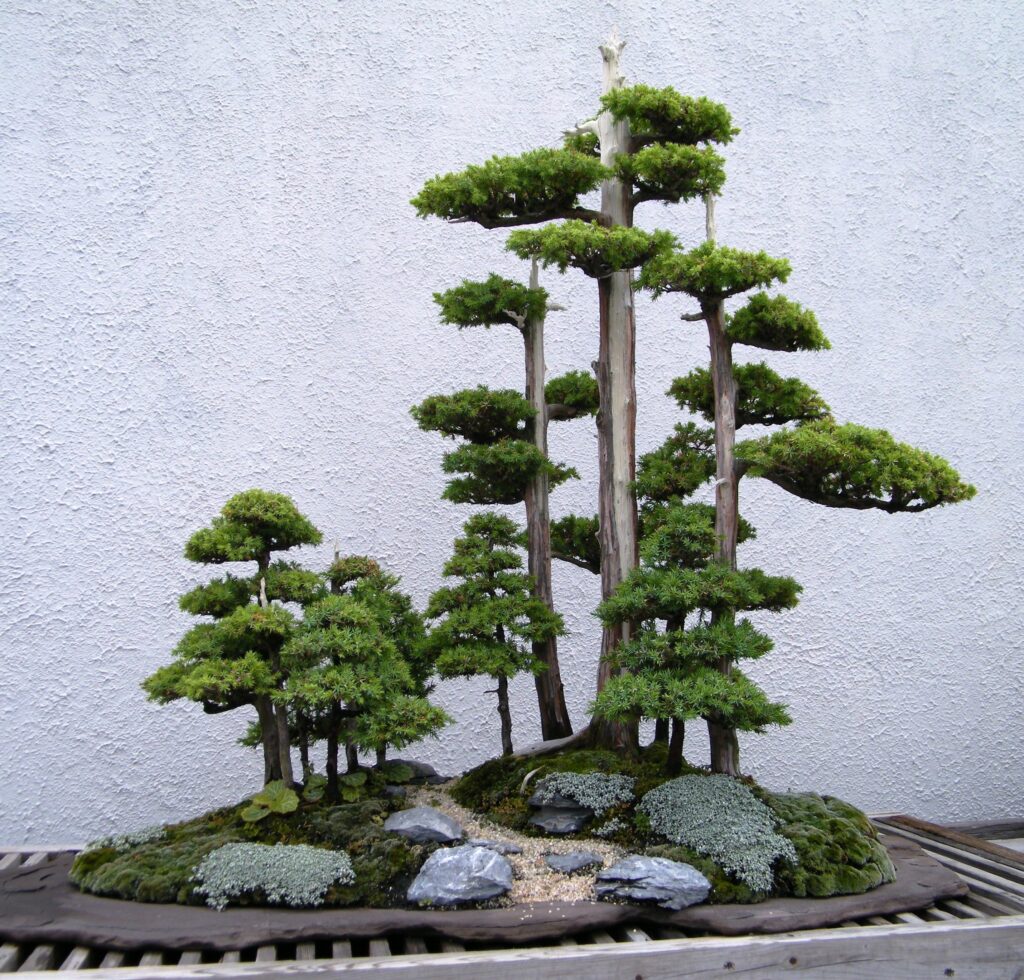
The Chinese Juniper Bonsai is one of the most versatile species in bonsai cultivation, capable of adapting to a wide range of traditional bonsai styles. Its flexible branches, dense foliage pads, and ability to develop rugged trunks make it ideal for both classical and highly artistic designs. Many of the most famous bonsai specimens around the world are Chinese junipers that have been shaped over decades or even centuries.
Because the Chinese Juniper Bonsai tolerates wiring, pruning, and carving techniques very well, bonsai artists often use it to create dramatic shapes that mimic ancient trees growing in harsh natural environments. The species also responds well to deadwood techniques such as jin and shari, which enhance the illusion of age and weathering.
Below are several bonsai styles that work particularly well when developing a Chinese Juniper Bonsai.
Informal Upright (Moyogi)
The informal upright style is one of the most common styles used for Chinese Juniper Bonsai. In this design, the trunk grows upward while gently curving from side to side, creating a natural and balanced appearance.
Branches are typically arranged in alternating layers along the trunk, with each level forming a foliage pad. This style works well because Chinese junipers naturally produce flexible branches that can be guided into soft curves through wiring.
The informal upright style captures the appearance of a mature tree growing freely in nature while still maintaining a sense of harmony and structure.
Cascade (Kengai)
The cascade style is another dramatic option for the Chinese Juniper Bonsai. In this design, the trunk grows downward below the rim of the pot, resembling a tree that has been forced to grow over the edge of a cliff.
Chinese junipers are particularly well suited to cascade designs because their branches remain flexible when young and can be shaped into long flowing forms. Dense foliage pads can then be developed along the descending trunk.
This style often creates a striking visual effect and is frequently used in bonsai exhibitions.
Semi-Cascade (Han-Kengai)
The semi-cascade style is similar to the cascade design but less extreme. In this style, the trunk slopes downward but does not extend far below the base of the container.
A Chinese Juniper Bonsai trained in the semi-cascade style often resembles a tree growing on a steep mountainside where gravity and wind influence its shape. The tree maintains a strong upper structure while allowing some branches to flow downward.
This style balances dramatic movement with a more stable visual composition.
Windswept (Fukinagashi)
The windswept style represents a tree that has been shaped by constant strong winds. All branches and foliage appear to grow in the same direction, creating the impression of powerful environmental forces.
A Chinese Juniper Bonsai works exceptionally well in this style because its branches can be wired into sweeping horizontal lines while still maintaining dense foliage clusters.
The windswept design often emphasises movement and drama, making it a favourite among bonsai artists who enjoy expressive compositions.
Literati (Bunjin)
The literati style focuses on elegance and minimalism. Trees trained in this style feature tall, slender trunks with minimal branches and sparse foliage near the top.
The Chinese Juniper Bonsai adapts well to literati styling because it can develop twisting trunks and dramatic deadwood features. This style often emphasises artistic expression rather than strict symmetry.
Literati bonsai are inspired by classical Chinese landscape paintings and poetry, giving the design a strong cultural connection.
Slanting (Shakan)
The slanting style represents a tree growing at an angle, often as a result of strong wind, shifting soil, or competition for sunlight. The trunk leans to one side while branches grow outward to balance the composition.
A Chinese Juniper Bonsai trained in the slanting style can develop a powerful visual presence. The angled trunk combined with layered foliage pads creates a sense of tension and movement.
This style is often used to simulate trees growing on hillsides or exposed environments.
Deadwood Styles (Jin and Shari)
Chinese junipers are famous for their ability to develop dramatic deadwood features. Bonsai artists frequently carve sections of trunk or branches to create jin (dead branches) or shari (exposed deadwood along the trunk).
These techniques give the Chinese Juniper Bonsai the appearance of a tree that has survived lightning strikes, storms, or harsh mountain conditions. When combined with living veins and healthy foliage, the contrast between deadwood and living tissue can produce extremely powerful bonsai designs.
Deadwood styling is one of the defining artistic techniques used with Chinese junipers and contributes greatly to their popularity in bonsai culture.
Symbolism and Cultural Significance
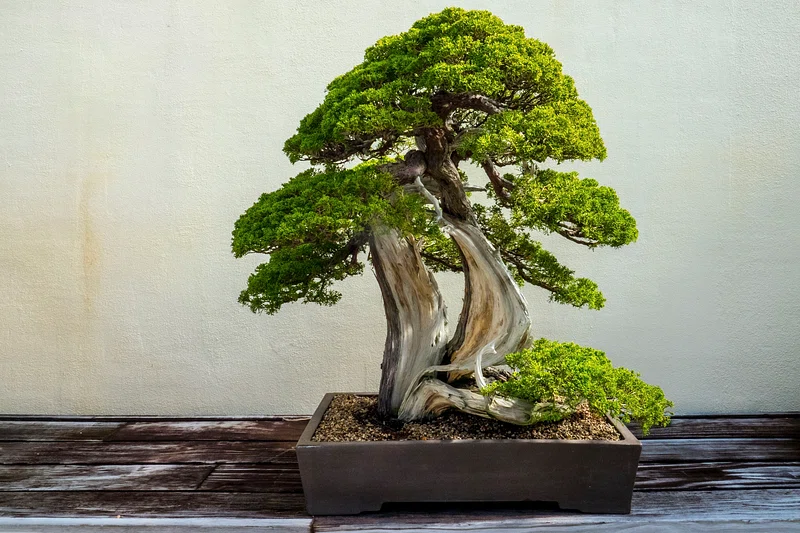
The Chinese Juniper Bonsai carries deep cultural symbolism rooted in centuries of East Asian horticultural tradition. Across China and Japan, juniper trees have long been associated with endurance, protection, and the quiet strength that comes from surviving harsh environments. When cultivated as a Chinese Juniper Bonsai, these symbolic meanings are often reflected in the tree’s aged appearance, twisted trunks, and weathered deadwood features.
In traditional Chinese culture, junipers are often viewed as symbols of longevity and resilience. Their ability to grow on rocky cliffs, windswept mountainsides, and poor soils has made them a metaphor for perseverance through adversity. A Chinese Juniper Bonsai therefore represents the idea that strength and beauty can emerge even under difficult conditions.
Japanese bonsai culture also holds the Chinese Juniper Bonsai in high regard. Many historic bonsai collections feature juniper specimens that are hundreds of years old, passed down through generations of caretakers. The famous Shimpaku cultivar in particular is considered one of the most important juniper varieties used in traditional Japanese bonsai. These trees are admired for their elegant foliage, refined branching patterns, and ability to develop dramatic deadwood.
The visual characteristics of a Chinese Juniper Bonsai often reinforce its symbolic meaning. Twisting trunks and exposed deadwood can represent the passage of time and the challenges a tree has endured. At the same time, vibrant green foliage growing from the living veins symbolises renewal, balance, and the persistence of life.
For many bonsai enthusiasts, caring for a Chinese Juniper Bonsai is not only about horticulture but also about cultivating patience and mindfulness. The slow growth of the tree encourages long-term thinking, while the careful shaping of branches reflects the harmony between human creativity and natural form.
Because of these associations, the Chinese Juniper Bonsai is often seen as a living representation of endurance, wisdom, and the beauty of age. Its presence in gardens, collections, and exhibitions continues to connect modern bonsai artists with centuries of cultural tradition.
Companion Plants and Wildlife Attraction
A Chinese Juniper Bonsai is often displayed alone as a focal tree, but companion plants can enhance its presentation and help create a miniature ecosystem around the bonsai. Carefully selected ground covers, flowers, and herbs can complement the appearance of a Chinese Juniper Bonsai while also supporting beneficial insects and wildlife.
Because the Chinese Juniper Bonsai prefers well-drained soil and full sun, companion plants should share similar environmental requirements. Choosing species that thrive in bright light and tolerate moderate dryness will help ensure both the bonsai and surrounding plants remain healthy.
In addition to visual appeal, companion plants may attract pollinators and small wildlife that contribute to a balanced garden environment.
Moss
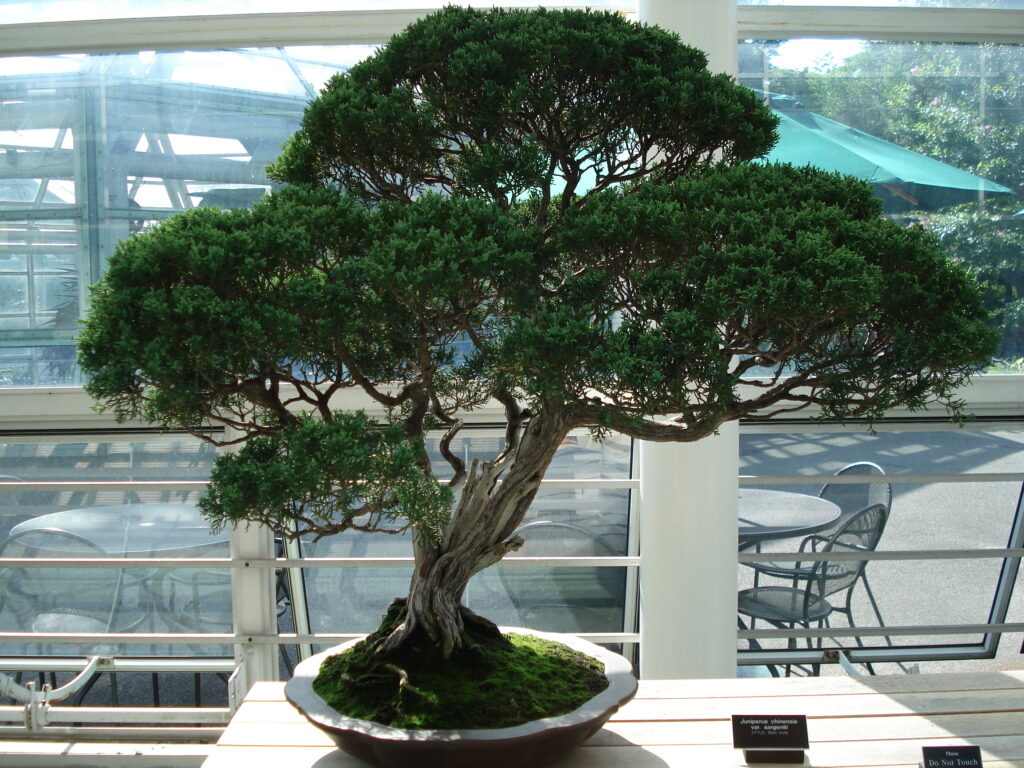
Moss is one of the most common companions used with a Chinese Juniper Bonsai, especially in display settings. Moss creates the visual illusion of an aged forest floor and helps retain moisture on the soil surface.
Popular moss species used around bonsai include Sheet Moss (Hypnum cupressiforme) and Cushion Moss (Leucobryum glaucum). These mosses create a soft, natural carpet around the base of the bonsai and improve the aesthetic presentation of the tree.
While moss can be beneficial, it should not be allowed to grow too thickly over the soil surface of a Chinese Juniper Bonsai. Excessive moss coverage may restrict airflow to the soil and retain too much moisture around the roots.
Flowers
Low-growing flowering plants can provide seasonal colour and contrast around a Chinese Juniper Bonsai display. When selecting flowering companions, it is best to choose species that do not compete aggressively for water or nutrients.
Good flowering companions include Sweet Alyssum (Lobularia maritima), Cosmos (Cosmos bipinnatus), and African Marigold (Tagetes erecta). These plants produce attractive blooms while remaining relatively compact and easy to manage in small garden spaces.
In bonsai display gardens, these flowers can add visual interest while still allowing the Chinese Juniper Bonsai to remain the centrepiece.
Herbs
Certain herbs can grow well near a Chinese Juniper Bonsai and may also provide practical benefits such as attracting pollinators or repelling pests.
Examples include Common Thyme (Thymus vulgaris), Oregano (Origanum vulgare), and Chives (Allium schoenoprasum). These herbs tolerate full sun and relatively dry conditions, making them suitable companions for junipers.
Because herbs generally have shallow root systems, they can be grown nearby without interfering significantly with the root structure of the Chinese Juniper Bonsai.
Wildlife Attraction
Although a Chinese Juniper Bonsai is typically grown in containers, juniper plants in general can support a variety of wildlife. The berry-like cones produced by female trees may attract birds that feed on the fruit.
Bird species known to consume juniper berries include the American Robin (Turdus migratorius) and the Cedar Waxwing (Bombycilla cedrorum). In many regions, small songbirds may visit junipers for both food and shelter.
Juniper foliage can also provide habitat for beneficial insects and pollinators. Bees such as the Western Honey Bee (Apis mellifera) and butterflies like the Painted Lady Butterfly (Vanessa cardui) may visit nearby flowering companion plants.
By combining a Chinese Juniper Bonsai with suitable companion plants, gardeners can create a small but vibrant ecological space that supports both plant health and local wildlife.
Care Summary and Practical Notes
The Chinese Juniper Bonsai remains one of the most reliable and visually striking species available to bonsai growers. Its rugged character, flexible branches, and long lifespan make it ideal for developing dramatic bonsai compositions that reflect the appearance of ancient trees shaped by nature. Whether grown by beginners or refined by experienced bonsai artists, the Chinese Juniper Bonsai offers both artistic potential and horticultural resilience.
Successful cultivation of a Chinese Juniper Bonsai depends largely on providing the right environmental conditions. Strong sunlight, fast-draining soil, and careful watering form the foundation of healthy growth. Because junipers prefer slightly drier conditions than many bonsai species, allowing the soil to partially dry between watering sessions helps prevent root problems and encourages strong root development.
Regular maintenance is equally important. Pruning and pinching help maintain dense foliage pads, while wiring allows growers to shape branches and guide the overall design of the tree. Over time, these techniques help transform a young Chinese Juniper Bonsai into a mature specimen with elegant structure and natural movement.
Patience plays a significant role in the long-term success of any bonsai project. A Chinese Juniper Bonsai develops its most impressive features slowly over the years, with aged bark, twisting trunks, and refined foliage gradually emerging through careful cultivation.
For growers willing to invest time and attention, the Chinese Juniper Bonsai offers a rewarding experience. With proper care and thoughtful styling, this hardy evergreen can become a living work of art that continues to evolve and improve for decades.