
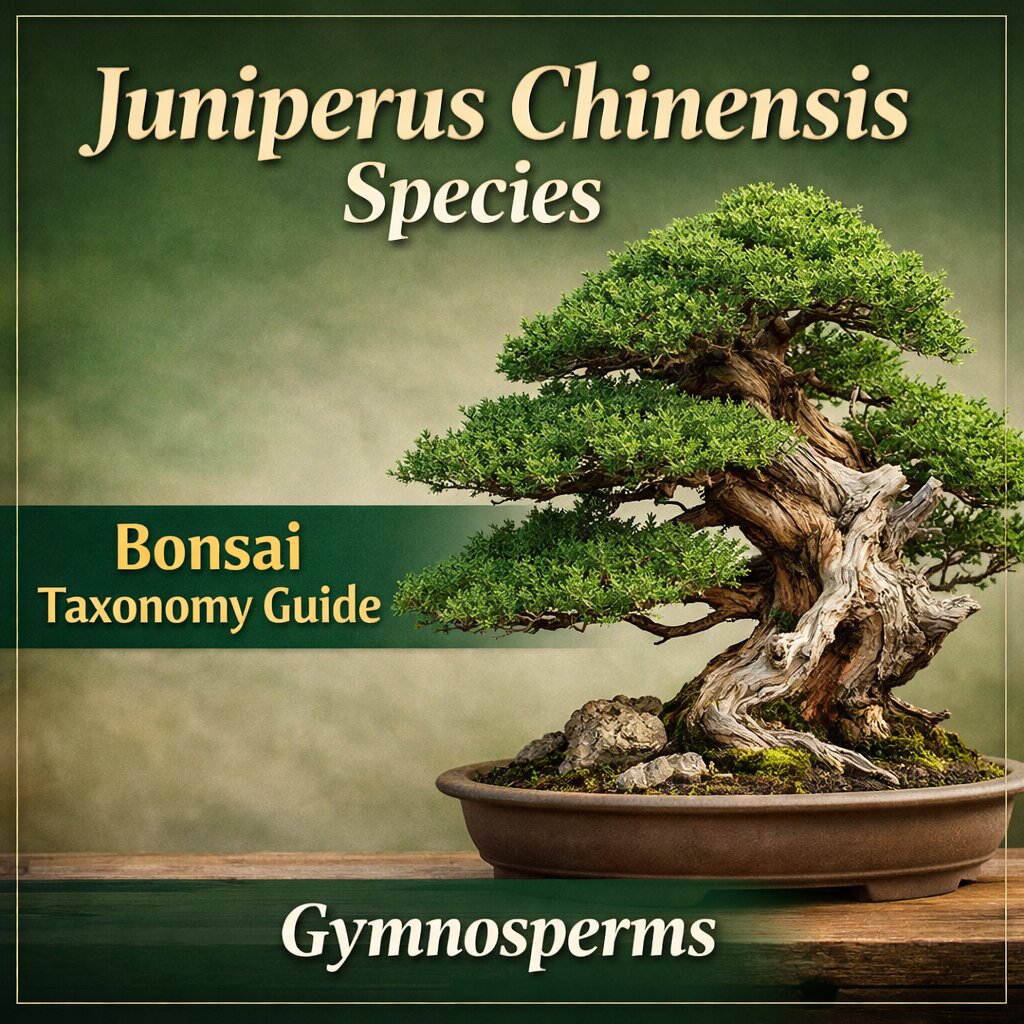
Juniperus chinensis, commonly known as the Chinese juniper, is one of the most widely cultivated and adaptable species within the juniper genus. Native to East Asia, including China, Japan, Korea, Mongolia, and parts of the Russian Far East, this evergreen conifer has gained global popularity in horticulture, landscaping, and especially in the art of bonsai. Its resilience, diverse growth forms, and distinctive foliage make it a highly valued species among gardeners and bonsai enthusiasts alike.
The species displays remarkable variability in both size and form. Depending on the cultivar or growing conditions, Juniperus chinensis may appear as a low, spreading shrub, a dense upright hedge plant, or a tall coniferous tree reaching heights of up to 20 metres. This versatility has allowed it to thrive in many climates and environments, from coastal gardens to urban landscapes.
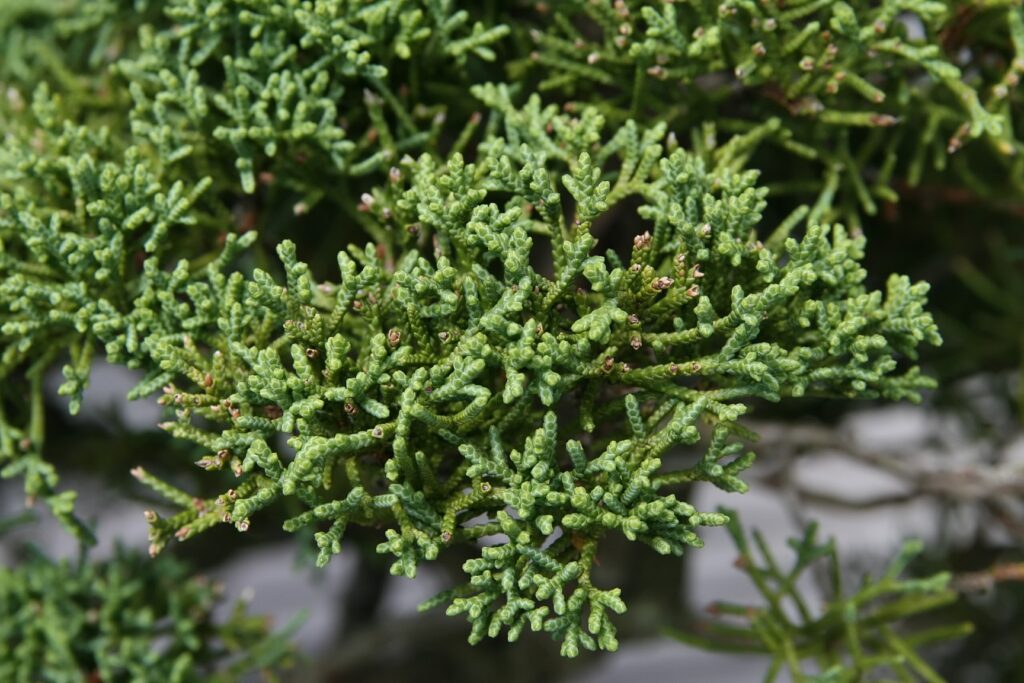
One of the defining characteristics of Juniperus chinensis is its foliage development. The species produces two types of leaves during its life cycle: sharp, needle-like juvenile leaves and mature scale-like foliage that forms dense sprays along the branches. Mature trees often display both foliage types simultaneously, especially in shaded parts of the canopy.
Because of its rugged appearance, flexible branches, and ability to tolerate extensive pruning and wiring, Juniperus chinensis has become one of the most iconic species used in bonsai cultivation. Famous cultivars such as Shimpaku and the highly prized Itoigawa form are widely recognised among bonsai artists for their fine foliage and sculptural potential.
In this taxonomy guide, we explore the botanical classification, growth characteristics, ecological origins, and horticultural significance of Juniperus chinensis, helping bonsai growers and plant enthusiasts better understand this remarkable species.
Table of Contents
Taxonomy
– Kingdom: Plantae (Plant Kingdom)
— Clade: Embryophytes (Land Plants)
— Clade: Polysporangiophytes (Multiple Sporangia)
—- Clade: Tracheophytes (Vascular Plants)
—– Superdivision: Spermatophytes (Seed Plants)
—— Clade: Gymnospermae (Naked Seeds)
——- Division: Pinophyta (Conifers)
——– Class: Pinopsida (Living Conifers)
——— Subclass: Cupressidae (Evergreen Conifers)
———- Order: Cupressales (Cypress)
———– Family: Cupressaceae (Cypress)
———— Subfamily: Cupressoideae (Cypress)
————- Genus: Juniperus (Juniper)
————– Section: Sabina (Scale-Leaf Junipers)
————— Species: Juniperus chinensis (Chinese Juniper)
What is Juniperus chinensis?
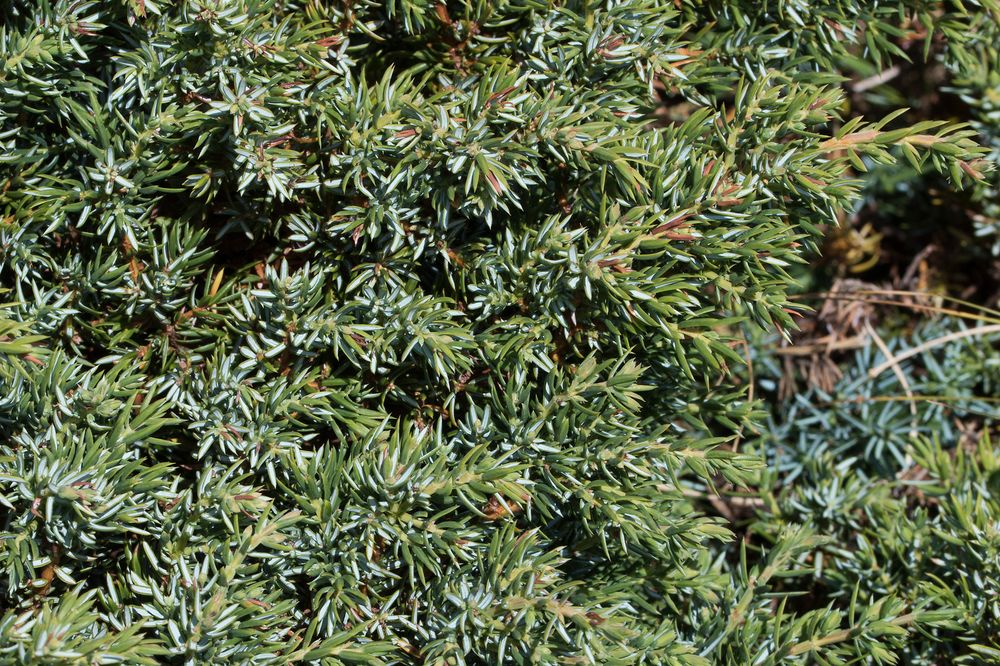
Juniperus chinensis, commonly known as the Chinese juniper, is a species of evergreen conifer in the cypress family Cupressaceae. Native to East Asia, it occurs naturally across China, Japan, Korea, Mongolia, Myanmar, and parts of the Russian Far East. This highly adaptable species can grow as either a shrub or a tree, depending on environmental conditions and cultivar characteristics.
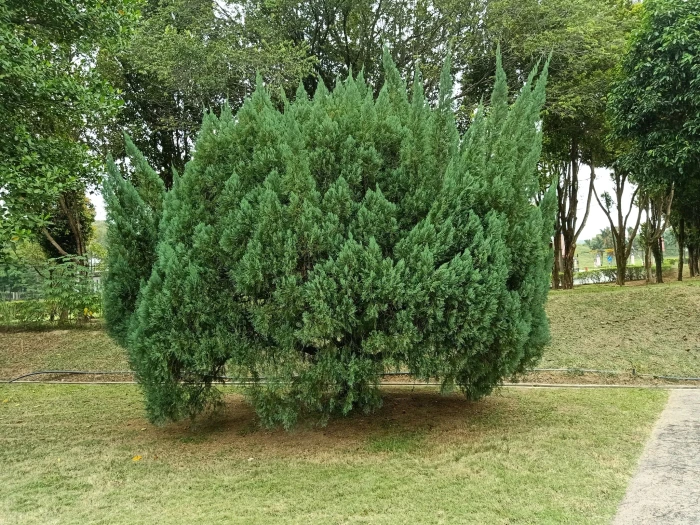
In its natural form, Juniperus chinensis can range in height from around 1 metre as a spreading shrub to as much as 20 metres as a mature tree. The species is known for its rugged structure, flexible branching, and ability to thrive in difficult environments such as rocky slopes, coastal regions, and dry mountainous terrain. These survival traits contribute to its popularity in horticulture and landscape planting around the world.
One of the defining botanical traits of Juniperus chinensis is its mixed foliage types. Young plants produce needle-like juvenile leaves, while mature growth typically develops scale-like foliage that forms dense sprays along the branches. However, even older specimens may retain patches of juvenile foliage, particularly on shaded or vigorous shoots.
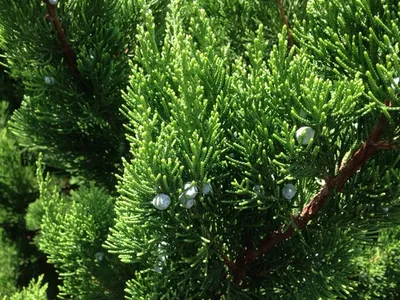
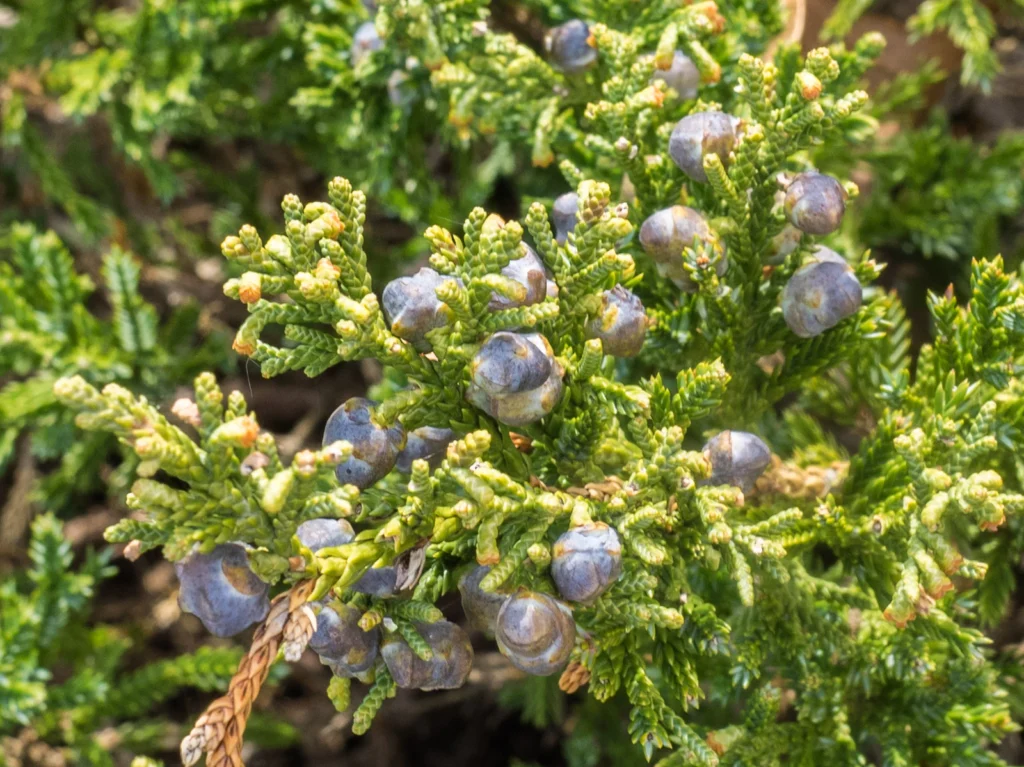
The species is also dioecious, meaning individual plants are typically either male or female. Female plants produce small berry-like cones that appear bluish to dark purple when mature and contain several seeds. These cones take roughly 18 months to fully develop and are often covered in a whitish waxy bloom.
Due to its resilience, ornamental appearance, and adaptability to pruning and shaping, Juniperus chinensis has become one of the most widely cultivated juniper species globally. It is commonly used in landscaping for hedges, groundcovers, and specimen trees, and it holds a particularly important place in the art of bonsai, where cultivars such as Shimpaku are highly prized.
Taxonomic classification of Juniperus chinensis within Cupressaceae
Juniperus chinensis belongs to the genus Juniperus, which is part of the cypress family Cupressaceae. This family contains many well-known conifer species, including cypresses, arborvitae, and other junipers that are widely distributed across the Northern Hemisphere. Members of Cupressaceae are typically evergreen trees or shrubs characterised by scale-like foliage, woody cones, and aromatic resin-rich wood.
Within the genus Juniperus, Juniperus chinensis is classified in the section Sabina, a group of junipers known for their scale-like foliage and berry-like cones. Species in this section often show mixed foliage types, meaning they can produce both juvenile needle-like leaves and mature scale leaves during different stages of growth or under varying environmental conditions.
The taxonomic classification of Juniperus chinensis follows the standard botanical hierarchy used to organise plant species according to shared evolutionary characteristics. This structure helps botanists and horticulturists understand how species relate to one another within the broader conifer lineage.
The genus Juniperus itself contains more than 60 recognised species distributed across Europe, Asia, Africa, and North America. These species vary widely in size and form, ranging from creeping alpine shrubs to large trees. Juniperus chinensis stands out among them due to its exceptional horticultural diversity and the large number of cultivars developed for landscaping and bonsai use.
Understanding the taxonomic placement of Juniperus chinensis provides valuable context for gardeners and bonsai practitioners, as closely related species often share similar growth habits, foliage characteristics, and environmental tolerances.
Botanical description and diagnostic identification features of Juniperus chinensis
Juniperus chinensis is a highly variable evergreen conifer that can grow either as a shrub or a tree depending on environmental conditions and cultivar selection. Native to East Asia, the species has adapted to a wide range of habitats, including rocky slopes, coastal regions, and mountainous terrain. This adaptability is reflected in the plant’s diverse growth forms and foliage characteristics, which have made it one of the most widely cultivated junipers in horticulture.
The botanical structure of Juniperus chinensis displays several distinctive traits that help botanists, gardeners, and bonsai practitioners identify the species. These include its mixed foliage types, berry-like cones, peeling bark, and flexible branching patterns. Although many cultivars differ in appearance, the core diagnostic features remain consistent across the species.
Understanding these identifying characteristics is particularly important for bonsai growers, as Juniperus chinensis is frequently confused with related species or hybrids such as Juniperus × pfitzeriana. Careful observation of foliage structure, cone formation, and bark texture can help distinguish it from similar junipers.
Foliage structure and leaf types
One of the most recognisable features of Juniperus chinensis is its ability to produce two different types of foliage during its life cycle. Young plants typically develop sharp, needle-like leaves known as juvenile foliage. These needles are usually 5–10 millimetres long and arranged in whorls along the shoots.
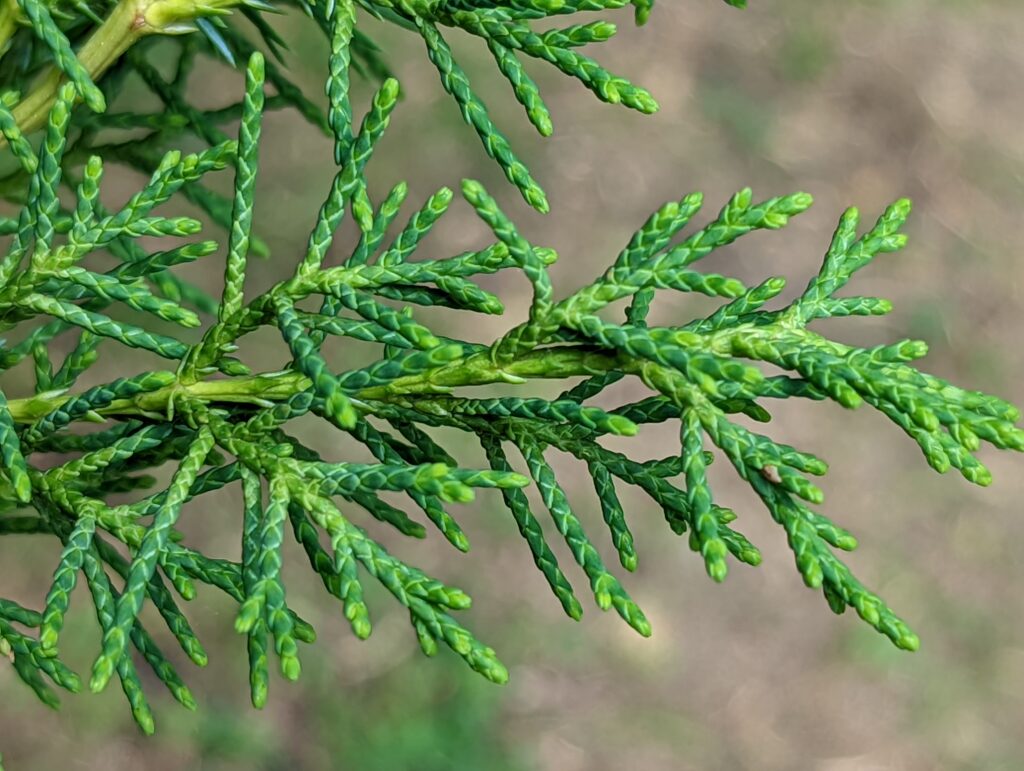
As the plant matures, the foliage transitions to scale-like leaves that form tight sprays along the branches. These adult leaves are much smaller, usually around 1.5–3 millimetres long, and overlap each other to create the dense, textured appearance often associated with mature junipers.
Interestingly, mature specimens of Juniperus chinensis may continue to produce patches of juvenile foliage, especially on shaded or vigorously growing shoots. This mixture of needle and scale foliage can be an important diagnostic feature when identifying the species.
Growth form and branching structure
The growth habit of Juniperus chinensis can vary dramatically depending on the cultivar. In the wild, the species may grow as an upright coniferous tree reaching heights of up to 20 metres, while some cultivated forms develop as compact shrubs or spreading groundcovers.
Branches typically grow in layered, irregular patterns, often forming dense foliage pads. Many cultivars develop twisting or sculptural branch structures, which contribute to their popularity in bonsai design. These branching patterns allow artists to create dramatic silhouettes that resemble ancient windswept trees.
The flexible nature of the branches also allows the species to tolerate heavy wiring and shaping, making Juniperus chinensis particularly suitable for long-term bonsai training.
Bark texture and trunk characteristics
The bark of Juniperus chinensis is another useful identification feature. Mature trees develop grey-brown to reddish-brown bark that peels in thin vertical strips as the plant ages. This peeling bark reveals lighter layers beneath, creating a textured and weathered appearance.
Older trunks often become rugged and fissured, particularly in cultivated bonsai specimens where age is emphasised through styling techniques. The peeling bark contributes to the species’ natural aesthetic, giving trees a mature and ancient look even at relatively young ages.
In bonsai culture, this bark texture is highly prized because it adds visual depth and character to the tree’s overall design.
Cones and reproductive structures
Like most junipers, Juniperus chinensis produces small berry-like cones rather than the woody cones typically associated with many conifers. These fleshy cones are usually bluish-black or violet-brown when mature and are often covered with a pale waxy bloom.
The species is generally dioecious, meaning male and female reproductive structures develop on separate plants. Male plants produce small pollen cones that release pollen in early spring, while female plants develop the berry-like seed cones.
These cones usually take around 18 months to fully mature, eventually containing two to four seeds. Their distinctive colour and waxy coating provide another useful visual cue for identifying Juniperus chinensis in the landscape or garden.
Growth habit, structural variability, and longevity potential
Juniperus chinensis is known for its remarkable structural diversity, which allows the species to thrive in a wide range of landscapes and environments. In its natural habitat, the plant may grow as a tall evergreen tree, while cultivated forms can appear as compact shrubs or spreading groundcovers. This adaptability has made the species extremely popular in horticulture and bonsai culture.
The growth habit of Juniperus chinensis is influenced by factors such as climate, soil conditions, pruning practices, and the specific cultivar being grown. Some varieties develop upright, pyramidal forms, while others display twisting trunks, cascading branches, or low horizontal growth patterns.
This structural variability is one of the key reasons why Juniperus chinensis is so highly valued among bonsai artists and landscape designers. Its flexible growth habits allow growers to shape the plant into a wide range of artistic or architectural forms while still maintaining the rugged appearance typical of mature junipers.
Natural tree and shrub forms
In the wild, Juniperus chinensis typically grows as a coniferous evergreen tree with a broadly conical or irregular crown. Mature trees can reach heights of up to 20 metres under favourable conditions, developing sturdy trunks and layered branching structures.
However, many cultivated varieties grow as multi-stemmed shrubs rather than single-trunk trees. These shrub forms often develop dense foliage and compact structures, making them useful for hedges, foundation plantings, and windbreaks.
Because the species is naturally adaptable, even the same cultivar may exhibit slightly different growth habits depending on climate and growing conditions.
Structural variation among cultivars
One of the most fascinating aspects of Juniperus chinensis is the large number of cultivars developed from the species. More than one hundred named varieties exist, each selected for specific growth habits, foliage colour, or structural characteristics.
Some cultivars develop tall, narrow forms that are ideal for privacy screens or vertical accents in landscape design. Others grow as spreading shrubs with arching branches that create layered groundcover. A few cultivars are known for their twisted or spiral branching patterns, which give them a sculptural appearance.
These structural variations make Juniperus chinensis one of the most versatile juniper species available to gardeners and bonsai growers.
Longevity and resilience
Another defining feature of Juniperus chinensis is its impressive lifespan. In favourable conditions, the species can live for many decades, and some specimens cultivated for bonsai are known to be several centuries old.
This longevity is supported by the plant’s natural resilience. Juniperus chinensis tolerates drought, poor soils, strong winds, and coastal conditions better than many other ornamental conifers. Its hardy nature allows it to survive in challenging environments where other plants may struggle.
For bonsai enthusiasts, this durability is especially important because it allows trees to be shaped, wired, and trained over many years without compromising the plant’s long-term health.
Adaptability to cultivation and bonsai training
The growth characteristics of Juniperus chinensis make it exceptionally well suited to cultivation and artistic training. Its branches are flexible when young, allowing growers to wire them into dramatic shapes that mimic ancient trees found in nature.
Over time, the trunk and branches thicken and develop rugged bark textures, giving the tree a mature appearance even in relatively small bonsai specimens. This gradual transformation is one of the reasons the species has become a cornerstone of traditional bonsai practice.
Because of its structural flexibility, longevity, and tolerance for pruning, Juniperus chinensis remains one of the most reliable species for both landscape planting and long-term bonsai cultivation.
Foliage structure, juvenile needle leaves, and mature scale foliage
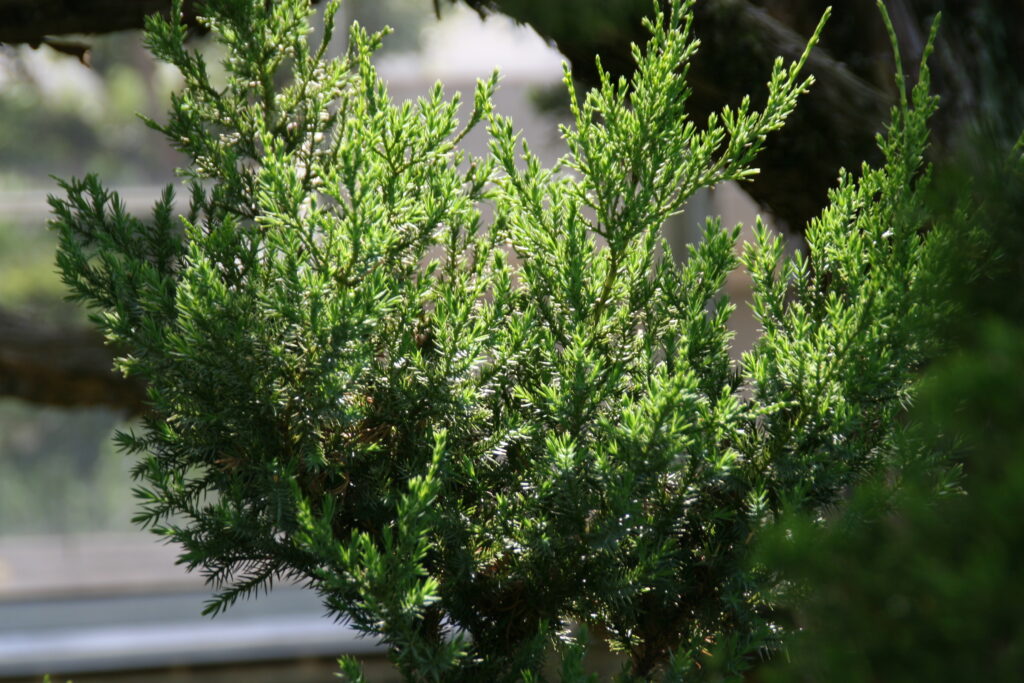
The foliage of Juniperus chinensis is one of the most distinctive features used to identify the species. Like many junipers, it produces two different types of leaves during its life cycle: juvenile needle-like foliage and mature scale-like foliage. The presence of these two leaf forms gives the plant a varied texture and plays an important role in both botanical identification and bonsai aesthetics.
This dual foliage system allows Juniperus chinensis to adapt to different stages of growth and environmental conditions. Young plants typically begin with needle-like leaves, while mature specimens gradually develop scale foliage that forms dense sprays along the branches. Interestingly, mature trees often retain patches of juvenile foliage under certain conditions.
For bonsai growers and horticulturists, understanding how these foliage types develop is essential for maintaining healthy growth and achieving the desired appearance when shaping the tree.
Juvenile needle foliage
Juvenile foliage in Juniperus chinensis consists of sharp, needle-like leaves that grow in whorls around the stem. These needles are typically between 5 and 10 millimetres long and have a pointed, awl-shaped structure that gives young shoots a spiky texture.
This type of foliage is most common in seedlings and young plants that have not yet transitioned to their mature growth stage. In bonsai cultivation, juvenile foliage may also appear after heavy pruning or when the plant produces strong new shoots.
Although some growers prefer the softer appearance of scale foliage, the needle form plays an important role in early plant development and regeneration.
Mature scale foliage
As Juniperus chinensis matures, its foliage typically transitions to scale-like leaves. These tiny overlapping scales are much smaller than the juvenile needles, usually measuring around 1.5 to 3 millimetres in length.
Scale foliage forms dense sprays along the branches, creating the layered pads commonly seen in mature juniper trees and bonsai specimens. This foliage structure gives the plant its characteristic textured appearance and contributes to the refined look valued in bonsai design.
Many cultivated forms of Juniperus chinensis, especially the famous Shimpaku varieties, are prized for their fine, compact scale foliage that allows for detailed shaping and styling.
Mixed foliage patterns
One interesting trait of Juniperus chinensis is that mature plants may display both foliage types simultaneously. Juvenile needles can appear on vigorous shoots, shaded areas of the canopy, or after significant pruning.
This mixed foliage pattern is normal and does not necessarily indicate a problem with the plant. In fact, many mature specimens naturally maintain a combination of needle and scale leaves throughout their lifespan.
For bonsai growers, managing foliage type can become part of the training process. Careful pruning techniques, balanced fertilisation, and controlled growth conditions often encourage the plant to produce more mature scale foliage over time.
Foliage colour and seasonal variation
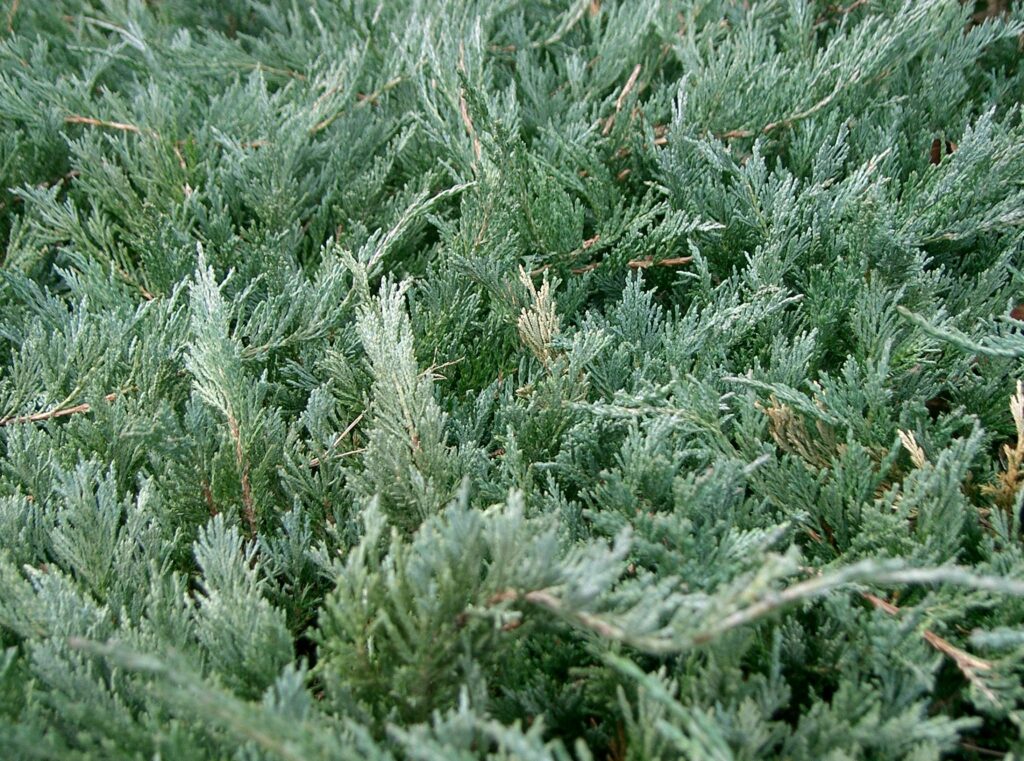
The colour of Juniperus chinensis foliage varies depending on cultivar, climate, and growing conditions. Many forms display rich green or bluish-green tones during the growing season, while some cultivars feature golden or yellow-tinted foliage.
In colder climates, the foliage may develop slightly darker or bronze hues during winter as part of the plant’s natural seasonal response. This colour shift helps protect the foliage from cold stress and environmental exposure.
Because of these subtle seasonal variations and the contrast between juvenile and mature leaves, the foliage of Juniperus chinensis remains one of the most visually appealing and botanically interesting features of the species.
Reproductive biology, dioecious traits, and berry-like cone development
The reproductive system of Juniperus chinensis follows the typical pattern found in many species within the genus Juniperus. Unlike flowering plants that produce true fruits, this conifer reproduces through seed-bearing cones. These cones develop differently depending on whether the plant is male or female, as the species is primarily dioecious, meaning individual plants usually produce only male or female reproductive structures.
This separation of reproductive roles helps encourage cross-pollination between plants, which increases genetic diversity within natural populations. In cultivated environments such as gardens and bonsai collections, the presence of both male and female plants is required for viable seed production.
Understanding the reproductive biology of Juniperus chinensis is important for botanists, horticulturists, and bonsai growers alike. It explains how the species spreads naturally and why some trees produce the distinctive berry-like cones while others do not.
Dioecious reproductive system
Most individuals of Juniperus chinensis are either male or female. Male plants produce small pollen cones that release pollen into the air during the early spring months. This pollen is carried by the wind to nearby female plants, where fertilisation can occur.
Female plants develop seed cones that gradually mature into fleshy, berry-like structures. While the species is generally dioecious, some individual trees may occasionally produce both male and female cones, although this is less common.
Because pollen is wind-dispersed, successful fertilisation typically depends on having both sexes growing within reasonable proximity to each other in the landscape.
Male cones and pollen release
The male reproductive structures of Juniperus chinensis are small pollen cones that usually measure around 2 to 4 millimetres in length. These cones appear at the tips of short branchlets and are often yellowish or light brown when mature.
In early spring, the cones release large quantities of fine pollen into the air. This pollen dispersal occurs over a relatively short period and is carried by wind currents to nearby female plants.
After releasing their pollen, the male cones dry out and eventually fall from the branches, completing their reproductive role for the season.
Development of berry-like seed cones
Female plants of Juniperus chinensis produce seed cones that resemble small berries rather than the woody cones typically associated with many conifers. These fleshy cones begin as small green structures and gradually mature over time.
As they develop, the cones become bluish-black or violet-brown in colour and are usually coated with a pale waxy bloom that gives them a slightly frosted appearance. Each cone typically measures around 7 to 12 millimetres in diameter.
Inside the cone are usually two to four seeds, which are protected by the fleshy outer layer until they mature.
Cone maturation and seed dispersal
The seed cones of Juniperus chinensis take approximately 18 months to fully mature after fertilisation. This relatively long development period is common among many juniper species.
Once mature, the berry-like cones may remain on the plant for some time before eventually falling to the ground or being eaten by birds and wildlife. Birds are particularly important for seed dispersal, as they consume the cones and later spread the seeds through their droppings.
This natural dispersal process allows Juniperus chinensis to colonise new environments and maintain healthy populations across its native range.
Native distribution in East Asia and ecological adaptations
Juniperus chinensis is native to a broad region of East Asia, where it has adapted to a variety of climates and landscapes. Its natural range includes China, Japan, Korea, Mongolia, Myanmar, and parts of the Russian Far East. Across this region, the species can be found growing in mountainous areas, coastal environments, rocky slopes, and open woodland habitats.
This wide distribution has contributed to the remarkable adaptability of Juniperus chinensis. Over time, the species has evolved traits that allow it to survive in environments that experience strong winds, poor soils, and seasonal drought conditions. These survival characteristics are one of the reasons the species has become so successful in horticulture and landscaping around the world.
Understanding the native environment of Juniperus chinensis provides valuable insight into how the plant should be cultivated and maintained. Many of the conditions that support its natural growth also influence how well it performs in gardens, landscapes, and bonsai cultivation.
Geographic range and natural habitats
In its native range, Juniperus chinensis grows across a wide variety of habitats. It can be found in mountainous forests, on rocky hillsides, along coastal cliffs, and even in dry, exposed terrain where few other trees are able to establish themselves.
The species often thrives in well-drained soils that are sandy, rocky, or gravelly. These environments typically prevent water from accumulating around the roots, which is important for junipers because they are sensitive to prolonged soil moisture.
Because of its ability to grow in harsh environments, Juniperus chinensis is often one of the more resilient conifers found in these landscapes.
Adaptation to climate and environmental stress
One of the key ecological strengths of Juniperus chinensis is its tolerance for a wide range of climatic conditions. The species is capable of surviving both cold winters and hot summers, making it well suited to temperate and subtropical regions.
The foliage and branching structure help reduce moisture loss, which allows the plant to tolerate drought conditions more effectively than many other evergreen species. Its roots are also well adapted to stabilise the plant in rocky or uneven soils.
These adaptations allow Juniperus chinensis to grow in areas where soil fertility is low and environmental conditions can be challenging.
Coastal and mountainous resilience
In several parts of its native range, Juniperus chinensis grows in coastal environments where plants must tolerate strong winds, salt spray, and sandy soils. The species has developed a hardy structure that allows it to withstand these harsh conditions.
Similarly, in mountainous regions, the plant often grows in exposed areas where wind and temperature fluctuations are common. Its dense branching structure and flexible stems help it resist damage from these environmental stresses.
These natural adaptations are one of the reasons the species performs well in coastal gardens and windy landscapes when cultivated outside its native range.
Influence on horticulture and bonsai cultivation
The ecological resilience of Juniperus chinensis directly influences how the species behaves in cultivation. Its tolerance for drought, poor soils, and environmental stress makes it a reliable plant for landscaping and bonsai training.
In bonsai culture, the species’ natural ability to survive in rugged terrain contributes to its suitability for dramatic styling. Twisting trunks, weathered bark, and irregular branching patterns seen in nature are often replicated in bonsai designs.
By understanding the natural distribution and ecological adaptations of Juniperus chinensis, growers can better replicate the conditions that allow the species to thrive both in landscapes and in bonsai collections.
Cultivars and infraspecific variation, including Shimpaku and Itoigawa
One of the most remarkable aspects of Juniperus chinensis is the extraordinary number of cultivars developed from the species. Over time, horticulturists and plant breeders have selected specific forms based on growth habit, foliage colour, branch structure, and resilience. As a result, Juniperus chinensis displays significant infraspecific variation, ranging from compact shrubs and groundcovers to upright trees with dramatic sculptural forms.
Many of these cultivars have become highly valued in landscaping and horticulture, while others have gained special recognition in the world of bonsai. The species’ natural flexibility, tolerance of pruning, and ability to develop aged-looking bark make it ideal for long-term cultivation and artistic training.
Among bonsai practitioners, the Shimpaku forms of Juniperus chinensis are particularly prized. These varieties are known for their fine foliage, compact growth, and the ability to produce intricate branch structures that suit traditional bonsai styling techniques. Within this group, certain cultivars have become legendary among collectors and artists.
Some of the most notable cultivars and forms include:
- Shimpaku – A highly valued bonsai form known for its soft, fine-textured scale foliage and excellent branch ramification.
- Itoigawa – Considered one of the finest Shimpaku variants, prized for its extremely tight foliage and superior bonsai characteristics.
- Blue Point – A dense, pyramidal cultivar with bluish-green foliage commonly used for hedges and vertical landscape accents.
- Torulosa (Hollywood Juniper) – Recognised for its dramatic twisting branches and upright habit, often used as a sculptural specimen tree.
- Sea Green – A spreading shrub form with graceful arching branches and vibrant green foliage.
- Sargentii – A low-growing groundcover cultivar valued for erosion control and dense spreading growth.
- Kaizuka – A spiral-branching cultivar with distinctive architectural form used in ornamental landscapes.
- Grey Owl – A broad, spreading cultivar with soft grey-green foliage and strong adaptability.
In addition to these cultivated forms, Juniperus chinensis has also been hybridised with other juniper species. One of the most well-known hybrids is Juniperus × pfitzeriana, created by crossing Juniperus chinensis with Juniperus sabina. These hybrids are widely used in landscaping due to their vigorous growth and shrub-like habit.
The diversity of cultivars within Juniperus chinensis highlights the species’ genetic flexibility and horticultural value. Whether used in large-scale landscape design or refined bonsai artistry, these cultivated forms demonstrate the wide range of possibilities that have emerged from this single, highly adaptable species.
Juniperus chinensis in horticulture, landscape design, and bonsai culture
Juniperus chinensis has become one of the most widely cultivated juniper species in the world due to its durability, structural versatility, and ornamental value. Its ability to thrive in a wide range of climates and soil conditions makes it a reliable choice for gardens, parks, and urban landscapes. From formal hedges and specimen trees to low-growing groundcovers, the species has proven adaptable to many different design purposes.
In landscape architecture, Juniperus chinensis is valued for its year-round evergreen presence and its tolerance for environmental stress. The species can withstand drought, wind exposure, coastal conditions, and even moderate air pollution. Because of these traits, it is frequently planted in city parks, roadside plantings, and large public landscapes where resilience is essential.
The species is also highly valued for its aesthetic qualities. Its varied growth forms, textured foliage, and naturally sculptural branching patterns allow landscape designers to create visual interest throughout the year. Upright cultivars can serve as architectural focal points, while spreading varieties are often used for erosion control, slope stabilisation, and groundcover.
Perhaps the most celebrated role of Juniperus chinensis is in the traditional art of bonsai. The species has become one of the defining trees used in Japanese bonsai culture, particularly through cultivars such as Shimpaku and Itoigawa. These forms are prized for their fine scale foliage, flexible branches, and ability to develop aged bark and dramatic deadwood features over time.
Because Juniperus chinensis tolerates heavy pruning, wiring, and long-term cultivation, it allows bonsai artists to shape trees into intricate designs that evoke ancient trees found in nature. Some bonsai specimens of this species have been cultivated and refined for well over a century, demonstrating the plant’s extraordinary longevity and artistic potential.
From wild mountain slopes in East Asia to carefully styled bonsai displayed in gardens and museums around the world, Juniperus chinensis continues to stand as one of the most important and versatile species within the juniper genus.