
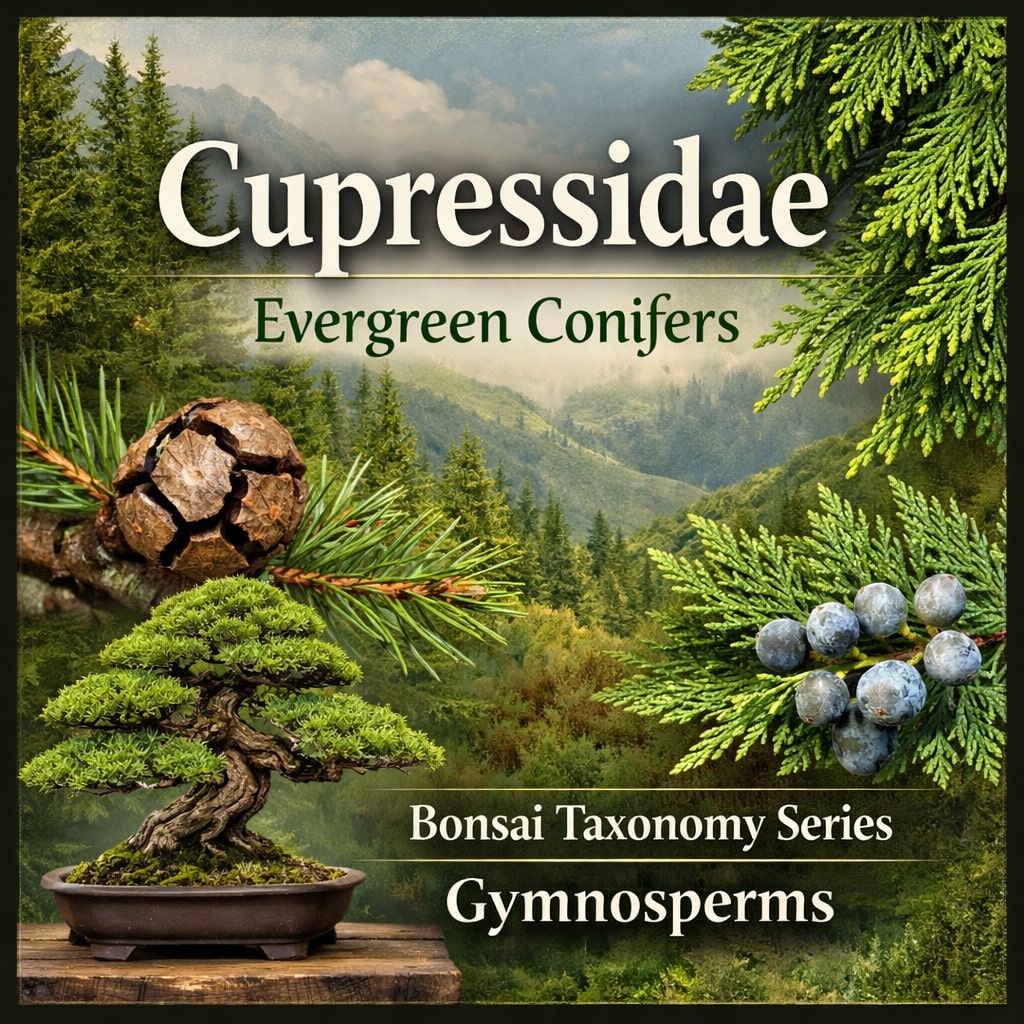
Cupressidae is a major subclass within the living conifers, representing a group of trees and shrubs that dominate evergreen landscapes across the world. Commonly referred to as the evergreen conifers, Cupressidae includes many of the most recognisable and widely cultivated conifer families, from junipers and cypresses to araucarias and yews. These plants are valued not only for their year-round foliage, but also for their resilience, longevity, and structural beauty.
Within the broader class Pinopsida, Cupressidae forms a distinct lineage defined by shared growth traits, reproductive structures, and evolutionary history. While conifers as a whole are ancient, Cupressidae represents a refined branch that has successfully adapted to a wide range of climates and ecological roles. This adaptability is one reason why Cupressidae species are so important in forestry, landscaping, and bonsai.
Understanding Cupressidae helps clarify how evergreen conifers are related, how they differ from other gymnosperms, and why they behave the way they do in cultivation. For bonsai enthusiasts, this knowledge provides a strong foundation for better care, styling decisions, and long-term tree health.
Table of Contents
Taxonomy
– Kingdom: Plantae (Plant Kingdom)
— Clade: Embryophytes (Land Plants)
— Clade: Polysporangiophytes (Multiple Sporangia)
—- Clade: Tracheophytes (Vascular Plants)
—– Superdivision: Spermatophytes (Seed Plants)
—— Clade: Gymnospermae (Naked Seeds)
——- Division: Pinophyta (Conifers)
——– Class: Pinopsida (Living Conifers)
——— Subclass: Cupressidae (Evergreen Conifers)
What is Cupressidae?
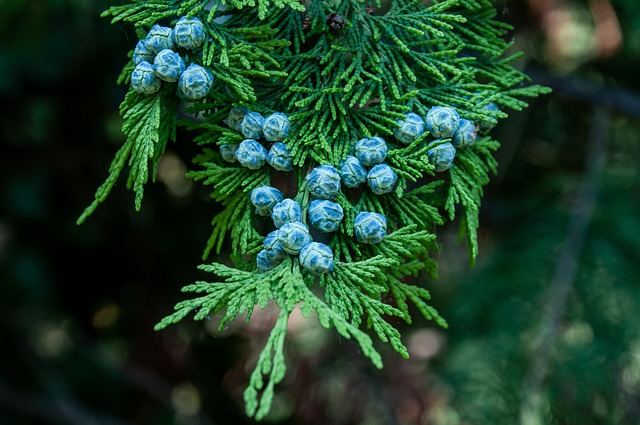
Cupressidae is a subclass of conifers within the class Pinopsida, grouping together a major portion of the world’s evergreen conifers. In botanical terms, Cupressidae brings together conifer lineages that share closer evolutionary relationships, similar reproductive structures, and comparable growth habits. It is a way for botanists to organise and better understand how certain conifers are related beyond the broader “conifer” label.
Originally, Cupressidae was proposed to include only the order Cupressales. However, modern phylogenetic research has refined this view. A major study published in 2022 expanded Cupressidae to include two conifer orders: Araucariales and Cupressales. This update reflects advances in genetic analysis, which showed that these groups form a natural evolutionary unit within the living conifers.
In practical terms, Cupressidae represents a large and important branch of conifer diversity. It includes families that are instantly familiar to gardeners and bonsai growers, such as Cupressaceae, Taxaceae, Araucariaceae, and Podocarpaceae. By grouping these families together, Cupressidae helps explain why many evergreen conifers share similar responses to pruning, wiring, environmental stress, and long-term cultivation.
Understanding what Cupressidae is allows growers to move beyond individual species and see broader patterns. Instead of treating each tree as an isolated case, Cupressidae provides a framework for understanding shared traits across evergreen conifers, making it easier to predict behaviour, plan care, and appreciate their place within conifer evolution.
Key Elements of Cupressidae
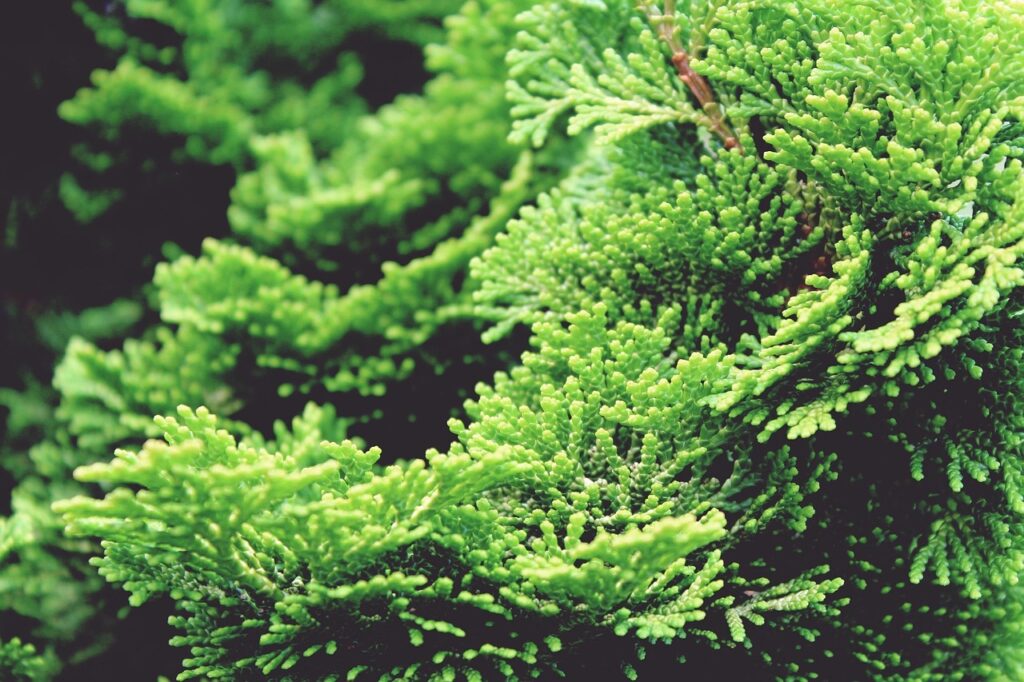
Cupressidae represents a major evolutionary and structural grouping within the living conifers. While individual species may look very different at first glance, the evergreen conifers grouped under Cupressidae share a set of core traits that link their growth behaviour, reproduction, and long-term survival strategies. Understanding these key elements makes it easier to recognise patterns across families and apply that knowledge in cultivation and bonsai.
Evergreen growth habit
One of the defining elements of Cupressidae is an evergreen growth habit. Most members retain their foliage year-round, allowing them to photosynthesise whenever conditions permit. This trait gives evergreen conifers a competitive advantage in environments with short growing seasons or poor soils, and it strongly influences how Cupressidae species respond to pruning and seasonal care.
Cone-based reproduction
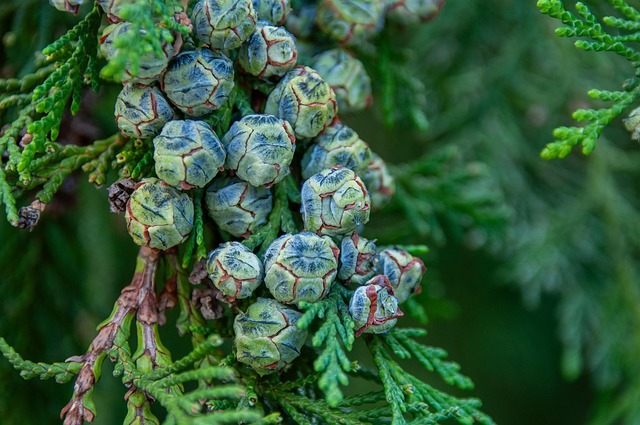
Cupressidae reproduce through cones rather than flowers. These cones may be woody, leathery, or fleshy, depending on the family, but they all serve the same function of protecting and dispersing seeds. The structure and timing of cone development are key unifying features of Cupressidae and help distinguish evergreen conifers from other gymnosperms.
Resin production and wood structure
Resin production is common across Cupressidae and plays an important role in defence against pests, disease, and physical damage. The wood of evergreen conifers is typically dense, fibrous, and rich in aromatic compounds, contributing to their durability and resistance to decay. These characteristics are also why many Cupressidae species are valued for timber and long-lived landscape use.
Adaptable branching and foliage forms
Although they share common ancestry, Cupressidae shows remarkable variation in branching patterns and foliage types. Some evergreen conifers have scale-like leaves, while others have needles or flattened leaf structures. This adaptability allows Cupressidae species to thrive in diverse climates and is one of the reasons they are so versatile in bonsai styling.
Long life cycles and slow maturation
Many members of Cupressidae are long-lived and slow to mature. Some species can survive for centuries or even millennia. This longevity reflects stable growth strategies and makes evergreen conifers particularly suited to long-term cultivation disciplines such as bonsai, where patience and gradual refinement are essential.
Evolutionary background of Cupressidae
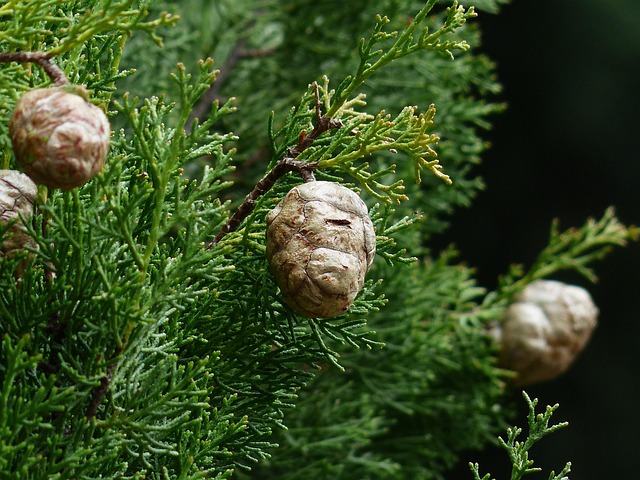
Cupressidae represents one of the most successful evolutionary branches within the living conifers. Its members trace their origins back hundreds of millions of years, surviving multiple mass extinction events and major climate shifts. The evolutionary history of Cupressidae helps explain why evergreen conifers are so resilient, widespread, and structurally diverse today.
Rather than evolving rapidly, Cupressidae developed through gradual adaptation, refining traits that supported long life, efficient reproduction, and survival in challenging environments. This slow, stable evolutionary path is reflected in the growth habits and durability seen across modern Cupressidae species.
Ancient origins in early conifers
The evolutionary roots of Cupressidae lie in early conifer lineages that emerged during the late Paleozoic and early Mesozoic eras. These early conifers developed cone-based reproduction and evergreen foliage, allowing them to thrive in climates that were too harsh or unstable for many flowering plants. These foundational traits remain central to Cupressidae today.
Divergence into Araucariales and Cupressales
Over time, Cupressidae diversified into two major orders: Araucariales and Cupressales. This divergence allowed evergreen conifers to occupy a broader range of ecological niches. Araucariales retained more ancient structural traits and became dominant in certain southern hemisphere regions, while Cupressales evolved greater diversity in leaf form, cone structure, and environmental tolerance.
Survival through climate change and extinction events
Cupressidae has persisted through dramatic global changes, including ice ages, continental drift, and mass extinctions. Evergreen foliage, resilient wood, and flexible reproductive strategies allowed these conifers to survive where many plant groups disappeared. This evolutionary resilience explains why Cupressidae still forms major forest components in many parts of the world.
Genetic refinement and modern classification
Advances in genetic analysis have reshaped how scientists understand Cupressidae. Modern studies confirmed close relationships between Araucariales and Cupressales, leading to their inclusion within the same subclass. This genetic refinement supports the Cupressidae grouping and highlights how evolutionary history continues to inform botanical classification.
Orders and families within Cupressidae
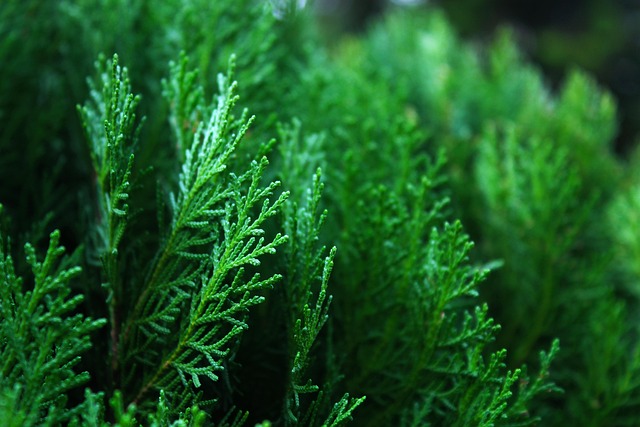
Cupressidae is organised into two main orders that together make up the evergreen conifers. These orders reflect deep evolutionary splits within the subclass, while still sharing core traits that define Cupressidae as a unified group. Understanding how these orders and families are structured helps clarify why certain conifers look, grow, and behave the way they do.
Araucariales
Araucariales represents one of the oldest surviving conifer lineages within Cupressidae. Species in this order tend to have bold, architectural forms, thick branches, and stiff foliage. Many Araucariales species are native to the southern hemisphere and are often considered living relics of ancient forests.
The primary families within Araucariales include Araucariaceae and Podocarpaceae. Araucariaceae contains well-known genera such as Araucaria and Agathis, valued for their striking symmetry and long lifespan. Podocarpaceae includes a wide range of evergreen conifers with softer foliage and diverse growth habits, many of which are adapted to forest understories and mountainous regions.
Cupressales
Cupressales is the most diverse and widely distributed order within Cupressidae. It includes many of the evergreen conifers most familiar to gardeners, landscapers, and bonsai growers. Members of Cupressales show a wide variety of leaf forms, from scale-like foliage to flattened needles, and are adapted to environments ranging from arid regions to temperate forests.
Key families within Cupressales include Cupressaceae, Taxaceae, and Sciadopityaceae. Cupressaceae contains junipers, cypresses, and related genera, many of which are commonly used in bonsai. Taxaceae includes yews, known for their shade tolerance and flexible growth habits. Sciadopityaceae, represented by a single living species, is unique in both structure and evolutionary significance within the evergreen conifers.
Shared traits across orders
Despite their differences, Araucariales and Cupressales share defining characteristics that justify their placement within Cupressidae. These include evergreen foliage, cone-based reproduction, resilient wood structure, and long life cycles. These shared traits highlight how diverse forms can still belong to the same evolutionary framework.
Together, the orders and families within Cupressidae form the structural backbone of the evergreen conifers. Recognising these groupings makes it easier to understand relationships between species and to apply that knowledge in horticulture, forestry, and bonsai cultivation.
How Cupressidae differs from other conifer subclasses
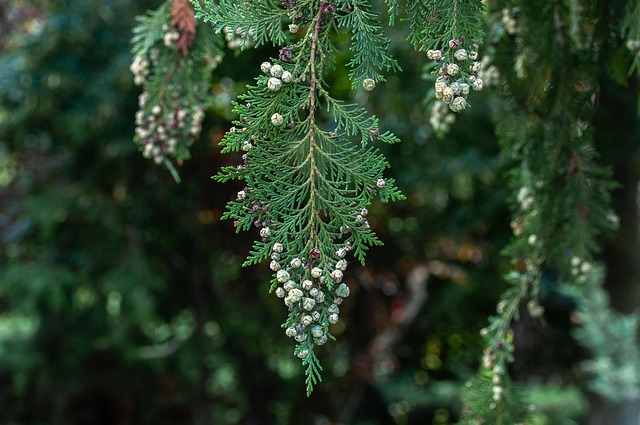
Cupressidae represents a distinct evolutionary branch within the conifers, setting it apart from other conifer subclasses through a combination of structure, reproduction, and growth behaviour. While all conifers share certain traits, Cupressidae shows a unique balance of adaptability, longevity, and diversity that defines the evergreen conifers as a group.
Understanding how Cupressidae differs from other conifer subclasses helps clarify why its members behave differently in cultivation, respond uniquely to environmental conditions, and occupy such a wide range of ecological roles.
Evergreen dominance and foliage retention
One of the most noticeable differences is the strong evergreen tendency within Cupressidae. While some conifer groups include deciduous or semi-deciduous members, Cupressidae is dominated by species that retain their foliage year-round. This evergreen habit allows for extended periods of photosynthesis and contributes to their steady, often slower growth patterns.
Diversity of leaf forms
Cupressidae displays a remarkable range of foliage types compared to other conifer subclasses. Leaves may appear as scales, needles, or flattened structures, sometimes even changing form between juvenile and mature growth. This diversity contrasts with more uniform leaf structures seen in some other conifer lineages and contributes to the adaptability of evergreen conifers across different climates.
Cone structure and seed dispersal
The cones of Cupressidae vary widely in form, from woody and rigid to fleshy and berry-like. This contrasts with other conifer subclasses where cone structures are often more uniform. These differences influence how seeds are dispersed, with some Cupressidae species relying on wind, while others depend on birds or animals, increasing their ecological reach.
Growth rate and longevity
Many Cupressidae species grow slowly and are exceptionally long-lived, with some individuals surviving for hundreds or even thousands of years. While longevity is not unique to Cupressidae, it is especially pronounced within this subclass. This slow, steady growth pattern makes evergreen conifers particularly well-suited to long-term cultivation disciplines such as bonsai.
Adaptability to varied environments
Cupressidae shows a high level of environmental adaptability compared to some other conifer subclasses. Members can thrive in arid, coastal, alpine, and forested environments. This flexibility is a key reason why Cupressidae has such a wide global distribution and why evergreen conifers are so commonly used in landscaping and forestry.
Together, these differences highlight why Cupressidae stands out among conifer subclasses. Its combination of evergreen habit, structural diversity, reproductive flexibility, and resilience defines the evergreen conifers as a uniquely successful and enduring plant group.
Growth behaviour, structure, and reproduction in Cupressidae
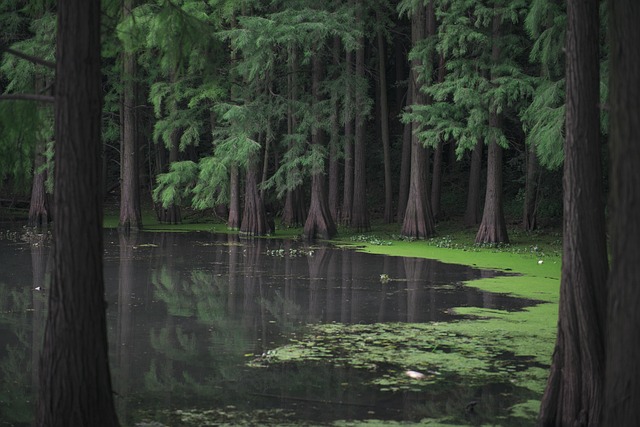
Cupressidae species share a set of growth and structural traits that reflect their long evolutionary history and adaptation to diverse environments. While individual genera may vary in appearance and growth speed, the evergreen conifers within Cupressidae follow similar biological strategies that influence how they develop, reproduce, and respond to cultivation over time.
For growers and bonsai enthusiasts, understanding these patterns is essential. Growth behaviour, internal structure, and reproductive methods all affect pruning responses, styling potential, and long-term health in Cupressidae species.
Growth behaviour and developmental patterns
Cupressidae generally exhibits steady, controlled growth rather than rapid expansion. Many species prioritise structural strength and longevity over speed, resulting in slower internode extension and dense branching. This growth behaviour supports long life spans and resilience but requires patience when cultivating evergreen conifers, especially in bonsai.
Juvenile and mature growth phases are also important within Cupressidae. Some species display juvenile foliage forms that differ significantly from their adult foliage. This transition can affect styling decisions and pruning techniques, as encouraging mature growth is often necessary for refined structure and scale.
Structural characteristics of evergreen conifers
The structure of Cupressidae plants is defined by strong woody tissue, fibrous trunks, and well-developed vascular systems. Resin canals are common and play a protective role against pests, disease, and physical damage. The wood of evergreen conifers is typically resistant to decay, contributing to their longevity and suitability for harsh environments.
Branching patterns vary across Cupressidae, ranging from layered and horizontal to upright and columnar forms. These natural structures influence how different species are used in landscaping and bonsai, with some lending themselves to formal styles and others to more naturalistic designs.
Reproductive strategies and cone development
Reproduction in Cupressidae occurs through cone formation rather than flowers. Male and female cones may be found on the same plant or on separate plants, depending on the species. Cone size, shape, and texture vary widely, from hard woody cones to softer, fleshy structures that resemble berries.
Seed dispersal strategies include wind dispersal and animal-assisted dispersal, particularly by birds. These varied reproductive methods increase the survival and spread of evergreen conifers across different habitats. In cultivation, cone production is often slow to develop, reflecting the long life cycles and gradual maturation typical of this subclass’s species.
Together, the growth behaviour, structure, and reproduction of Cupressidae reveal why evergreen conifers are stable, resilient, and well-suited to long-term cultivation. These traits underpin their success in natural ecosystems and their enduring appeal in horticulture and bonsai.
Ecological roles of evergreen conifers
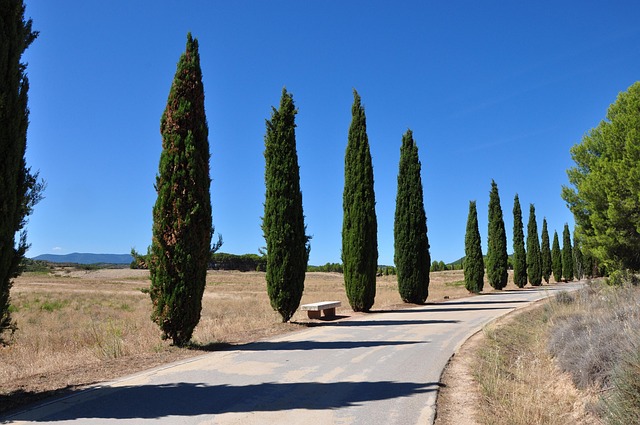
Evergreen conifers play a vital role in many of the world’s ecosystems, often forming the structural and functional backbone of forests and natural landscapes. Within this subclass, these roles reflect a long evolutionary history of adaptation to varied climates, soils, and environmental pressures. The ecological importance of evergreen conifers extends far beyond their visual presence, influencing biodiversity, climate stability, and soil health.
Understanding these ecological roles helps place this subclass in context, showing why these trees have persisted for millions of years and why they remain essential in both natural and managed environments.
Forest structure and habitat formation
Evergreen conifers frequently dominate forest canopies or form dense woodland stands. Their year-round foliage provides continuous shelter for birds, mammals, insects, and other organisms. Many species create stable habitats that support entire ecosystems, particularly in regions where seasonal leaf loss would otherwise reduce cover and food availability.
In mountainous and coastal regions, evergreen conifers often serve as keystone species. Their presence shapes forest composition and influences which plant and animal species can thrive alongside them.
Climate regulation and carbon storage
One of the most important ecological roles of evergreen conifers is their contribution to climate regulation. Through continuous photosynthesis, these trees capture and store carbon over long periods. Their slow growth and long lifespans mean carbon remains locked in woody tissue for centuries.
This subclass’s species are especially effective carbon stores due to their dense wood and resistance to decay. This makes evergreen conifers important contributors to long-term carbon sequestration and climate stability.
Soil stabilisation and water regulation
Evergreen conifers play a crucial role in soil conservation. Their extensive root systems help stabilise soil on slopes, prevent erosion, and reduce the impact of heavy rainfall. In fragile environments, such as alpine regions or coastal zones, this stabilising effect is essential for maintaining landscape integrity.
Their foliage also influences water cycles by intercepting rainfall and regulating water flow into the soil. This helps moderate flooding and supports consistent groundwater replenishment.
Adaptation to harsh environments
Cupressidae species are often found in environments that challenge other plant groups, including poor soils, high altitudes, arid regions, and exposed coastal areas. Evergreen foliage allows them to take advantage of favourable conditions whenever they occur, rather than being limited to short growing seasons.
This adaptability enables evergreen conifers to colonise and stabilise environments that might otherwise remain sparsely vegetated, contributing to ecosystem resilience and recovery.
Support for biodiversity
Evergreen conifers support biodiversity in subtle but significant ways. Their cones, seeds, and foliage provide food sources, while their bark and branches offer nesting and shelter opportunities. Some species have co-evolved with specific animals, forming long-standing ecological relationships.
By maintaining habitat stability year-round, evergreen conifers help ensure continuity in food webs and ecological processes, reinforcing their importance within natural systems.
Together, these ecological roles highlight why evergreen conifers are more than just long-lived trees. Within this subclass, they function as ecological anchors, shaping environments, supporting life, and contributing to the balance of ecosystems across the globe.
Why understanding Cupressidae matters in bonsai
This subclass includes many of the most commonly used and respected conifers in bonsai, making an understanding of this subclass especially important for practitioners. While individual species have their own care requirements, the evergreen conifers grouped under this subclass share fundamental traits that directly influence how they respond to cultivation, styling, and long-term training.
By understanding this subclass as a group, bonsai growers can move beyond trial and error and make informed decisions based on shared biological behaviour rather than isolated species traits.
Predictable responses to pruning and wiring
Many species in this subclass respond similarly to pruning and wiring because of shared growth patterns and wood structure. Evergreen conifers typically do not back-bud as readily on old wood as deciduous trees, meaning pruning must be planned carefully. Understanding this helps prevent excessive cutting that could permanently weaken structure or foliage density.
Wiring responses are also influenced by the fibrous, resin-rich wood common in this subclass. Branches may hold shape well once set but can also become brittle if worked incorrectly. Recognising these shared traits allows for safer, more effective styling techniques.
Long-term development and patience
Cupressidae species are generally slow-growing and long-lived, qualities that align well with the philosophy of bonsai. However, this also means progress can be gradual. Understanding the growth rhythms of evergreen conifers helps set realistic expectations and encourages long-term planning rather than short-term results.
This perspective is especially important when working with young material. Knowing that this subclass’s trees mature slowly helps growers prioritise trunk development and structural refinement before focusing on fine detail.
Species selection and suitability
A clear understanding of this subclass helps bonsai growers choose species that match their climate, skill level, and stylistic goals. While many evergreen conifers are hardy, they vary in tolerance to heat, cold, humidity, and soil conditions. Group-level knowledge allows for better initial selection and fewer losses due to unsuitable choices.
It also helps explain why certain techniques work across multiple species within this subclass, making it easier to transfer skills from one tree to another.
Health, stress management, and longevity
Cupressidae trees tend to be resilient, but they can be slow to show stress. By the time symptoms appear, underlying issues may already be advanced. Understanding the shared physiological traits of evergreen conifers helps growers recognise early warning signs and adjust care accordingly.
This awareness supports healthier trees and longer-lived bonsai. Since this subclass’s species are naturally long-lived, proper care rooted in understanding their biology allows bonsai to develop and endure for decades.
In bonsai, success is built on understanding rather than force. Learning how this subclass functions as a group provides a strong foundation for working with evergreen conifers, leading to better decisions, healthier trees, and more refined results over time.
Cupressidae as the evergreen conifer foundation
Cupressidae forms the structural and evolutionary foundation of what we commonly recognise as evergreen conifers. Within the living conifers, this subclass brings together lineages that share resilience, longevity, and adaptability, traits that have allowed them to persist through vast spans of geological time. From ancient forest giants to refined bonsai specimens, Cupressidae represents continuity, stability, and quiet strength.
Understanding this subclass provides more than taxonomic clarity. It offers insight into how evergreen conifers grow, reproduce, and interact with their environment. This perspective helps explain why these trees respond in consistent ways to pruning, climate, and long-term cultivation, and why they play such important ecological and horticultural roles.
For bonsai practitioners, recognising this subclass as a unified foundation encourages patience and respect for natural growth patterns. It shifts focus from forcing results to working in harmony with the tree’s biology. Whether viewed in forests, gardens, or bonsai pots, this subclass stands as the enduring backbone of evergreen conifers, grounding both scientific understanding and practical cultivation in a single, coherent framework.