

Spring has arrived in South Africa, bringing warmer temperatures, fresh growth and plenty of activity to our bonsai collections. As new shoots appear and branches begin extending, many bonsai enthusiasts start thinking about shaping their trees for the growing season ahead. That raises an important question: is spring a good time to wire your bonsai?
The answer is yes — but with caution.
Spring can be an excellent opportunity to position branches and begin developing the structure of a bonsai. However, it is also one of the fastest-growing periods of the year for many species. Branches can thicken surprisingly quickly, meaning wire that was perfectly positioned when applied could begin cutting into the bark only a few weeks later.
Successful spring wiring therefore isn’t simply about knowing how to apply bonsai wire. You also need to know your tree, understand its growth habits and keep a close eye on it throughout the season.
Why Wire a Bonsai in Spring?

Wiring allows us to guide branches into positions that would be difficult to achieve through pruning alone. By carefully wrapping aluminium or copper wire around a branch, we can gradually change its angle, direction and overall position within the design.
Spring presents several advantages.
Many trees become more flexible as active growth begins, particularly younger branches. New growth also provides opportunities to determine the future direction of developing branches before they become thick and difficult to manipulate.
For bonsai still undergoing structural development, spring can therefore be a productive time to assess the tree after winter and decide which branches need repositioning.
However, timing varies significantly between species. Deciduous trees, conifers and subtropical bonsai don’t necessarily follow identical growth patterns, which is why you should never treat spring as a universal wiring deadline.
The Biggest Spring Wiring Risk: Wire Bite
The greatest danger when wiring during spring is rapid branch thickening.
As temperatures increase and trees enter active growth, branches expand. The wire wrapped around them doesn’t expand with them.
Eventually, the bark begins pressing against the wire. If it remains in place for too long, the wire starts cutting into the branch and creates the familiar spiral scars known as wire bite.
Minor impressions may disappear as the tree develops, but severe wire damage can remain visible for years. On smooth-barked species, these scars can be particularly noticeable.
This doesn’t mean you shouldn’t wire during spring. It means you cannot wire a bonsai and then forget about it.
Check Your Bonsai Frequently
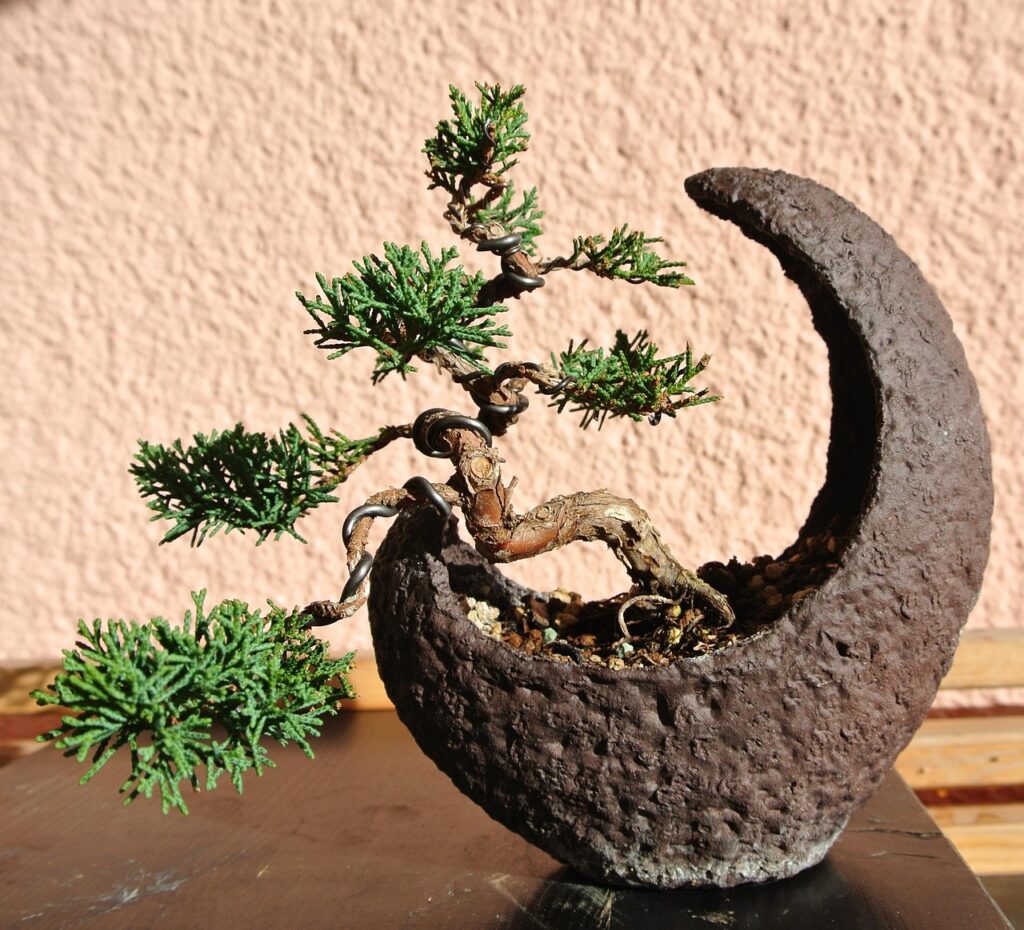
A tree wired during winter may sometimes remain wired for months, depending on the species and circumstances. During vigorous spring growth, things can change much faster.
Get into the habit of inspecting wired branches regularly.
For rapidly developing trees, checking the wire every week or two is sensible. Look particularly closely at areas where branches are swelling or where the wire passes around bends.
Watch for:
- wire beginning to press noticeably into the bark;
- swelling developing around sections of wire;
- rapid thickening of young branches;
- bark changing colour around contact points;
- branches that appear to have set into their new position.
If the wire starts biting, remove it.
Don’t wait because you want the branch to hold its position perfectly. You can always rewire the branch later if necessary. Repairing years of visible scarring is considerably more difficult.
Don’t Unwind Bonsai Wire
When the time comes to remove your wire, resist the temptation to unwind it.
Trying to reverse the original wrapping process can damage bark, buds and delicate branches. It can also place unnecessary pressure on the branch you’ve spent weeks positioning.
Instead, use proper bonsai wire cutters and cut the wire away section by section.
Yes, this means sacrificing the wire rather than reusing it. Your bonsai is worth considerably more than a piece of aluminium wire.
Be Careful Around New Growth
Spring also means buds, young leaves and tender shoots.
These can be surprisingly easy to damage while wiring. When wrapping wire around a branch, work slowly and make sure you aren’t trapping buds beneath the wire or accidentally knocking new shoots from the tree.
Young branches may be flexible, but they’re also easier to snap.
Support the branch with your fingers while bending it and make gradual adjustments rather than attempting one dramatic bend. If you feel significant resistance, stop and reconsider the movement.
Bonsai styling rewards patience far more often than force.
Should You Wire Every Bonsai This Spring?
Definitely not.
Some trees may need wiring, while others would benefit more from simply being allowed to grow.
If you’ve recently repotted a bonsai, performed major root work or carried out significant pruning, consider whether adding another stressful procedure is necessary. A tree recovering from substantial work may benefit from being left alone while it regains strength.
Likewise, don’t wire simply because spring has arrived.
Ask yourself whether the branch actually needs repositioning. Bonsai development is about purposeful intervention rather than constantly doing something to the tree.
Spring Is a Great Time to Plan Your Bonsai’s Future
Spring gives us an opportunity to see our bonsai collections waking up and imagine how they might develop during the months ahead.
Wiring can certainly form part of that process.
Used carefully, it allows you to improve branch placement, establish structure and guide new growth towards your intended design. The important difference during spring is that your bonsai may be changing much faster than the wire around it.
Wire carefully, avoid damaging new growth and inspect your tree regularly. The moment you notice the wire beginning to bite into the bark, cut it away.
Spring bonsai work isn’t about forcing a tree into shape as quickly as possible.
It’s about gently guiding all that new growth in the right direction. 🌱