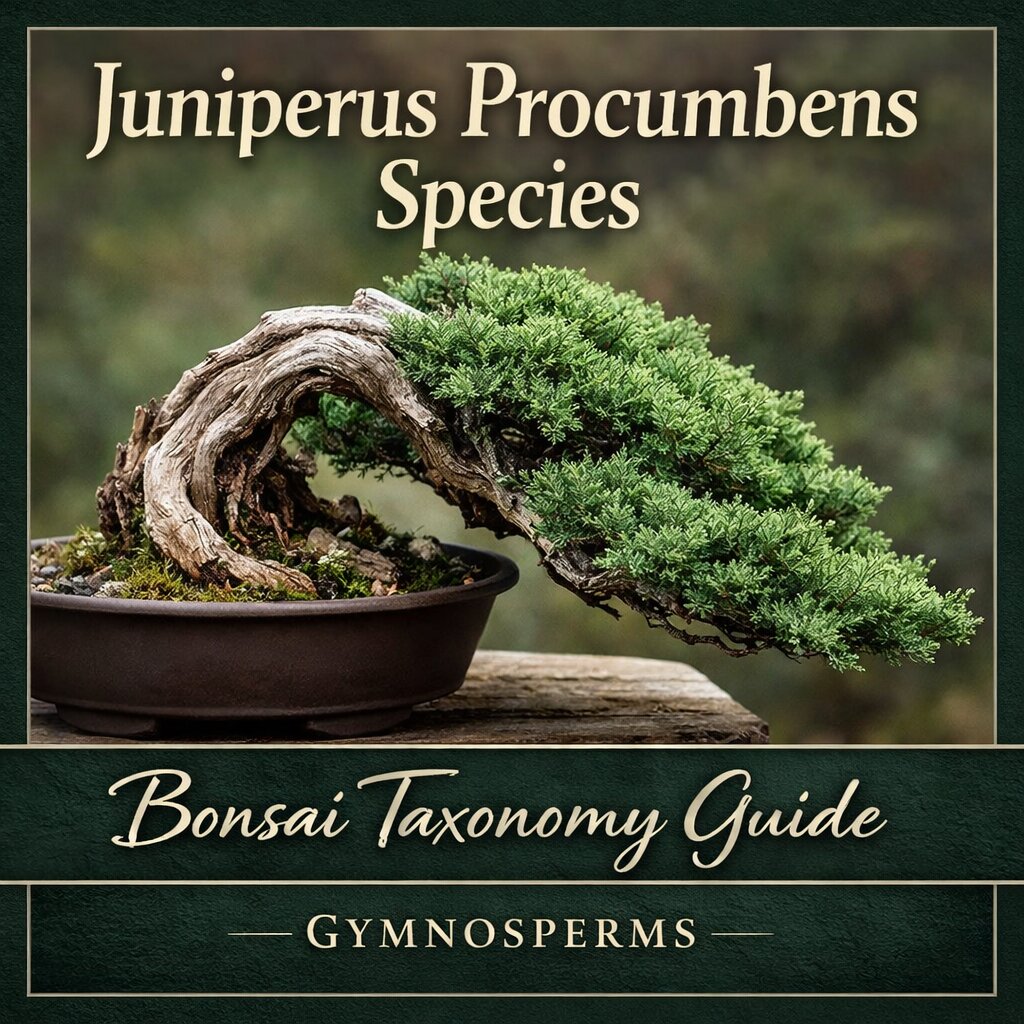
Juniperus procumbens, also known as the Garden Juniper, is one of the most recognisable and widely cultivated juniper species in the world, particularly within bonsai culture. Known for its low-growing, mat-forming structure and hardy evergreen foliage, this Japanese native has become a staple in gardens, rock landscapes, and training pots across multiple climates.
Despite its popularity, Juniperus procumbens is often misunderstood taxonomically. It is sometimes confused with Juniperus chinensis, mislabelled in horticultural trade, or grouped loosely with other creeping junipers. A proper species-level understanding is essential for accurate identification, cultivation, and bonsai styling decisions.
In this taxonomy guide, we examine Juniperus procumbens from a botanical and ecological perspective. We will explore its classification within Cupressaceae, diagnostic morphological features, natural distribution, reproductive biology, cultivar variations, and its long-standing role in horticulture and bonsai design.
Whether you are studying juniper taxonomy, refining your bonsai knowledge, or identifying groundcover species in a landscape setting, this guide provides a structured, species-focused breakdown of Juniperus procumbens.
Table of Contents
Taxonomy
– Kingdom: Plantae (Plant Kingdom)
— Clade: Embryophytes (Land Plants)
— Clade: Polysporangiophytes (Multiple Sporangia)
—- Clade: Tracheophytes (Vascular Plants)
—– Superdivision: Spermatophytes (Seed Plants)
—— Clade: Gymnospermae (Naked Seeds)
——- Division: Pinophyta (Conifers)
——– Class: Pinopsida (Living Conifers)
——— Subclass: Cupressidae (Evergreen Conifers)
———- Order: Cupressales (Cypress)
———– Family: Cupressaceae (Cypress)
———— Subfamily: Cupressoideae (Cypress)
————- Genus: Juniperus (Juniper)
————– Section: Sabina (Scale-Leaf Junipers)
————— Species: Juniperus procumbens (Garden Juniper)
What is Juniperus procumbens?
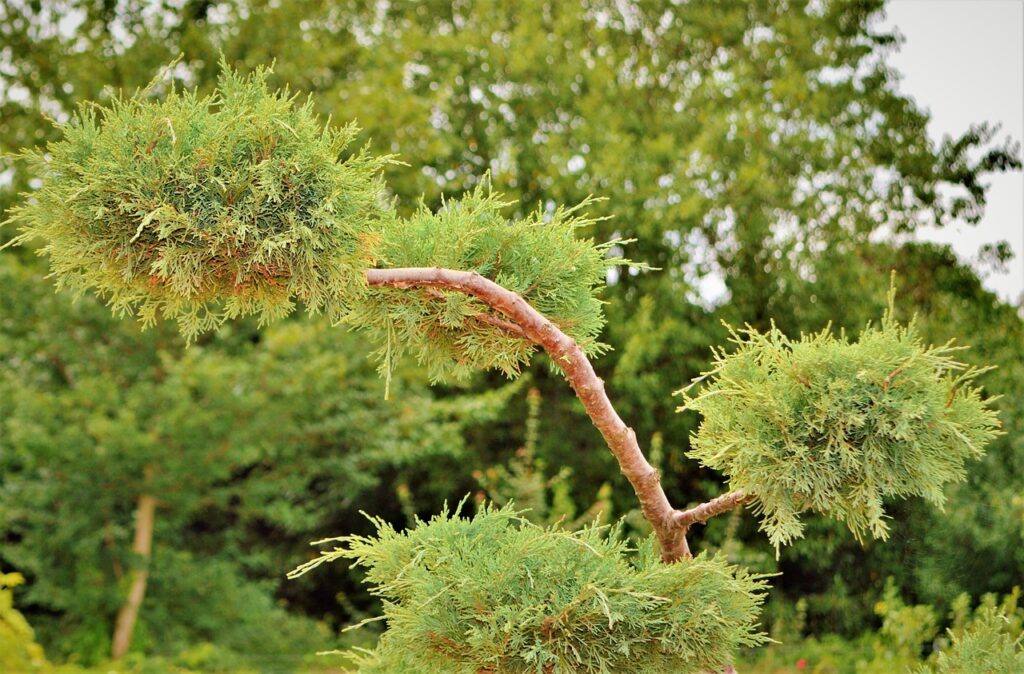
Juniperus procumbens is a low-growing, evergreen conifer native to Japan, widely recognised for its dense, prostrate growth habit and exceptional suitability for bonsai cultivation. Commonly known as the Japanese garden juniper, this species forms spreading mats of interwoven branches that hug the ground rather than rising vertically like many other junipers.
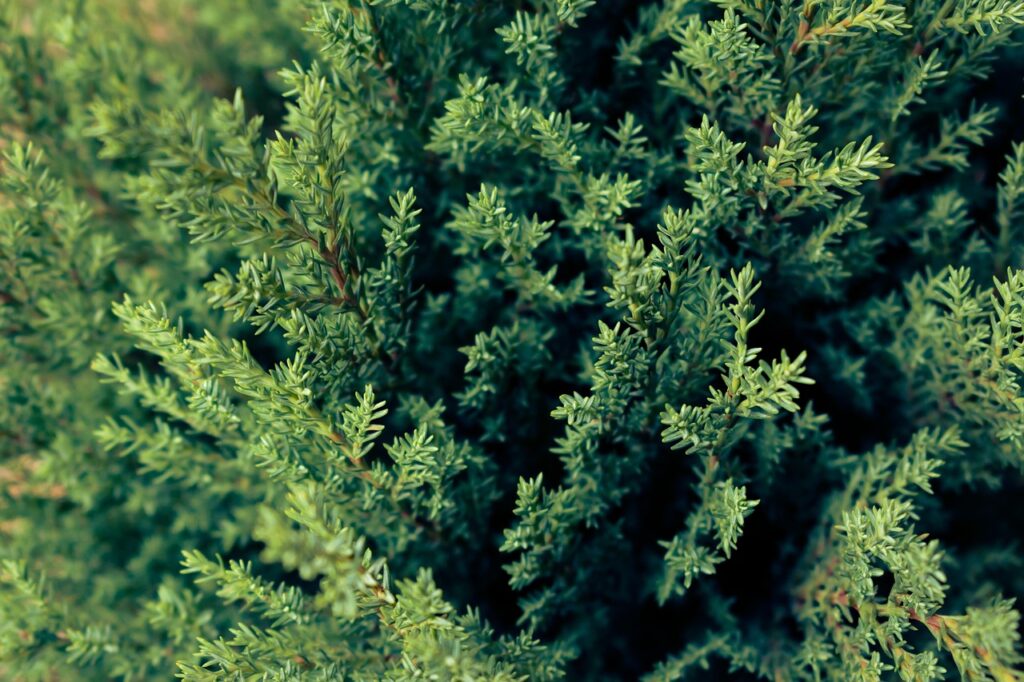
Within the genus Juniperus, Juniperus procumbens is distinctive for retaining its juvenile needle-like foliage throughout its life. Unlike species that transition to scale foliage with maturity, this species maintains sharp, awl-shaped leaves arranged in whorls of three. This consistent foliage form is one of its most useful diagnostic features in both landscape and bonsai identification.
Taxonomically, Juniperus procumbens belongs to the cypress family Cupressaceae and is closely related to Juniperus chinensis. Some botanical authorities have historically treated it as a variety of Chinese juniper. However, it is widely recognised as a distinct species due to its consistently prostrate growth form, ecological distribution, and morphological characteristics.
Today, Juniperus procumbens is one of the most cultivated junipers in ornamental horticulture and is arguably the most commonly encountered species in beginner bonsai. From coastal slopes in Japan to training pots around the world, this hardy and adaptable shrub has become a global icon in both garden design and bonsai artistry.
Taxonomic Classification of Juniperus procumbens Within Cupressaceae
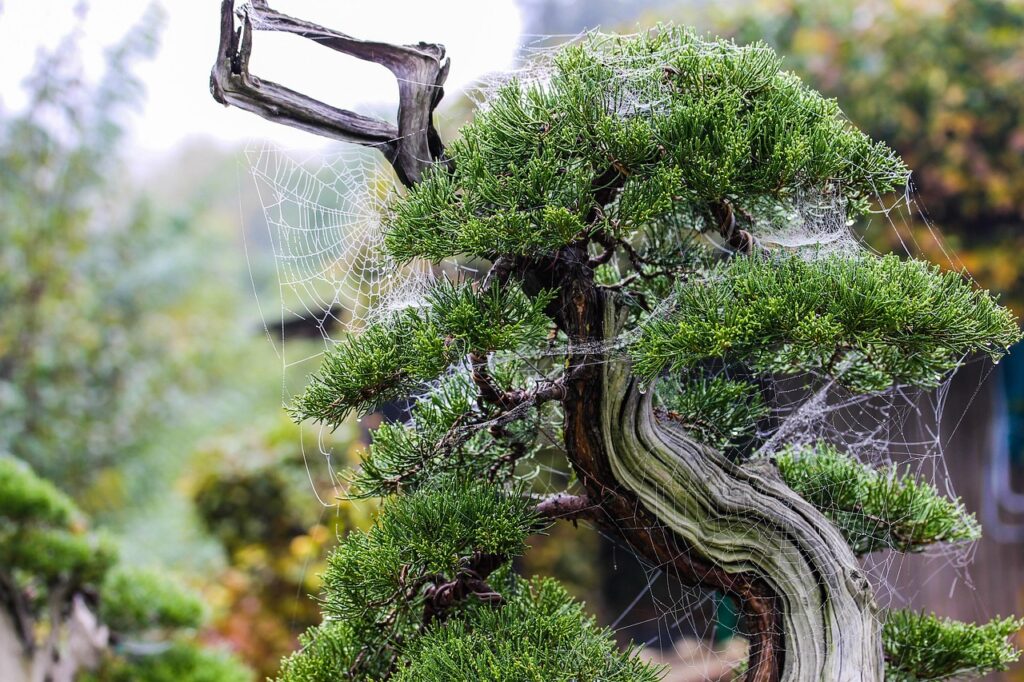
Juniperus procumbens belongs to the cypress family Cupressaceae, a large and globally distributed family of coniferous trees and shrubs that includes genera such as Cupressus, Chamaecyparis, Thuja, and Juniperus. Members of Cupressaceae are characterised by evergreen foliage, resinous wood, and small, woody or berry-like cones. Within this family, Juniperus procumbens sits among a diverse group of junipers adapted to environments ranging from alpine mountains to coastal cliffs.
Within the genus Juniperus, Juniperus procumbens is classified in section Sabina, a grouping that contains species typically bearing scale-like or juvenile needle foliage and berry-like seed cones. This section also includes several creeping or shrubby junipers, many of which are adapted to harsh, exposed environments. The placement of Juniperus procumbens in sect. Sabina reflects its morphological similarities to other low-growing junipers, particularly in cone structure and foliage arrangement.
Taxonomic discussion has occasionally centred on the close relationship between Juniperus procumbens and Juniperus chinensis. Some historical classifications treated it as Juniperus chinensis var. procumbens, suggesting it represented a prostrate form of the Chinese juniper. However, modern botanical authorities generally recognise Juniperus procumbens as a distinct species due to its consistent prostrate habit, ecological distribution in Japan, and stable morphological characteristics.
Understanding the precise taxonomic classification of Juniperus procumbens is important for accurate identification, horticultural labelling, and bonsai cultivation. Misidentification can lead to incorrect assumptions about growth habit, foliage behaviour, and environmental tolerance. A clear placement within Cupressaceae and the genus Juniperus provides a solid foundation for studying this species in greater botanical detail.
Botanical Description and Diagnostic Identification Features
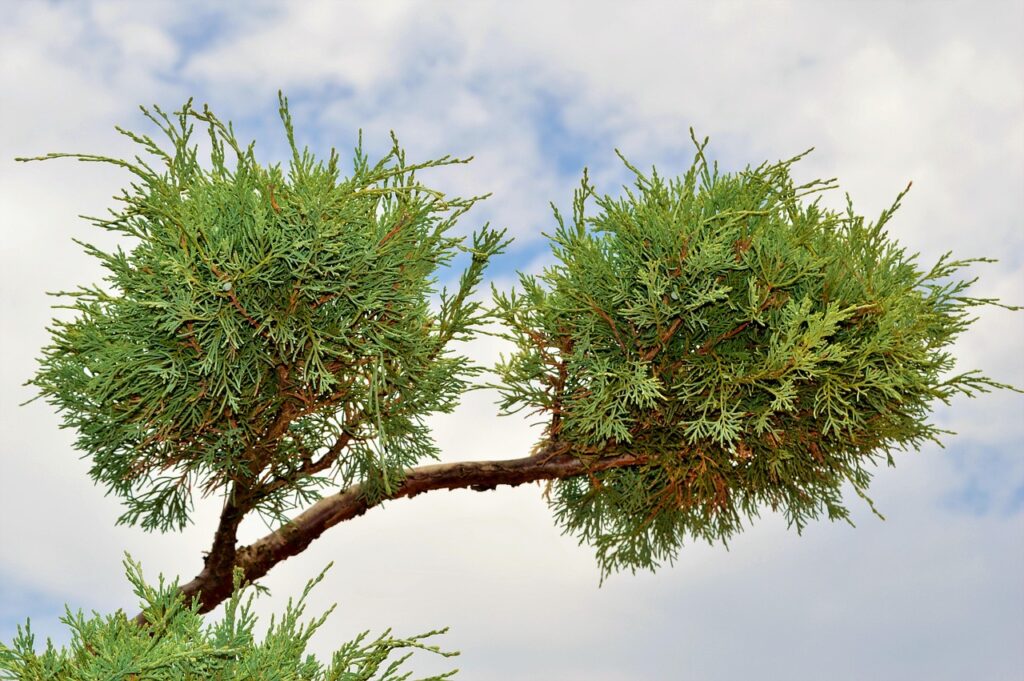
Accurate identification of Juniperus procumbens depends on careful observation of its foliage, branching structure, and cone characteristics. While many junipers share similar evergreen traits, Juniperus procumbens displays a combination of prostrate growth and persistent juvenile foliage that makes it relatively distinct when examined closely.
In landscape settings and bonsai cultivation, this species is often confused with low-growing forms of Juniperus chinensis or other creeping junipers. However, its consistent structural features and needle morphology provide reliable diagnostic markers. The following characteristics define Juniperus procumbens from a botanical perspective.
Prostrate Branching and Dense Mat Formation
One of the most defining traits of Juniperus procumbens is its naturally prostrate growth habit. Rather than developing a strong vertical leader, the plant spreads outward, forming low, interwoven mats of woody branches. Mature specimens typically reach only 20 to 30 centimetres in height, though they may occasionally grow slightly taller under ideal conditions.
The branches extend horizontally and often root lightly where they contact soil, contributing to the formation of dense groundcover. Over time, Juniperus procumbens can spread several metres across, creating a compact, intertwined structure. This creeping architecture is one of the primary visual cues used to distinguish it from upright juniper species.
In bonsai cultivation, this natural prostrate habit makes Juniperus procumbens particularly suitable for cascade and semi-cascade styling, where its trailing branches can be shaped to emphasise movement and flow.
Juvenile Needle-Like Foliage
Unlike many juniper species that transition from juvenile needle foliage to mature scale foliage, Juniperus procumbens retains its juvenile form throughout its life cycle. The leaves are sharp, awl-shaped needles arranged in whorls of three around the stem.
Each needle typically measures 6 to 8 millimetres in length and is narrow and pointed. On the inner surface of the needle, two pale stomatal bands are usually visible. These whitish bands are a useful identification feature, particularly when examining foliage under good light.
The colour of Juniperus procumbens foliage ranges from blue-green to grey-green, sometimes deepening in tone during colder months. In winter, the plant may develop subtle purplish or bronze hues, especially in exposed or frost-prone environments. The persistent needle structure gives the species a textured, slightly prickly appearance compared to scale-leaved junipers.
Berry-Like Seed Cones
Juniperus procumbens is a dioecious species, meaning individual plants produce either male or female cones, but not both. Male cones are small, typically around 3 to 4 millimetres long, and release pollen in early spring.
Female plants produce globose, berry-like cones that are approximately 8 to 9 millimetres in diameter. These cones mature over an extended period, often taking around 18 months to fully develop. When mature, they appear dark blackish-brown with a pale blue-white waxy bloom.
Each cone usually contains two or three seeds. The waxy coating on the surface contributes to the characteristic “juniper berry” appearance associated with many species in the genus. Observing cone structure and maturation timing can assist in confirming the identification of Juniperus procumbens in naturalised or cultivated settings.
Together, the prostrate branching habit, persistent juvenile needle foliage, and distinctive berry-like cones provide a reliable combination of diagnostic features for identifying Juniperus procumbens within the genus.
Prostrate Growth Habit, Mat Formation, and Longevity Potential
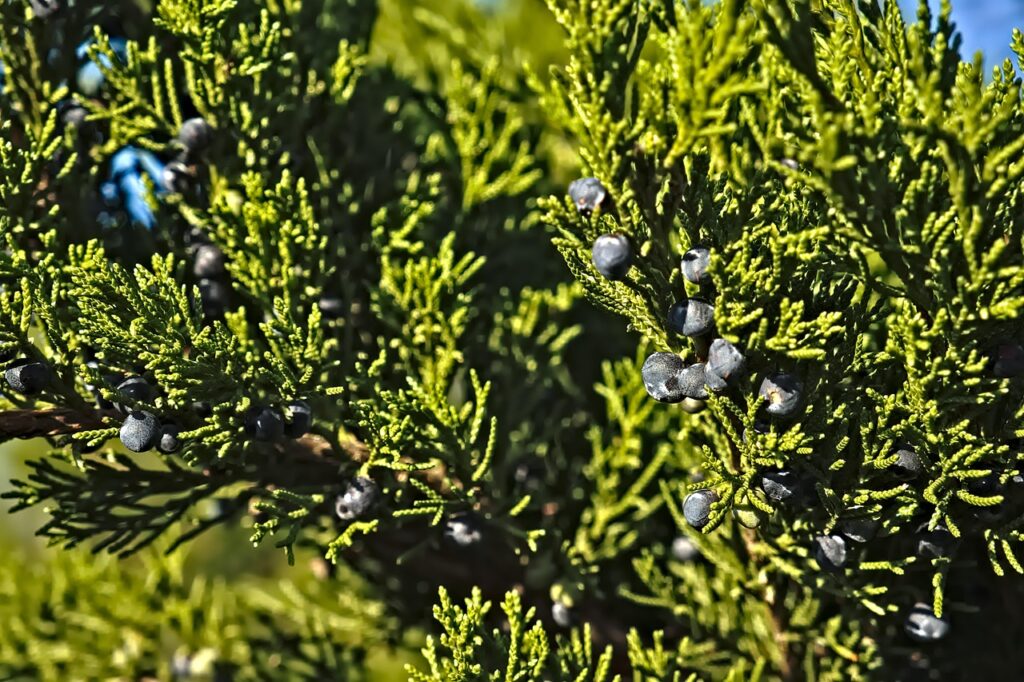
The prostrate growth habit of Juniperus procumbens is one of its most defining botanical and horticultural characteristics. Unlike upright junipers that develop a dominant leader and vertical canopy, Juniperus procumbens spreads laterally, forming dense, ground-hugging mats of evergreen foliage. This growth strategy is not incidental. It is a stable genetic trait that reflects the species’ adaptation to exposed coastal and mountainous environments in Japan.
Understanding the structural behaviour of Juniperus procumbens is essential for accurate identification, ecological interpretation, and bonsai styling. Its creeping architecture influences everything from soil interaction and erosion control to long-term trunk development in cultivation.
Lateral Expansion and Ground-Hugging Architecture
Juniperus procumbens naturally expands outward rather than upward. Mature specimens typically reach 20 to 30 centimetres in height, occasionally up to 50 centimetres under favourable conditions, but they can spread two to four metres across over time.
The branches extend horizontally and often intertwine, forming a tightly woven mat. This lateral expansion creates a stable structural network that resists wind exposure and surface erosion. In natural habitats, this creeping form allows Juniperus procumbens to survive in harsh conditions where taller shrubs would be damaged by strong coastal winds or alpine weather.
The absence of a dominant vertical trunk distinguishes Juniperus procumbens from many other species within the genus. Even in cultivation, it tends to maintain a low profile unless deliberately trained.
Dense Mat Formation and Soil Interaction
As Juniperus procumbens spreads, its branches overlap and create a thick vegetative carpet. This dense mat suppresses competing vegetation and stabilises the soil surface. In landscape design, this makes the species particularly valuable for erosion control on slopes, embankments, and rocky gardens.
The plant’s root system anchors shallow soils effectively, especially in well-drained, sandy, or gravelly substrates. While the branches typically do not form extensive adventitious roots along their length, the overall growth structure reinforces ground stability through continuous coverage.
This mat-forming characteristic also contributes to its popularity in ornamental settings, where uniform, evergreen coverage is desirable throughout the year.
Structural Durability and Longevity
Juniperus procumbens is a hardy and long-lived evergreen conifer. Once established, it demonstrates strong drought tolerance and resilience in nutrient-poor soils. Its ability to withstand temperature extremes, often rated for USDA Zones 4 through 9, further contributes to its longevity.
Over decades, the woody stems of Juniperus procumbens become increasingly textured and characterful. The bark develops subtle roughness, particularly on older branches, enhancing its aesthetic appeal in both landscape and bonsai contexts.
In bonsai cultivation, longevity is especially significant. With proper care, Juniperus procumbens can be trained and maintained for many decades, gradually developing trunk thickness, movement, and visual maturity. Its natural creeping habit makes it particularly suited to cascade and semi-cascade forms, where its lateral growth tendency is used as an artistic advantage.
The combination of prostrate growth, dense mat formation, and long-term structural resilience reinforces the ecological and horticultural value of Juniperus procumbens as a species.
Foliage Structure, Juvenile Needle Morphology, and Seasonal Colour Shifts
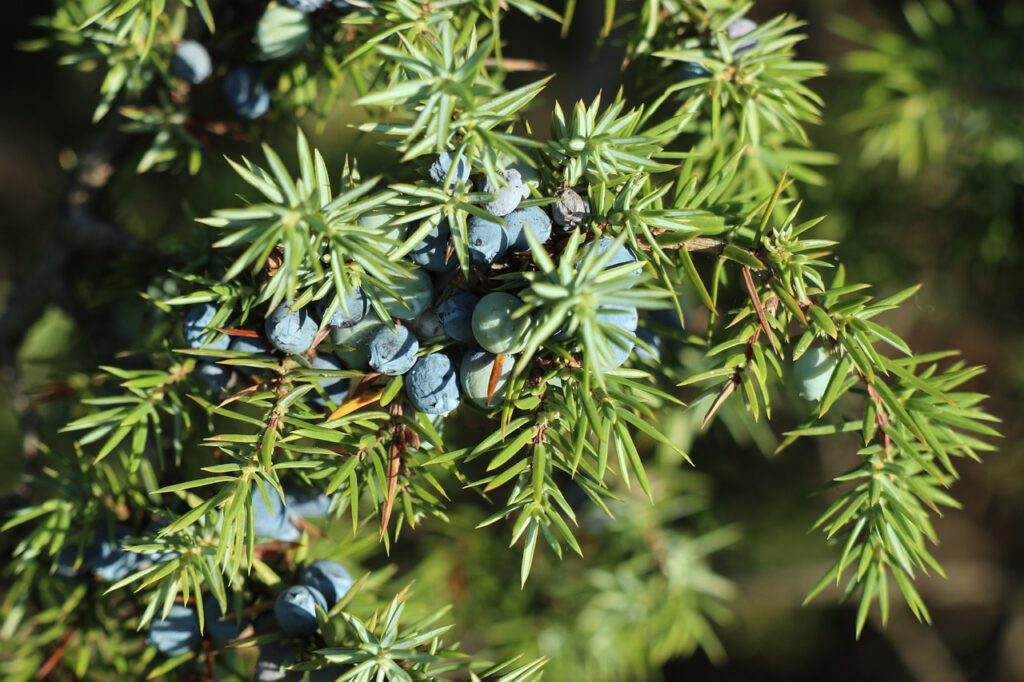
The foliage of Juniperus procumbens is one of its most distinctive and diagnostically important features. Unlike many juniper species that transition from juvenile needle foliage to mature scale foliage as they age, Juniperus procumbens retains its juvenile needle form throughout its life cycle. This consistent foliage type is a key identifying characteristic and plays a significant role in both botanical classification and bonsai aesthetics.
Close examination of leaf structure, arrangement, and seasonal colour variation provides reliable confirmation of Juniperus procumbens, particularly when distinguishing it from closely related species within the genus.
Persistent Juvenile Needle Morphology
All foliage on Juniperus procumbens remains in the juvenile form. The leaves are awl-shaped, sharp, and needle-like, measuring approximately 6 to 8 millimetres in length and around 1 to 1.5 millimetres in width.
These needles are arranged in whorls of three around the stem, forming a decussate pattern that creates a dense, textured appearance. When viewed closely, each needle displays two pale white stomatal bands along its inner surface. These bands are particularly visible under good lighting and serve as an important diagnostic feature.
The absence of mature scale foliage distinguishes Juniperus procumbens from species such as Juniperus chinensis, which typically exhibit a mix of scale and juvenile leaves depending on age and growth conditions. In Juniperus procumbens, the foliage remains uniformly needle-like, giving the plant a consistently prickly texture.
Foliage Density and Structural Texture
The needles of Juniperus procumbens grow densely along the branchlets, contributing to its compact, mat-forming habit. This dense foliage arrangement enhances its effectiveness as a ground cover and provides strong visual mass in bonsai design.
The branchlets themselves are relatively slender but firm, supporting tight clusters of needles that create a fine, textured surface. This dense coverage helps reduce moisture loss in exposed environments and protects internal woody tissue from environmental stress.
In cultivated settings, maintaining full sun exposure is essential to preserve this compact foliage density. Insufficient light may result in slightly elongated growth and reduced tightness in needle arrangement.
Seasonal Colour Shifts
The typical foliage colour of Juniperus procumbens ranges from blue-green to grey-green during the growing season. In strong sunlight, the foliage may appear slightly brighter, while in cooler conditions it often deepens in tone.
During winter or periods of frost, Juniperus procumbens may exhibit subtle purplish, bronze, or slightly plum-toned hues. These seasonal colour shifts are a normal physiological response to colder temperatures and increased environmental stress.
The winter colouration does not indicate decline or nutrient deficiency. Instead, it reflects adaptive pigmentation changes that help protect the foliage during colder months. As temperatures rise in spring, the foliage typically returns to its characteristic blue-green shade.
The persistent juvenile needle morphology combined with seasonal tonal variation makes the foliage of Juniperus procumbens both botanically distinctive and horticulturally appealing.
Reproductive Biology, Dioecious Traits, and Berry-Like Cone Development
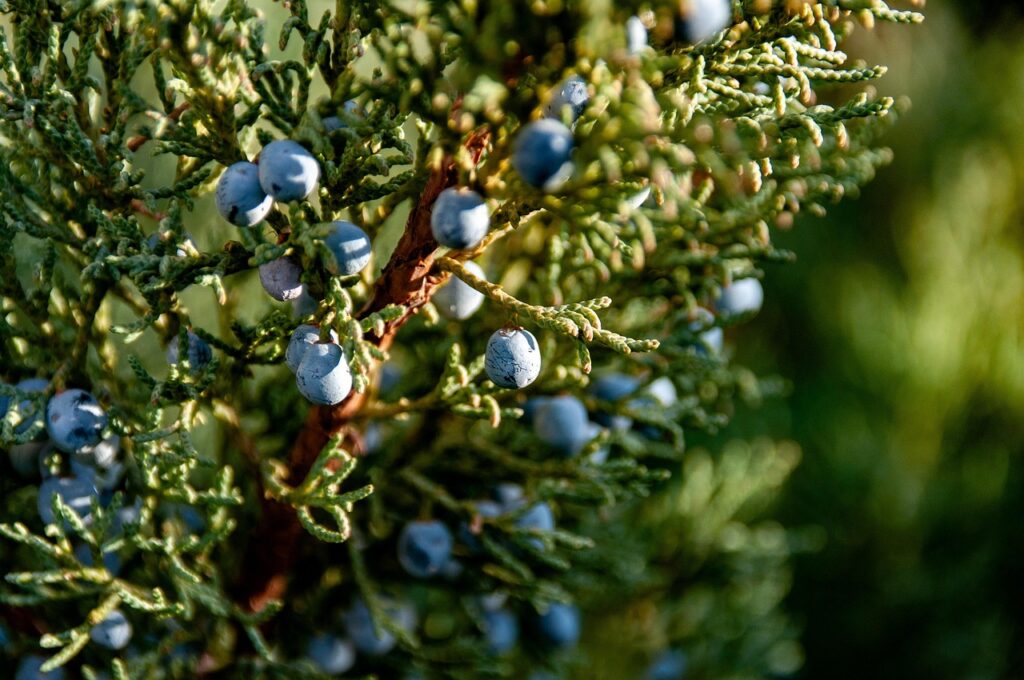
The reproductive biology of Juniperus procumbens follows the typical gymnosperm pattern found within the genus, but its dioecious nature and extended cone maturation period are important diagnostic and ecological features. As a member of Cupressaceae, Juniperus procumbens produces seed cones rather than true flowers, and fertilisation occurs through wind pollination rather than insect activity.
Understanding the reproductive structure of Juniperus procumbens is essential for species identification, propagation planning, and long-term ecological study. Its reproductive cycle reflects both its adaptation to exposed environments and its classification within section Sabina of the genus.
Dioecious Reproductive Structure
Juniperus procumbens is a dioecious species, meaning individual plants produce either male cones or female cones, but not both. This separation of sexes requires the presence of both male and female specimens within proximity for successful seed production.
Male cones are small, typically 3 to 4 millimetres in length, and are produced in early spring. These cones release pollen into the air, relying entirely on wind for dispersal. The pollen grains travel to receptive female cones, where fertilisation eventually occurs.
Because Juniperus procumbens plants produce cones of only one sex, cultivated specimens grown in isolation may never produce viable seed cones. In bonsai cultivation, reproductive behaviour is often secondary to aesthetic development, but in landscape settings it plays a role in natural regeneration.
Berry-Like Female Cones
Female plants of Juniperus procumbens develop globose, berry-like seed cones that are one of the most recognisable features of the genus. These cones measure approximately 8 to 9 millimetres in diameter and mature slowly over a prolonged period, often taking around 18 months to reach full development.
When mature, the cones appear dark blackish-brown with a pale blue-white waxy bloom. This glaucous coating gives them the familiar “juniper berry” appearance. Despite the name, these are not true berries but modified seed cones with fleshy scales that enclose the seeds.
Each cone typically contains two or three seeds, though occasionally only one develops fully. The extended maturation period ensures that seed development occurs across multiple seasonal cycles.
Pollination Ecology and Seed Dispersal
Wind pollination is the primary reproductive mechanism for Juniperus procumbens. The lightweight pollen produced by male cones disperses readily in open, exposed habitats, which aligns with the species’ natural coastal and mountainous environments.
Once the female cones mature, seed dispersal may occur through gravity or animal interaction. In natural ecosystems, birds and small mammals may consume the fleshy cone tissue and later disperse the seeds, aiding distribution.
The combination of dioecious reproduction, wind pollination, and berry-like cone development reflects the evolutionary strategy of Juniperus procumbens as a hardy, adaptable conifer capable of surviving in exposed and nutrient-poor habitats.
Native Distribution in Japan and Ecological Adaptations to Coastal and Mountain Environments
The natural distribution of Juniperus procumbens has been the subject of some botanical discussion, but it is widely recognised as native to Japan. Most authorities associate the species with southern Japan, particularly coastal regions and mountainous terrain, where it grows in exposed, well-drained habitats.
Whether occurring along rocky shorelines or on high-elevation slopes, Juniperus procumbens demonstrates a clear preference for environments that combine strong sunlight, lean soils, and consistent drainage. Its growth form and physiological resilience reflect adaptation to these demanding ecological conditions.
Geographic Range Within Japan
Botanical records place Juniperus procumbens primarily in southern Japan, including parts of Kyūshū and surrounding islands. Some sources describe it as occurring in high mountain zones, while others emphasise coastal habitats along southern and central regions of the country.
Regardless of the precise boundaries of its natural range, Juniperus procumbens is associated with exposed landscapes rather than forest understories. It typically inhabits open slopes, rocky outcrops, and coastal areas where taller vegetation is limited by wind, salt spray, or shallow soils.
This distribution pattern explains its strong sun tolerance and its limited ability to thrive in shaded or waterlogged conditions.
Adaptation to Coastal Conditions
In coastal environments, Juniperus procumbens must withstand salt-laden winds, intense sunlight, and nutrient-poor substrates. Its low-growing, prostrate habit reduces wind resistance and limits structural damage. By hugging the ground, the plant avoids the mechanical stress that affects taller shrubs.
The dense needle foliage also plays a protective role. The narrow, awl-shaped leaves minimise surface area exposed to desiccating winds, while their waxy coating helps reduce moisture loss. These traits support survival in environments where water availability fluctuates and evaporation rates are high.
Salt tolerance further enhances the ecological versatility of Juniperus procumbens. While not exclusively a coastal species, its ability to tolerate moderate salt exposure allows it to persist where less resilient plants may fail.
Adaptation to Mountainous Terrain
In higher elevations, Juniperus procumbens encounters cooler temperatures, increased wind exposure, and shallow, rocky soils. Its spreading root system anchors it securely in thin substrates, stabilising slopes and reducing erosion.
The species’ tolerance of cold conditions contributes to its wide hardiness range in cultivation. Winter colour shifts, often displaying purplish or bronze tones, reflect physiological adjustments to lower temperatures and increased environmental stress.
The mat-forming structure of Juniperus procumbens also insulates the soil surface beneath it, moderating temperature fluctuations and reducing moisture loss. This ecological function benefits both the plant itself and the surrounding microhabitat.
Together, its coastal and mountainous adaptations reveal Juniperus procumbens as a species shaped by exposure, resilience, and environmental efficiency. These ecological traits explain not only its success in native Japanese habitats but also its durability in horticultural landscapes and bonsai cultivation worldwide.
Cultivars and Infraspecific Variation: ‘Nana’, ‘Green Mound’, and Related Forms
Within horticulture, Juniperus procumbens is represented by several cultivated forms that emphasise compact growth, refined mat structure, or subtle colour variation. While the wild species naturally grows in a prostrate form, selective cultivation has produced compact, nursery-stable varieties particularly suited to ornamental landscaping and bonsai.
The most widely grown and commercially recognised cultivar is Juniperus procumbens ‘Nana’. This dwarf selection is slower growing and more compact than seed-grown specimens of the species. ‘Nana’ forms a dense, tightly layered mat and is especially valued in bonsai cultivation for its manageable growth rate and reliable needle structure. In many garden centres worldwide, ‘Nana’ has effectively become the standard representation of Juniperus procumbens.
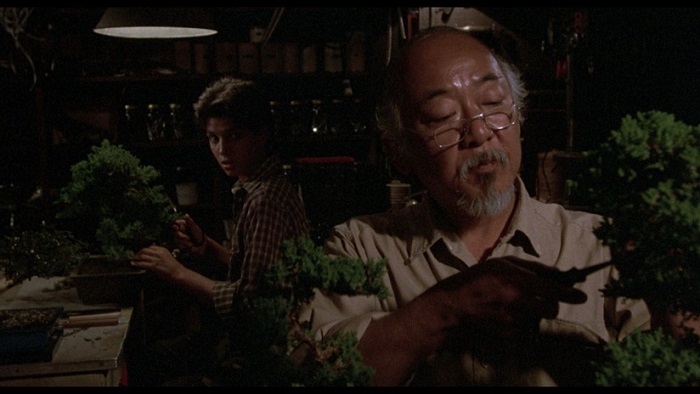
‘Nana’ also gained international recognition through popular culture. The bonsai tree featured prominently in the 1984 film The Karate Kid is widely identified as Juniperus procumbens ‘Nana’. Often referred to informally as the “Mr. Miyagi tree,” this cultivar became strongly associated with patience, discipline, and traditional bonsai artistry following the film’s release. As a result, Juniperus procumbens ‘Nana’ experienced a surge in popularity in the United States and remains one of the most common beginner bonsai species today.
Another cultivar frequently encountered is ‘Green Mound’, noted for its slightly lighter green foliage and consistently low, spreading profile. In some horticultural references, ‘Green Mound’ may be treated as a distinct selection, while in others it is considered closely aligned with ‘Nana’. The differences are often subtle and may vary depending on nursery propagation practices.
A plant sold under the name Juniperus procumbens ‘Variegata’ has created some taxonomic confusion. In many documented cases, this variegated form is actually a cultivar of Juniperus chinensis that has been mislabelled. Because Juniperus procumbens retains exclusively juvenile needle foliage, careful examination of leaf morphology remains essential when identifying cultivated material.
Despite minor variation in compactness or colour tone, the defining structural and foliage traits of Juniperus procumbens remain consistent across cultivars. Understanding these variations supports accurate labelling, informed bonsai selection, and proper taxonomic distinction within the genus.
Juniperus procumbens in Horticulture, Landscape Use, and Bonsai Culture
The enduring popularity of Juniperus procumbens is rooted in its structural resilience, ecological adaptability, and aesthetic versatility. From coastal slopes in Japan to urban gardens and bonsai benches worldwide, this species has proven itself both botanically reliable and artistically expressive. Its prostrate growth habit, persistent juvenile foliage, and tolerance of challenging conditions make it one of the most dependable evergreen shrubs in cultivation.
In landscape design, Juniperus procumbens is frequently used as a ground cover, particularly on slopes and embankments where erosion control is required. Its dense, mat-forming structure stabilises soil while providing year-round evergreen coverage. The species performs especially well in full sun and well-drained soils, making it suitable for rock gardens, coastal plantings, and xeriscape environments. Once established, it demonstrates strong drought tolerance and minimal maintenance requirements.
Beyond its practical landscape value, Juniperus procumbens holds a central place in bonsai culture. Its naturally spreading habit lends itself to cascade and semi-cascade styles, while its hardy constitution allows it to tolerate shaping, wiring, and pruning over extended periods. The cultivar ‘Nana’, in particular, has become one of the most widely trained junipers in beginner and intermediate bonsai practice. Its cultural visibility increased significantly following its association with The Karate Kid, where it symbolised patience, discipline, and mentorship in traditional bonsai artistry.
In horticultural trade, Juniperus procumbens is sometimes marketed casually as a beginner bonsai plant. However, when properly cultivated and artistically trained, it is capable of refined and sophisticated forms. Over time, its woody stems develop character and subtle bark texture, enhancing visual maturity. With correct drainage and full sunlight, it can remain vigorous and responsive for decades.
From a taxonomy perspective, understanding Juniperus procumbens at the species level strengthens identification accuracy and cultivation decisions. From a horticultural standpoint, it remains one of the most reliable and adaptable junipers available. Whether stabilising a rocky slope, softening a retaining wall, or shaped into a cascading bonsai composition, Juniperus procumbens continues to demonstrate why it holds a respected position within both landscape design and botanical study.