
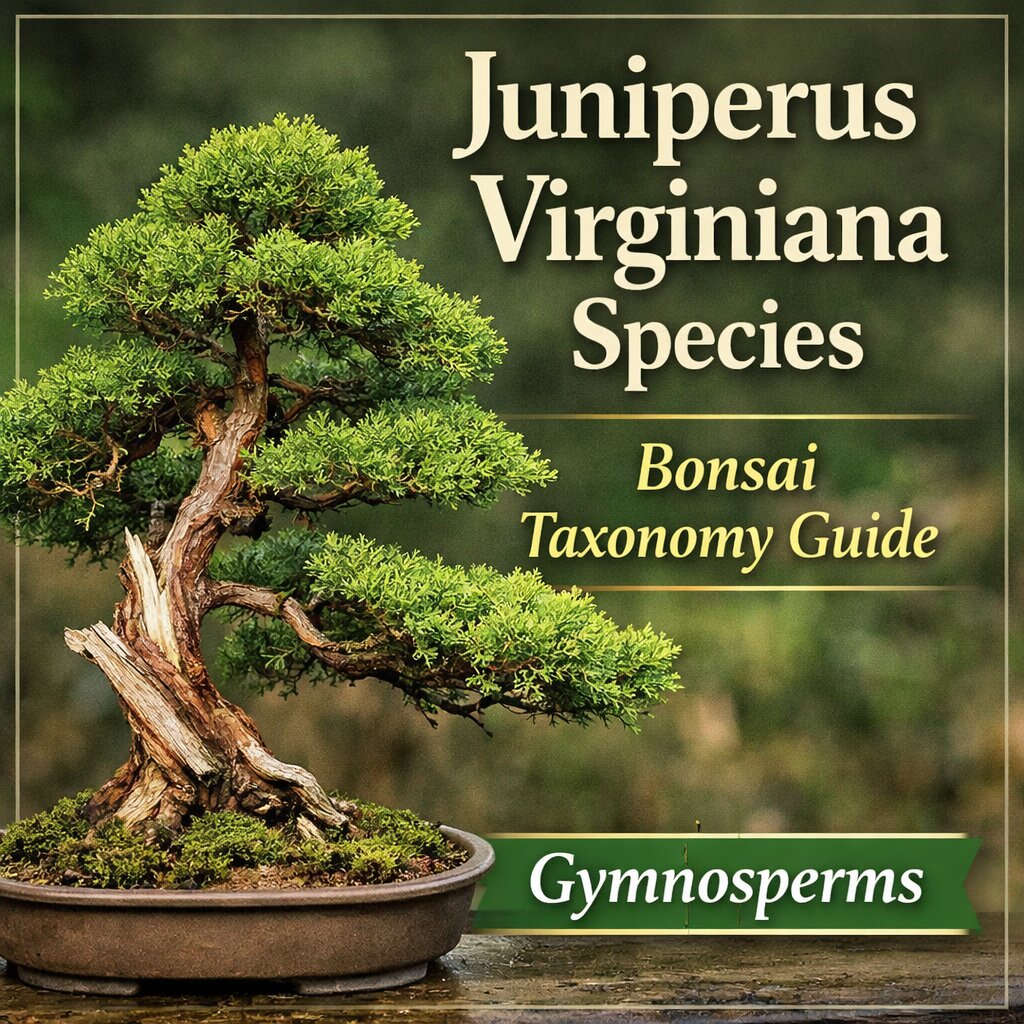
Juniperus virginiana, commonly known as eastern redcedar or Virginian juniper, is a hardy evergreen conifer native to eastern North America. Despite its common name, it is not a true cedar but a member of the Juniperus genus within the cypress family (Cupressaceae). The species is widely recognised for its dense foliage, aromatic wood, and remarkable adaptability to a wide range of soil and climate conditions.
This species plays an important ecological and historical role across its native range. As a pioneer tree, Juniperus virginiana is often one of the first species to colonise disturbed land, abandoned fields, and rocky soils where other trees struggle to survive. Its berry-like cones provide an important food source for wildlife, while its durable wood has long been valued for construction, tools, and aromatic products.
In horticulture and bonsai cultivation, Juniperus virginiana is appreciated for its rugged character and resilience. Its varied growth forms, distinctive bark, and evergreen foliage make it a fascinating species to study both botanically and practically. Understanding the taxonomy, biology, and ecological behaviour of Juniperus virginiana provides valuable insight into one of North America’s most adaptable juniper species.
Taxonomy
– Kingdom: Plantae (Plant Kingdom)
— Clade: Embryophytes (Land Plants)
— Clade: Polysporangiophytes (Multiple Sporangia)
—- Clade: Tracheophytes (Vascular Plants)
—– Superdivision: Spermatophytes (Seed Plants)
—— Clade: Gymnospermae (Naked Seeds)
——- Division: Pinophyta (Conifers)
——– Class: Pinopsida (Living Conifers)
——— Subclass: Cupressidae (Evergreen Conifers)
———- Order: Cupressales (Cypress)
———– Family: Cupressaceae (Cypress)
———— Subfamily: Cupressoideae (Cypress)
————- Genus: Juniperus (Juniper)
————– Section: Sabina (Scale-Leaf Junipers)
————— Species: Juniperus virginiana (Virginian Juniper)
What is Juniperus virginiana?
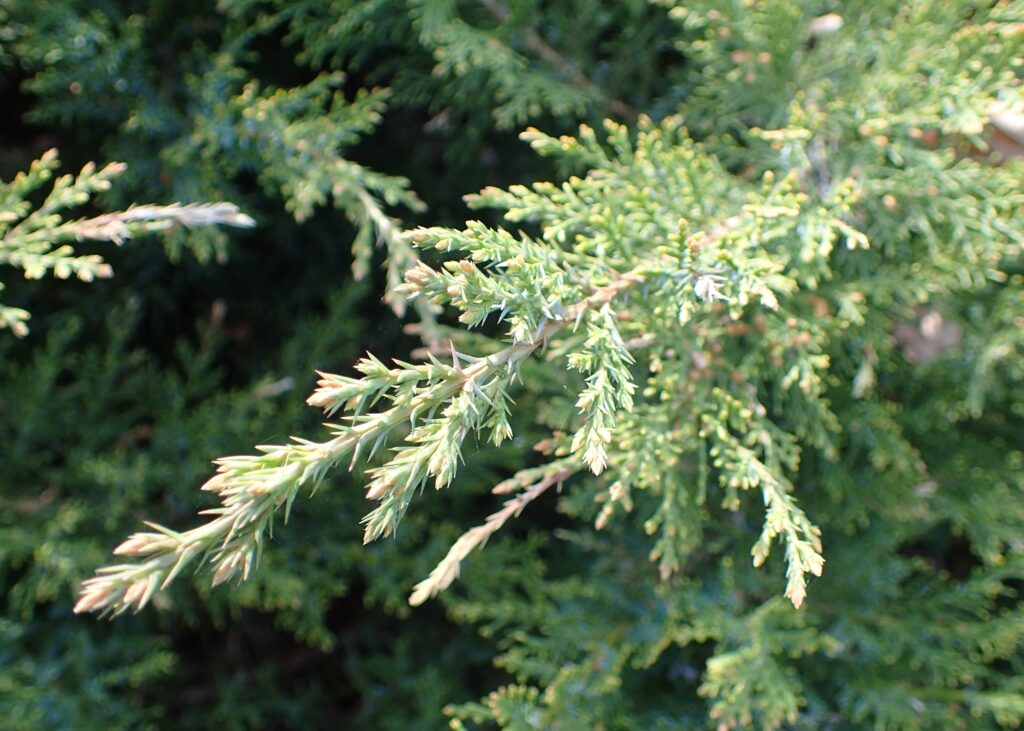
Juniperus virginiana is an evergreen coniferous tree species native to eastern North America. Commonly called eastern redcedar or Virginian juniper, it belongs to the genus Juniperus within the cypress family (Cupressaceae). Despite its name, it is not a true cedar, as true cedars belong to the genus Cedrus. The species is widely recognised for its dense evergreen foliage, reddish aromatic wood, and exceptional tolerance of difficult growing conditions.
The tree typically grows between 5 and 20 metres tall, although older specimens can occasionally reach greater heights in favourable environments. Its crown usually forms a narrowly conical or columnar shape, particularly in younger trees, while mature individuals may develop a broader form. In poor soils or exposed environments, the species may remain small and shrub-like.
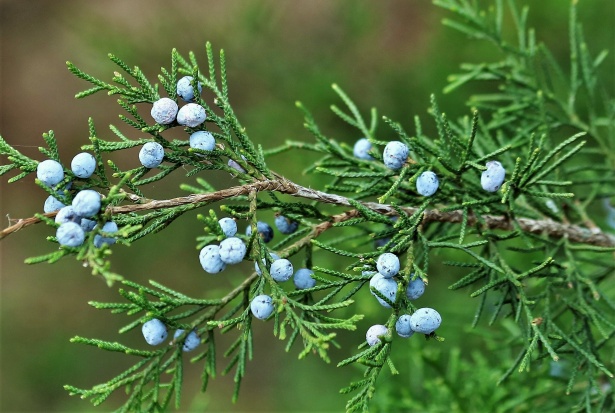
One of the defining features of Juniperus virginiana is its dual foliage type. Young plants produce sharp, needle-like leaves, while mature branches develop small, scale-like leaves that overlap tightly along the twigs. Female trees produce distinctive blue, wax-coated berry-like cones, which contain the seeds and are an important food source for many bird species.
Because of its resilience and ability to grow in rocky, dry, or nutrient-poor soils, Juniperus virginiana is often considered a pioneer species. It commonly colonises abandoned farmland, grasslands, and disturbed sites, gradually establishing woodland ecosystems. This adaptability, combined with its ecological importance and valuable wood, makes it one of the most well-known juniper species in North America.
Taxonomic classification of Juniperus virginiana within Cupressaceae
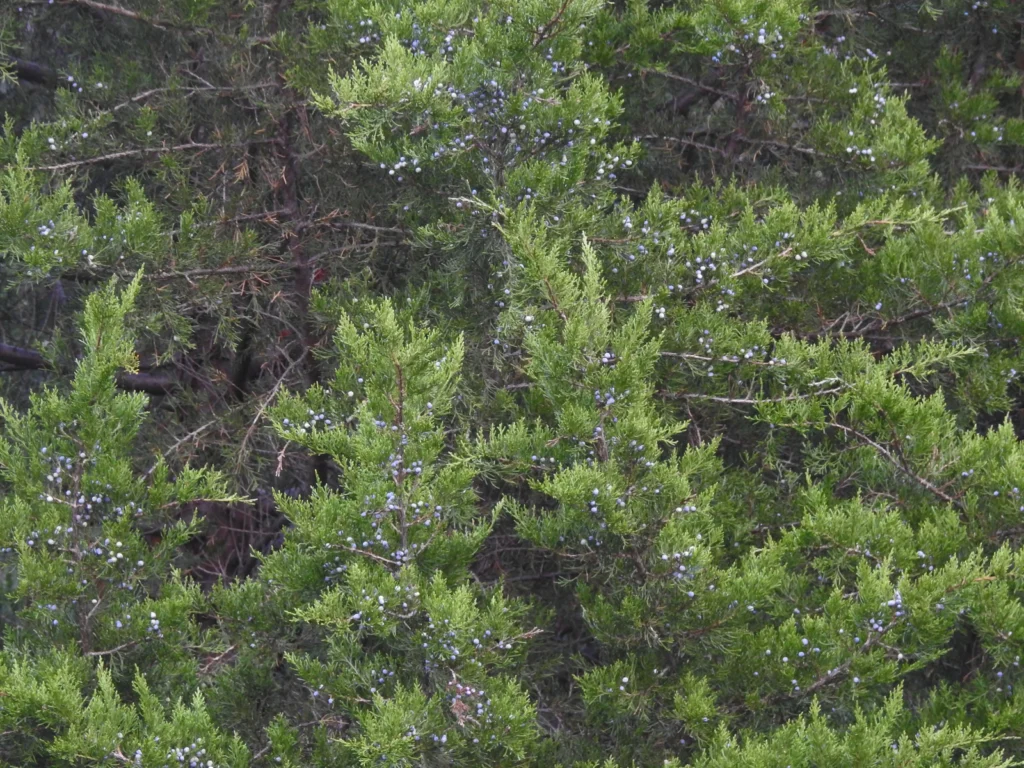
Juniperus virginiana belongs to the cypress family (Cupressaceae), a large group of evergreen conifers that includes junipers, cypresses, and other resinous trees widely distributed across the Northern Hemisphere. Within this family, the genus Juniperus is notable for its scale-like foliage, berry-like cones, and exceptional adaptability to diverse climates and soils.
The species is classified within the genus Juniperus, which contains more than 60 species of shrubs and trees found across North America, Europe, Asia, and parts of Africa. Members of this genus are recognised by their aromatic wood, small seed cones resembling berries, and their ability to thrive in environments ranging from mountain slopes to dry grasslands.
Within the species, botanists recognise two main varieties that differ slightly in distribution and morphological traits. The typical variety, Juniperus virginiana var. virginiana, occurs across much of eastern North America. The second variety, Juniperus virginiana var. silicicola, is commonly known as the southern or sand redcedar and is typically found along the Atlantic and Gulf coastal regions.
Understanding the taxonomy of Juniperus virginiana helps place the species within the broader evolutionary context of conifers and highlights its close relationship with other junipers used in landscaping, forestry, and bonsai cultivation.
Botanical description and key identification features of Juniperus virginiana
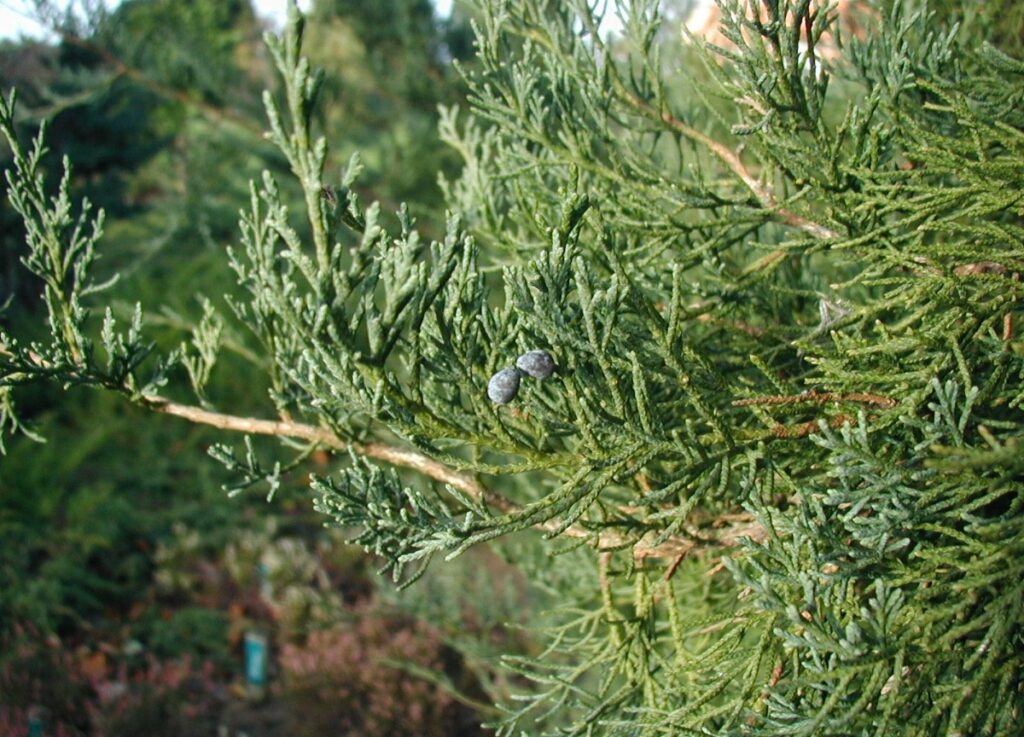
Juniperus virginiana is a dense evergreen conifer recognised for its rugged adaptability and distinctive appearance. Native to eastern North America, this species can vary significantly in form depending on soil quality, climate, and surrounding vegetation. In favourable conditions it grows into a tall tree with a narrow crown, while in harsher environments it may remain smaller or shrub-like.
Several botanical features help distinguish Juniperus virginiana from other juniper species. These include its characteristic reddish bark, its transition from needle-like juvenile foliage to scale-like adult leaves, and its blue berry-like seed cones. Understanding these identifying traits is essential for botanists, landscapers, and bonsai enthusiasts studying the species.
Bark and trunk structure
One of the easiest ways to identify Juniperus virginiana is by its bark. The bark is thin, fibrous, and reddish-brown, and it typically peels away in long, narrow strips. This shredding texture gives the trunk a rough, layered appearance that becomes more pronounced as the tree ages.
The trunk itself is usually relatively short and sturdy, particularly in mature trees growing in open environments. Diameter commonly ranges between 30 and 100 centimetres, although exceptionally old specimens may become larger.
Older trees often develop irregular trunks and twisting branches, especially when exposed to strong winds or limited soil conditions. This rugged structure contributes to the species’ appeal in natural landscapes and bonsai design.
Crown shape and branching pattern
The crown of Juniperus virginiana typically begins as a narrow, columnar shape in younger trees. As the tree matures, the crown may broaden slightly, forming a conical or irregular silhouette.
Branching is usually dense, producing a thick canopy of evergreen foliage. This dense growth makes the species particularly useful as a windbreak or privacy screen in landscaping applications.
In natural environments, the shape of the crown can vary widely. Trees growing in open grasslands often maintain a tall, upright structure, while those growing in poor soils or exposed sites may develop more irregular and spreading forms.
Dual foliage types
A distinctive feature of Juniperus virginiana is the presence of two different leaf types during its life cycle.
Young plants and vigorous new shoots produce sharp, needle-like leaves that measure approximately 5 to 10 millimetres in length. These juvenile leaves spread outward from the stem and give young trees a slightly prickly texture.
As the tree matures, most branches develop scale-like adult leaves that overlap closely against the twigs. These small leaves are typically 2 to 4 millimetres long and arranged in opposite pairs along the stem. The transition from needle-like foliage to scale foliage is an important identification characteristic for the species.
Berry-like seed cones
Like other junipers, Juniperus virginiana produces berry-like cones rather than the woody cones commonly associated with many conifer species. These seed cones are small, rounded, and typically measure 3 to 7 millimetres in diameter.
The cones mature into a dark blue or purple colour and are covered with a pale waxy coating that gives them a sky-blue appearance. Each cone usually contains one to three seeds, although occasionally more may be present.
These cones are an important winter food source for many bird species. Birds consume the berries and disperse the seeds across the landscape, helping the species spread naturally across its native range.
Growth habit, lifespan, and structural form of eastern redcedar
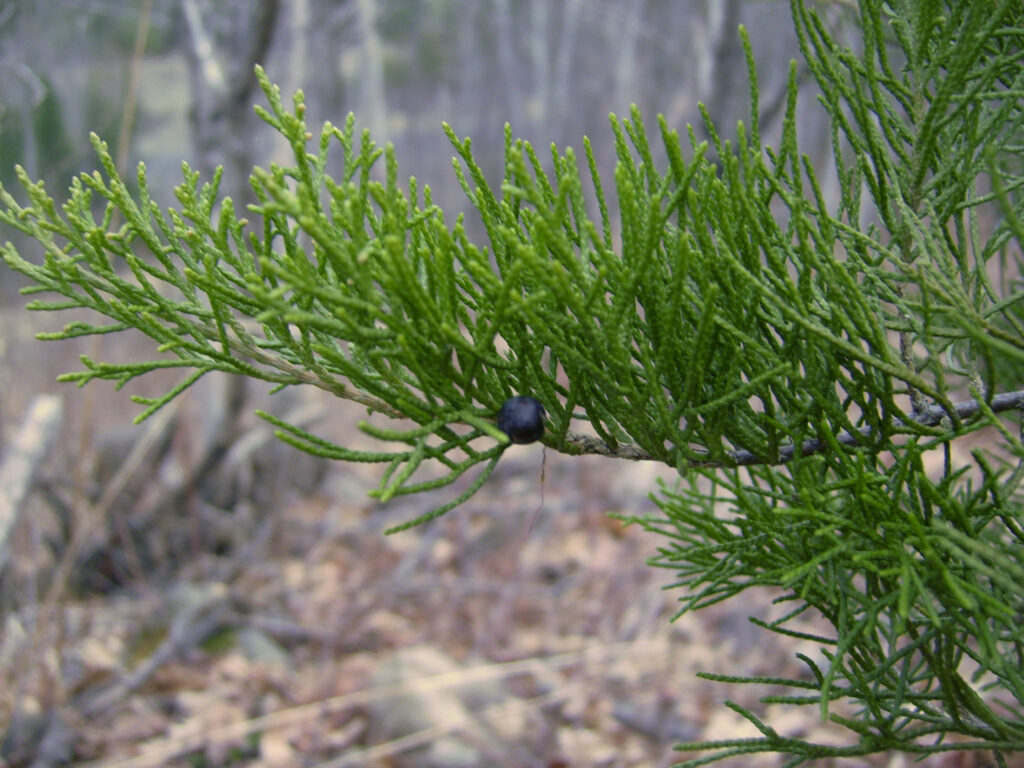
Eastern redcedar (Juniperus virginiana) is known for its remarkable adaptability and long lifespan. As a hardy evergreen conifer, it can grow in a wide variety of environments, from rocky hillsides and grasslands to abandoned farmland and roadside habitats. Its growth habit changes significantly depending on soil quality, climate conditions, and competition from surrounding vegetation.
Despite often being considered a pioneer species, eastern redcedar can live for centuries under favourable conditions. Its structure and growth form reflect both its resilience and its ability to colonise difficult environments where many other trees cannot establish themselves.
Typical growth pattern and development
The growth habit of Juniperus virginiana usually begins with a narrow, upright form during its early years. Young trees commonly develop a slender trunk with dense foliage arranged in a columnar or pyramidal shape.
As the tree matures, the crown may broaden slightly and the branching pattern becomes more complex. In open environments with little competition, eastern redcedar often develops a broad conical crown with strong lateral branches.
However, growth can vary greatly depending on conditions. In poor or rocky soils, the species may remain smaller and more shrub-like, while in fertile soils it can grow into a tall, well-formed tree.
Structural form and canopy shape
The structural form of eastern redcedar is typically conical to cylindrical, with branches extending outward in layered tiers. This arrangement gives the tree a dense, evergreen canopy that provides excellent shelter for wildlife.
The lower branches often extend close to the ground, particularly in trees growing in open areas. This characteristic creates a full, pyramidal silhouette that is commonly associated with the species.
Over time, mature trees may develop irregular or asymmetrical shapes, especially in windy or exposed environments. These structural variations contribute to the rugged and natural appearance of the species.
Longevity and age potential
Although many pioneer species are relatively short-lived, Juniperus virginiana can be extremely long-lived. Some specimens are known to survive for several centuries, and the oldest recorded individuals have approached or exceeded 900 years of age.
The slow growth rate of the species contributes to its longevity. Its dense wood and durable structure allow the tree to withstand harsh conditions, including drought and nutrient-poor soils.
Long-lived individuals often develop thicker trunks and more complex branching patterns, making older trees particularly valuable for ecological habitats and for bonsai enthusiasts seeking mature character in a species.
Environmental influence on growth form
Environmental conditions play a significant role in shaping the structure of eastern redcedar. Trees growing in open grasslands or abandoned fields often develop tall, upright forms with symmetrical crowns.
In contrast, trees growing in rocky landscapes or exposed ridges may become shorter, twisted, or irregular in shape due to wind exposure and limited nutrients.
Competition with other trees also influences growth patterns. In dense forests, eastern redcedar may grow taller and narrower as it competes for light, while isolated trees in open environments tend to spread outward and develop fuller crowns.
Foliage characteristics, juvenile needles, and mature scale leaves
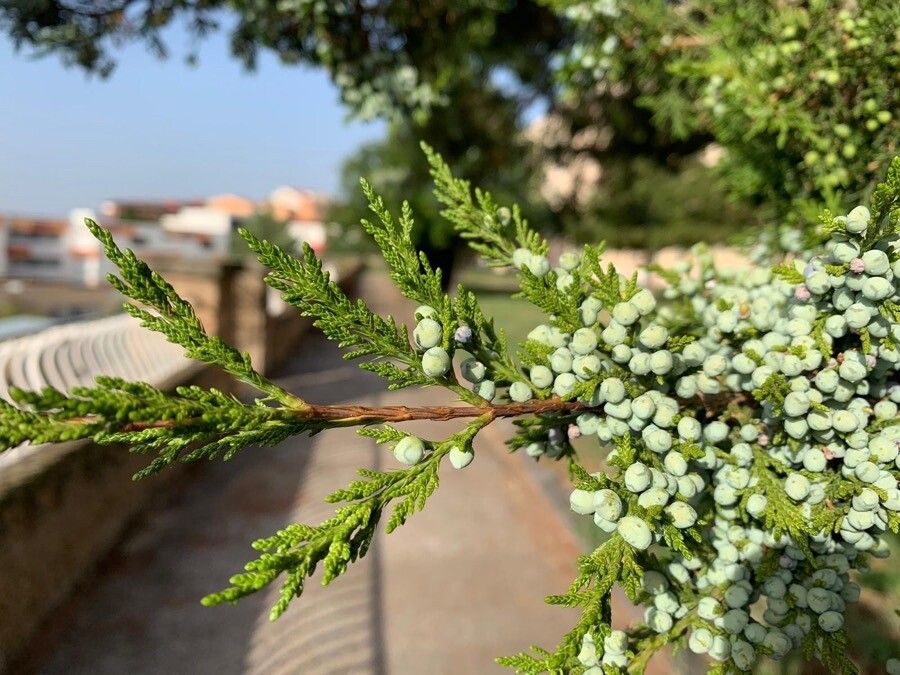
The foliage of Juniperus virginiana is one of its most distinctive botanical features. Like many species within the juniper genus, it produces two different leaf forms during its development. These foliage types not only help identify the species but also reflect its growth stage and environmental conditions.
The tree’s evergreen foliage remains on the branches throughout the year, providing dense coverage that contributes to its use as a windbreak and wildlife shelter. Understanding the structure and appearance of these leaves helps botanists, horticulturists, and bonsai growers correctly identify and manage the species.
Juvenile needle-like foliage
Young Juniperus virginiana plants typically produce needle-like juvenile leaves. These needles are sharp, narrow, and usually measure 5 to 10 millimetres in length. They spread outward from the stems, giving young shoots a spiky texture.
This juvenile foliage is most common on young trees and vigorous new growth, particularly during the early years of development. It may also appear on shaded branches of mature trees or after heavy pruning, where the plant produces fresh growth.
The needle form helps protect young shoots from herbivores and environmental stress. Its rigid structure also allows the plant to withstand exposure to wind and dry conditions during early growth stages.
Mature scale-like leaves
As the tree matures, most of the foliage transitions into scale-like adult leaves. These leaves are much smaller than the juvenile needles, usually measuring 2 to 4 millimetres long, and they lie closely against the twigs.
The scale leaves overlap tightly in opposite pairs along the stems, creating a compact and textured surface across the branches. This dense foliage gives the tree its characteristic evergreen appearance.
The scale structure also reduces moisture loss, helping the tree conserve water in dry environments. This adaptation contributes to the species’ reputation as one of the most drought-tolerant conifers in eastern North America.
Seasonal colour and foliage density
The foliage colour of Juniperus virginiana is generally deep green to dark bluish-green, although variations can occur depending on soil conditions and seasonal changes. Some trees may develop slightly bronze or purplish tones during colder winter months.
The dense arrangement of scale leaves creates a thick canopy that blocks significant amounts of sunlight beneath the tree. This dense foliage is one reason the species can dominate certain landscapes, as fewer plants can survive under its shaded canopy.
For bonsai growers and landscapers, the compact foliage of eastern redcedar provides excellent texture and structure. When properly maintained, the foliage can be shaped into attractive forms that highlight the natural character of the species.
Reproductive biology, dioecious traits, and berry-like seed cones
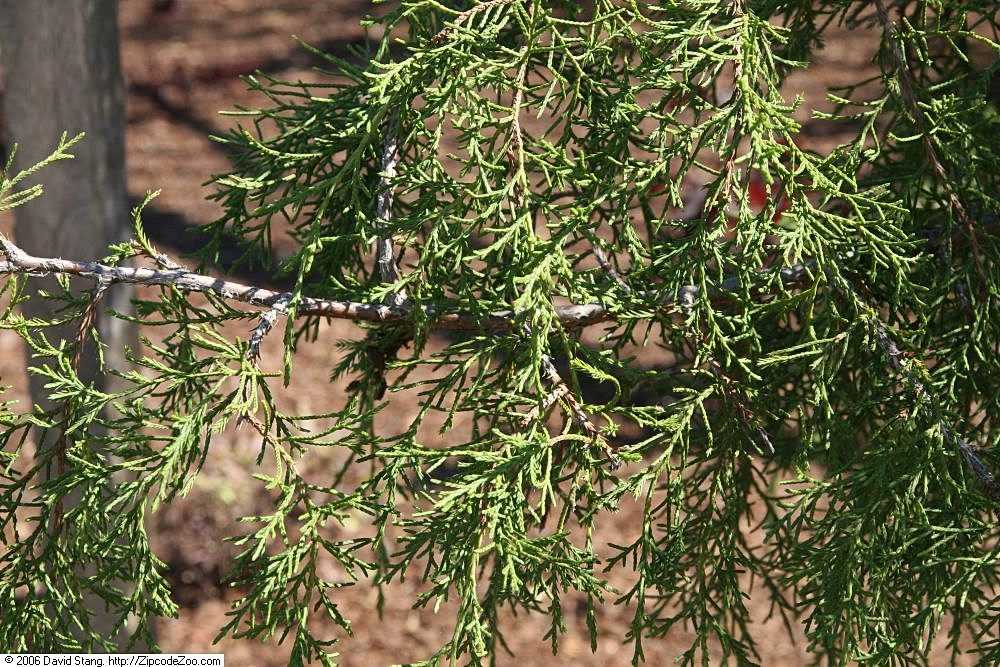
The reproductive biology of Juniperus virginiana follows the typical pattern found in many juniper species, with separate male and female reproductive structures. These structures produce pollen and seeds that allow the species to reproduce and spread across a wide range of environments. The tree’s reproductive system also plays an important ecological role, supporting wildlife that depends on its seeds for food.
One of the most notable aspects of Juniperus virginiana reproduction is its dioecious nature, meaning male and female cones usually grow on separate trees. This characteristic encourages cross-pollination between individuals and helps maintain genetic diversity within natural populations.
Dioecious reproductive system
Most eastern redcedar trees are dioecious, meaning individual trees are either male or female. Male trees produce pollen cones, while female trees produce seed cones that eventually develop into the characteristic berry-like structures.
Male pollen cones are small and inconspicuous, usually measuring 2 to 3 millimetres in length. These cones release pollen during late winter or early spring, allowing the wind to carry the pollen to nearby female trees.
Although the species is typically dioecious, some trees may occasionally show monoecious behaviour, producing both pollen and seed cones. However, this is relatively uncommon.
Development of berry-like seed cones
Female trees produce small, rounded seed cones that resemble berries rather than the woody cones typically associated with many conifer species. These structures measure approximately 3 to 7 millimetres in diameter.
As they mature, the cones develop a dark purple to blue colour and are covered by a pale waxy coating that gives them a distinctive sky-blue appearance. Inside each cone are one to three seeds, although occasionally a fourth seed may develop.
The cones usually reach full maturity six to eight months after pollination, at which point they become an important food source for wildlife.
Seed dispersal and wildlife interaction
The berry-like cones of Juniperus virginiana play a crucial role in seed dispersal. Many bird species consume the fruits, including cedar waxwings, bluebirds, and wild turkeys, along with several small mammals.
After the berries are eaten, the seeds pass through the digestive systems of these animals and are deposited in new locations. Interestingly, the digestive process often improves the seeds’ ability to germinate.
This relationship between wildlife and eastern redcedar helps the species spread naturally across landscapes. It also explains why the tree is frequently found along fence lines, abandoned farmland, and disturbed areas, where birds commonly deposit seeds while resting or feeding.
Native distribution, habitat range, and ecological adaptations
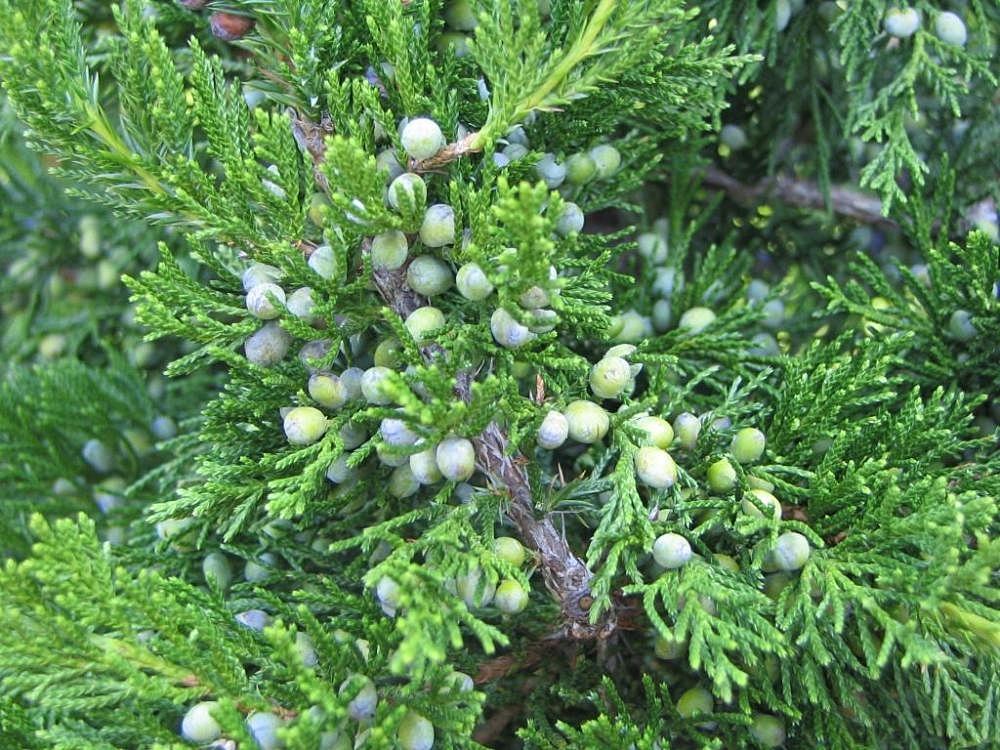
Juniperus virginiana is native to a large portion of eastern North America and is one of the most adaptable conifer species in the region. Its natural range stretches from southeastern Canada through the eastern United States and south to the Gulf of Mexico, extending westward to the edges of the Great Plains. Because of its ability to tolerate challenging environmental conditions, the species is widely distributed across a variety of landscapes.
The tree commonly grows in grasslands, limestone hills, prairies, old pastures, and open woodlands, often appearing along roadsides or disturbed land. Its adaptability allows it to establish itself quickly in areas where other tree species struggle to survive.
Geographic range across North America
The natural range of Juniperus virginiana spans a large geographic area. It can be found from southern Ontario and Quebec in Canada, extending south through the eastern United States to Florida and the Gulf Coast. Westward, its range reaches into parts of Texas, Oklahoma, and the central plains.
Beyond this range, the species is gradually replaced by closely related junipers. For example, Rocky Mountain juniper (Juniperus scopulorum) becomes more common in western regions, while Ashe juniper (Juniperus ashei) dominates in parts of the southwestern United States.
Within its range, eastern redcedar can appear in both natural ecosystems and areas affected by human activity. It is particularly common in locations where farmland has been abandoned or where vegetation has been disturbed.
Habitat preferences and environmental tolerance
One of the reasons for the success of Juniperus virginiana is its ability to grow in a wide range of soil and climate conditions. The species can thrive in rocky, sandy, clay, or alkaline soils, and it often survives in areas with low nutrient availability.
The tree is also highly drought tolerant, thanks to its extensive fibrous root system and small leaf surface area that reduces water loss. These adaptations allow it to grow in dry environments where many other trees would struggle to survive.
Despite this tolerance, eastern redcedar rarely dominates highly fertile forest environments. In richer soils with dense vegetation, faster-growing hardwood trees often outcompete it for sunlight and space.
Pioneer species and ecological role
Juniperus virginiana is widely recognised as a pioneer species, meaning it is one of the first trees to establish itself in disturbed environments. It frequently colonises abandoned farmland, open grasslands, and recently cleared areas.
As the tree grows and spreads, it gradually changes the surrounding ecosystem. Its dense evergreen canopy creates shaded conditions beneath the branches, which can limit the growth of grasses and smaller plants.
At the same time, eastern redcedar provides important habitat for wildlife. Its thick foliage offers shelter for birds and small mammals throughout the year, while its berry-like cones serve as an essential winter food source.
These ecological roles make Juniperus virginiana both valuable and controversial. While it contributes to wildlife habitat and soil stabilisation, unchecked expansion in grassland regions can also alter native ecosystems if not managed properly.
Varieties of Juniperus virginiana and regional differences
Although Juniperus virginiana is generally treated as a single species, botanists recognise two primary varieties that differ slightly in their geographic distribution and morphological traits. These varieties occur in different ecological regions across eastern North America, though they can intergrade where their ranges meet. Understanding these varieties helps clarify how the species adapts to different climates and environments.
The most widespread form is Juniperus virginiana var. virginiana, often referred to as eastern redcedar or eastern juniper. This variety occurs across most of the species’ native range, from parts of southeastern Canada southward through the eastern United States and into northern Florida and Texas. It is commonly found in grasslands, old fields, limestone hills, and disturbed areas where it acts as a pioneer species.
The second recognised variety is Juniperus virginiana var. silicicola, sometimes known as southern redcedar or sand juniper. This variety is more commonly found along the Atlantic and Gulf coastal regions, where sandy soils and coastal conditions influence its growth characteristics. Some botanists treat this form as a separate species due to its distinctive traits, although it is still widely classified as a variety of Juniperus virginiana.
Key differences between the two varieties include:
- Juniperus virginiana var. virginiana – widespread across eastern North America with slightly larger seed cones and reddish-brown bark
- Juniperus virginiana var. silicicola – primarily found along Atlantic and Gulf coasts with smaller cones and orange-brown bark
- Coastal populations often show adaptations to sandy soils and coastal climates
- Transitional populations may display traits from both varieties where their geographic ranges overlap
These regional variations illustrate the species’ remarkable ability to adapt to different environments. Whether growing in inland grasslands, limestone hills, or coastal sands, Juniperus virginiana remains one of the most resilient and widely distributed juniper species in North America.
Juniperus virginiana in wildlife habitat, landscaping, and bonsai cultivation
Juniperus virginiana plays an important role in both natural ecosystems and human-managed landscapes. Its dense evergreen foliage, durable structure, and adaptability allow it to support wildlife while also serving practical and aesthetic purposes in landscaping and horticulture. Because of these qualities, the species remains widely valued across North America and beyond.
In natural environments, eastern redcedar provides year-round shelter for birds and small mammals. Its thick branches offer nesting sites and protection from predators and harsh weather conditions. The tree’s berry-like cones are a vital winter food source for many bird species, including cedar waxwings, bluebirds, and wild turkeys, which also help disperse the seeds across the landscape.
In landscaping, Juniperus virginiana is often planted as a windbreak, privacy screen, or erosion-control tree. Its ability to tolerate drought, poor soils, and strong winds makes it particularly useful in challenging environments. Rows of eastern redcedar have historically been planted as shelterbelts to protect farmland from wind erosion and harsh weather.
The species also holds potential in bonsai cultivation, although it is less commonly used than some other juniper species. Its rugged bark, natural movement in older branches, and evergreen foliage can produce striking bonsai specimens when properly trained. Growers who appreciate its hardy character often value the species for its resilience and distinctive natural form.
Whether supporting wildlife, shaping landscapes, or inspiring bonsai artistry, Juniperus virginiana demonstrates the versatility and ecological importance that have made it one of the most recognised juniper species in North America.