
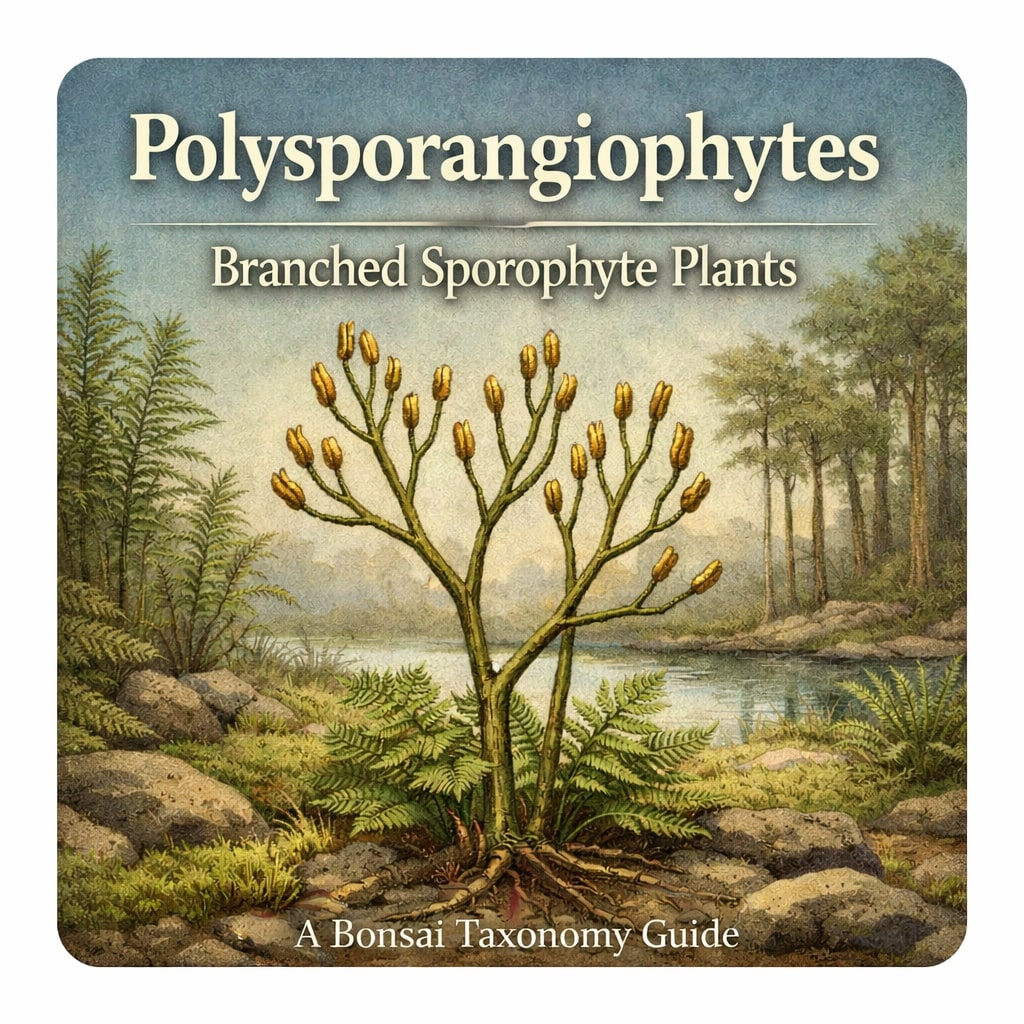
Polysporangiophytes are a major group of land plants defined by one key feature: a branched sporophyte that produces multiple sporangia. While the term may sound technical, it describes something fundamental to bonsai. Every true bonsai tree, from pines and junipers to maples and figs, belongs to this plant group.
Understanding Polysporangiophytes helps explain why bonsai trees can develop woody trunks, branch repeatedly, respond to pruning, and live for decades or even centuries in containers. These traits are not accidental. They are the result of an evolutionary shift that allowed plants to grow taller, branch more freely, and transport water and nutrients through specialised vascular tissue.
In this guide, we explore Polysporangiophytes through the lens of bonsai, focusing on what makes these plants different from mosses and other non-woody plants, how multiple sporangia relate to plant structure, and why this group forms the foundation of all tree-based bonsai practice.
Table of Contents
Taxonomy
– Kingdom: Plantae (Plant Kingdom)
— Clade: Embryophytes (Land Plants)
— Clade: Polysporangiophytes (Multiple Sporangia)
Where Polysporangiophytes fit in bonsai plant taxonomy
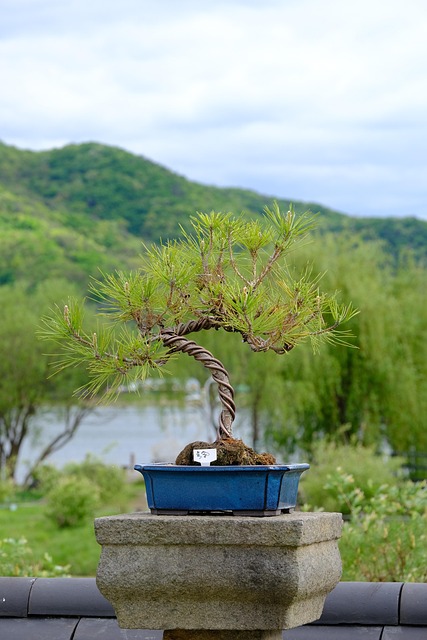
Polysporangiophytes occupy a crucial position in bonsai plant taxonomy because they represent the first major grouping that includes all tree-forming plants. Understanding where they sit helps bonsai practitioners move from broad plant classification to the specific families, genera, and species used in bonsai.
At the highest level, bonsai trees belong to the land plants, known as embryophytes. This group includes all plants that live primarily on land and develop protected embryos. However, embryophytes are divided into two major paths: bryophytes and Polysporangiophytes.
Polysporangiophytes form the branch that leads to vascular plants, which means they possess specialised tissues for transporting water and nutrients. This immediately separates them from mosses and liverworts, which cannot develop trunks, branches, or woody structure.
Within bonsai taxonomy, the hierarchy typically flows like this:
- Embryophytes – all land plants
- Polysporangiophytes – branched sporophyte plants with multiple sporangia
- Tracheophytes – vascular Polysporangiophytes
- Seed plants – gymnosperms and flowering plants
- Families – such as Pinaceae, Aceraceae, Oleaceae
- Genera – such as Pinus, Acer, Juniperus
- Species and cultivars – the specific trees used for bonsai
Polysporangiophytes act as the gateway level in this hierarchy. Once a plant is identified as a Polysporangiophyte, it is immediately known to be structurally capable of becoming a bonsai, provided it also meets other criteria such as woody growth and responsiveness to pruning.
From a practical perspective, bonsai artists rarely think in terms of Polysporangiophytes day to day. However, this classification explains why certain plants are suitable for bonsai while others are not. It also provides a logical framework for organising bonsai knowledge, from broad evolutionary traits down to species-specific care.
In bonsai plant taxonomy, Polysporangiophytes are the foundational group that connects evolutionary plant biology to the living trees shaped in bonsai containers.
What are Polysporangiophytes?
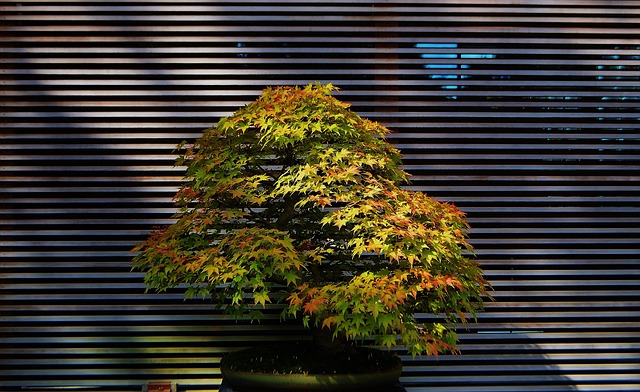
Polysporangiophytes are a major group of land plants characterised by a branched sporophyte that produces multiple sporangia (spore-producing structures). The name literally means “many sporangia plants.”
In simple terms, Polysporangiophytes are plants whose main life stage can branch repeatedly and form many reproductive organs. This branching ability marks a key evolutionary step that allowed plants to grow taller, spread wider, and develop complex structures.
Key characteristics of Polysporangiophytes
- Branched sporophyte rather than a single, unbranched stalk
- Multiple sporangia instead of just one
- Vascular tissue in all living members, allowing efficient transport of water and nutrients
- Capacity for woody growth, long lifespans, and complex branching
What plants are Polysporangiophytes?
Polysporangiophytes include all land plants except bryophytes (mosses, liverworts, and hornworts). This means:
- Ferns and fern allies
- Conifers such as pines and junipers
- Flowering plants such as maples, figs, elms, and olives
In other words, every true bonsai tree is a Polysporangiophyte.
Why Polysporangiophytes matter for bonsai
Because Polysporangiophytes can branch, form vascular wood, and respond to pruning, they are capable of developing trunks, ramification, and long-term structure. These traits make bonsai possible in the first place, something mosses and other non-vascular plants cannot achieve.
Understanding what Polysporangiophytes are provides the biological foundation for understanding why bonsai trees grow, heal, and shape the way they do.
Polysporangiophytes and multiple sporangia explained
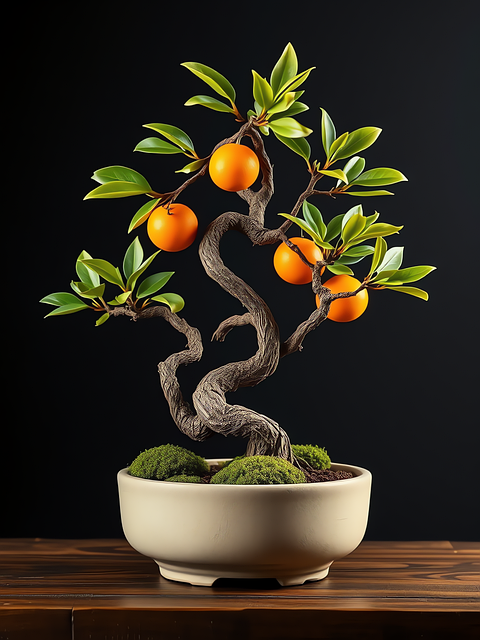
The defining feature of Polysporangiophytes is the presence of multiple sporangia on a branched sporophyte. To understand why this matters, it helps to break the term down.
A sporangium is a structure that produces and releases spores. In early land plants such as mosses, the sporophyte is typically unbranched and bears only a single sporangium. Once that sporangium releases its spores, the sporophyte’s role is essentially complete.
Polysporangiophytes represent a major evolutionary shift. Instead of a single, simple stalk, the sporophyte branches into multiple axes, with many sporangia forming on those branches. This allowed plants to reproduce more efficiently while also investing energy into growth, structure, and longevity.
Why multiple sporangia changed plant evolution
Having multiple sporangia meant plants no longer depended on a single reproductive event. Branching sporophytes could:
- Produce spores over a longer period
- Spread reproduction across multiple points
- Continue growing while reproducing
This shift supported taller growth, wider spread, and greater survival in early terrestrial environments.
What multiple sporangia mean for modern plants
Although most modern Polysporangiophytes reproduce by seeds rather than spores, the structural legacy of multiple sporangia remains. The same branching architecture that once supported many spore-bearing organs now supports:
- Complex branch systems
- Leaves and buds at multiple nodes
- Flowers, cones, or reproductive structures distributed across a plant
This architecture is fundamental to trees and shrubs.
The connection to bonsai
For bonsai practitioners, multiple sporangia are not about reproduction, but about structure. The ability of a plant to branch repeatedly, form secondary growth, and support multiple growing points is what allows:
- Trunk thickening
- Ramification through pruning
- Long-term refinement over decades
These traits exist because bonsai trees descend from Polysporangiophytes with branching sporophytes. Without the evolutionary step that introduced multiple sporangia, the tree forms used in bonsai would not exist.
In short, multiple sporangia are the biological marker of a plant group that made branching, wood, and tree form possible, laying the foundation for all bonsai trees.
Polysporangiophytes vs bryophytes: why mosses cannot be bonsai
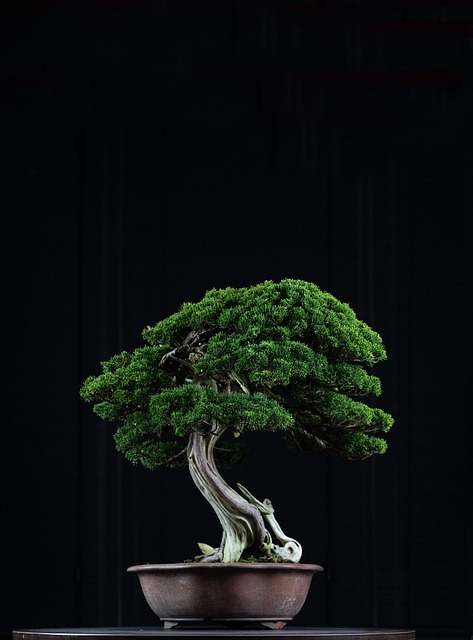
The difference between Polysporangiophytes and bryophytes explains, very clearly, why mosses can be used with bonsai but can never be bonsai.
Bryophytes include mosses, liverworts, and hornworts. These plants sit at an earlier evolutionary stage than Polysporangiophytes and lack several key features required for tree growth and long-term shaping.
Structural differences
Bryophytes have a simple, unbranched sporophyte that produces a single sporangium. This sporophyte is short-lived and remains dependent on the gametophyte for nutrients. In contrast, Polysporangiophytes have a branched, independent sporophyte capable of producing multiple sporangia and sustaining long-term growth.
Because of this difference:
- Bryophytes cannot form true stems or trunks
- Polysporangiophytes can develop woody axes and branching systems
Absence of vascular tissue
Bryophytes do not have true vascular tissue. Water and nutrients move through them by diffusion, which severely limits their size and structural complexity. Polysporangiophytes, on the other hand, possess xylem and phloem, allowing efficient internal transport and the development of height, girth, and branching.
Without vascular tissue, bryophytes:
- Cannot thicken or lignify
- Cannot respond to pruning or wiring
- Cannot sustain upright, self-supporting forms
Growth and lifespan limitations
Mosses grow as mats or cushions, spreading laterally rather than vertically. They do not produce secondary growth, buds, or dormant nodes. Polysporangiophytes can grow for decades or centuries, continually producing new branches and healing wounds, which is essential for bonsai cultivation.
Moss in bonsai: accent, not tree
Moss is widely used in bonsai, but only as a ground cover or visual accent. It enhances scale, moisture retention, and aesthetic age, but it does not function as the bonsai itself. The bonsai tree must always be a Polysporangiophyte capable of woody growth and structural refinement.
In summary, mosses cannot be bonsai because they lack branching sporophytes, vascular tissue, and the ability to form wood. Polysporangiophytes possess all of these traits, making them the only plants capable of becoming true bonsai trees.
Vascular tissue in Polysporangiophytes
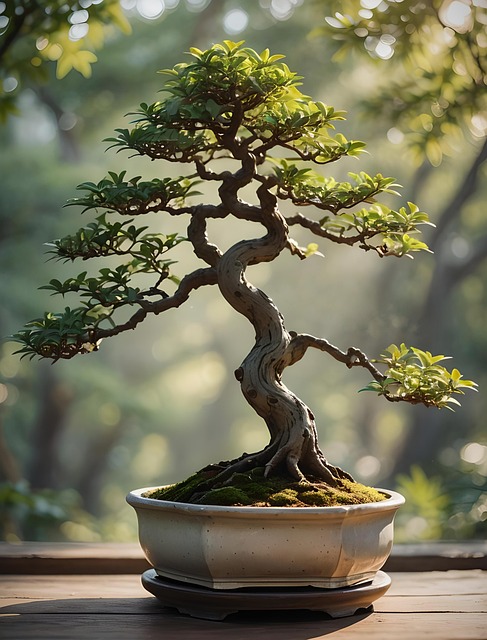
One of the most important features of Polysporangiophytes is the presence of vascular tissue, a trait found in all living members of this group. Vascular tissue is what allows these plants to grow tall, branch extensively, and develop woody structures, making bonsai possible.
Vascular tissue consists of two main components:
- Xylem, which transports water and dissolved minerals from the roots upward
- Phloem, which distributes sugars and energy produced through photosynthesis
Together, these tissues form an internal transport network that supports growth far beyond what non-vascular plants can achieve.
Why vascular tissue was a turning point
Before vascular tissue evolved, plants were limited to small, low-growing forms because water and nutrients had to move by diffusion. Polysporangiophytes overcame this limitation by developing specialised conducting cells, allowing them to:
- Grow upright and self-supporting
- Branch repeatedly without collapsing
- Supply distant leaves and buds with water and nutrients
This innovation laid the groundwork for trunks, branches, and eventually trees.
Vascular tissue and woody growth
In many Polysporangiophytes, especially those used for bonsai, vascular tissue becomes lignified, forming wood. This allows for:
- Trunk thickening over time
- Structural strength to support complex branch systems
- Healing of pruning cuts and wounds
Secondary growth, driven by the vascular cambium, is what enables bonsai trees to be shaped, reduced, and refined repeatedly over many years.
Early Polysporangiophytes and the origin of branching stems
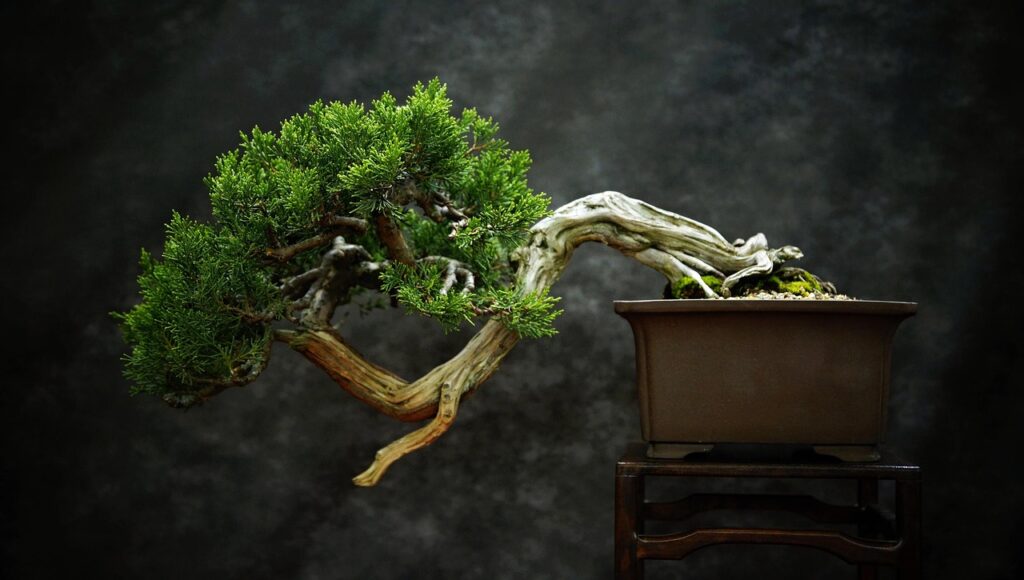
Early Polysporangiophytes mark one of the most important turning points in plant evolution: the shift from simple, unbranched growth to branching stems. This development fundamentally changed how plants occupied land and directly led to the forms we now recognise as trees and shrubs.
The earliest land plants were small and structurally simple. Their sporophytes were typically unbranched, producing a single sporangium at the tip of a stem. Early Polysporangiophytes broke away from this limitation by developing dichotomous branching, where a stem splits into two growing axes. Each of these axes could then grow independently and, crucially, bear its own sporangia.
Why branching was revolutionary
Branching stems allowed early Polysporangiophytes to:
- Increase their photosynthetic surface area
- Distribute reproductive structures across multiple points
- Continue growing while reproducing
Instead of relying on a single growth tip, these plants could spread risk and opportunity across many branches. If one growing point was damaged, others could continue to function.
From reproductive branching to structural branching
In early Polysporangiophytes, branching was closely tied to reproduction. Sporangia often formed at the tips of branches, making the entire architecture of the plant a reproductive system. Over time, this branching framework became increasingly specialised, separating vegetative growth from reproduction.
This separation allowed stems to thicken, support leaves, and form more complex branching patterns. What began as a way to hold multiple sporangia eventually became the structural backbone of woody plants.
The long-term legacy for bonsai trees
Modern bonsai trees inherit this ancient branching architecture. The ability to:
- Produce multiple branches from a single trunk
- Respond to pruning by activating dormant buds
- Develop fine ramification over time
all traces back to the early Polysporangiophytes that first evolved branching stems.
In bonsai, every cut, fork, and refined branch is a direct expression of this evolutionary innovation. Without the early Polysporangiophytes and their branching sporophytes, the complex tree forms central to bonsai art would never have existed.
Spores, seeds, and reproduction in Polysporangiophytes
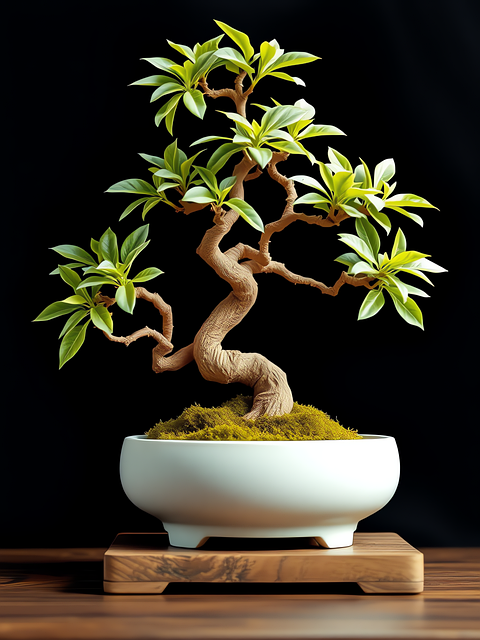
Polysporangiophytes include plants that reproduce using spores, seeds, or, in evolutionary terms, both. Understanding this progression helps explain why certain plant groups dominate bonsai practice while others remain limited to specialist or ornamental roles.
Spore-based Polysporangiophytes
Early Polysporangiophytes, as well as modern ferns and their allies, reproduce using spores. These spores are produced in sporangia and released into the environment, where they must land in suitable conditions to grow into a gametophyte.
Spore-based reproduction:
- Requires moisture for fertilisation
- Produces highly variable offspring
- Follows a more complex life cycle
While ferns can form impressive structures, their reliance on spores and lack of true woody secondary growth limit their suitability for long-term bonsai cultivation. Tree ferns, for example, can resemble bonsai trees visually but lack the branching response needed for refinement.
The evolutionary shift to seeds
Seed-producing Polysporangiophytes represent a major evolutionary advantage. Seeds protect the developing plant embryo and contain stored nutrients, allowing reproduction to occur independently of constant moisture.
Seed-based reproduction enabled plants to:
- Colonise drier environments
- Produce more predictable offspring
- Develop longer lifespans and complex woody structures
This shift gave rise to gymnosperms and flowering plants, the two groups that dominate bonsai.
Seeds and bonsai practice
Nearly all traditional bonsai trees reproduce by seed. This is not accidental. Seed plants:
- Develop strong, woody trunks
- Respond predictably to pruning and wiring
- Can live for decades or centuries in containers
Seeds also allow bonsai practitioners to grow trees from a young age, shaping structure gradually over time.
Why Polysporangiophytes form the foundation of bonsai trees
Polysporangiophytes form the foundation of bonsai trees because they possess the exact biological traits required for long-term shaping, refinement, and survival in containers. Bonsai is not simply about keeping a plant small; it is about guiding a living tree through decades of controlled growth. Only Polysporangiophytes are capable of this.
At the core of bonsai is a branched, independent sporophyte. This group grows through a dominant sporophyte stage that can branch repeatedly, heal wounds, and continue growing year after year. This allows bonsai trees to respond to pruning, produce new shoots, and develop increasingly complex branch structures over time.
Another critical factor is vascular tissue. This group transports water, minerals, and sugars internally through xylem and phloem. This internal transport system supports trunk thickening, long branches, and dense foliage while allowing the tree to survive severe reductions in size. Without vascular tissue, techniques such as wiring, defoliation, and structural pruning would not be possible.
Polysporangiophytes also exhibit secondary growth, which leads to the formation of wood. Wood provides mechanical strength and allows bonsai trees to hold shape once branches are wired and set. It also enables scar healing and callus formation, both essential for refining the appearance of aged trunks and branches.
Reproductive strategy plays a role as well. Most bonsai trees are seed-producing, which are adapted for longevity rather than rapid reproduction. This long-lived growth strategy aligns perfectly with bonsai, where trees are cultivated and refined over many years, sometimes across generations.
Finally, the evolutionary history of Polysporangiophytes explains why bonsai trees behave the way they do. Their ancestors developed branching stems, vascular systems, and durable tissues that allowed plants to become trees. Bonsai practice takes advantage of these traits, guiding natural growth patterns rather than fighting against them.
In essence, bonsai is possible because this group evolved the ability to branch, transport resources internally, and form wood. Every bonsai tree is a living expression of this evolutionary foundation.
Polysporangiophytes as the backbone of bonsai practice
Polysporangiophytes form the biological backbone of bonsai practice. Their evolution introduced the key traits that make bonsai possible: branched growth, vascular tissue, and the ability to form wood. Without these features, the techniques that define bonsai, such as pruning, wiring, and long-term refinement, simply would not work.
Every bonsai tree relies on a dominant, independent sporophyte capable of responding to human intervention over many years. This capacity comes directly from this group’s lineage, where plants first developed the ability to branch repeatedly, transport resources internally, and sustain long lifespans.
Understanding this group gives bonsai practitioners a deeper appreciation of why certain plants succeed in containers while others fail. It also provides a logical foundation for bonsai taxonomy, helping growers move from broad plant groups to the specific families and species best suited to bonsai cultivation.
In essence, bonsai is not about forcing plants into unnatural forms. It is about working with the evolutionary strengths of this group, guiding growth patterns that have existed for hundreds of millions of years. Every refined branch, thickened trunk, and aged silhouette in bonsai is a direct expression of this ancient and resilient plant group.