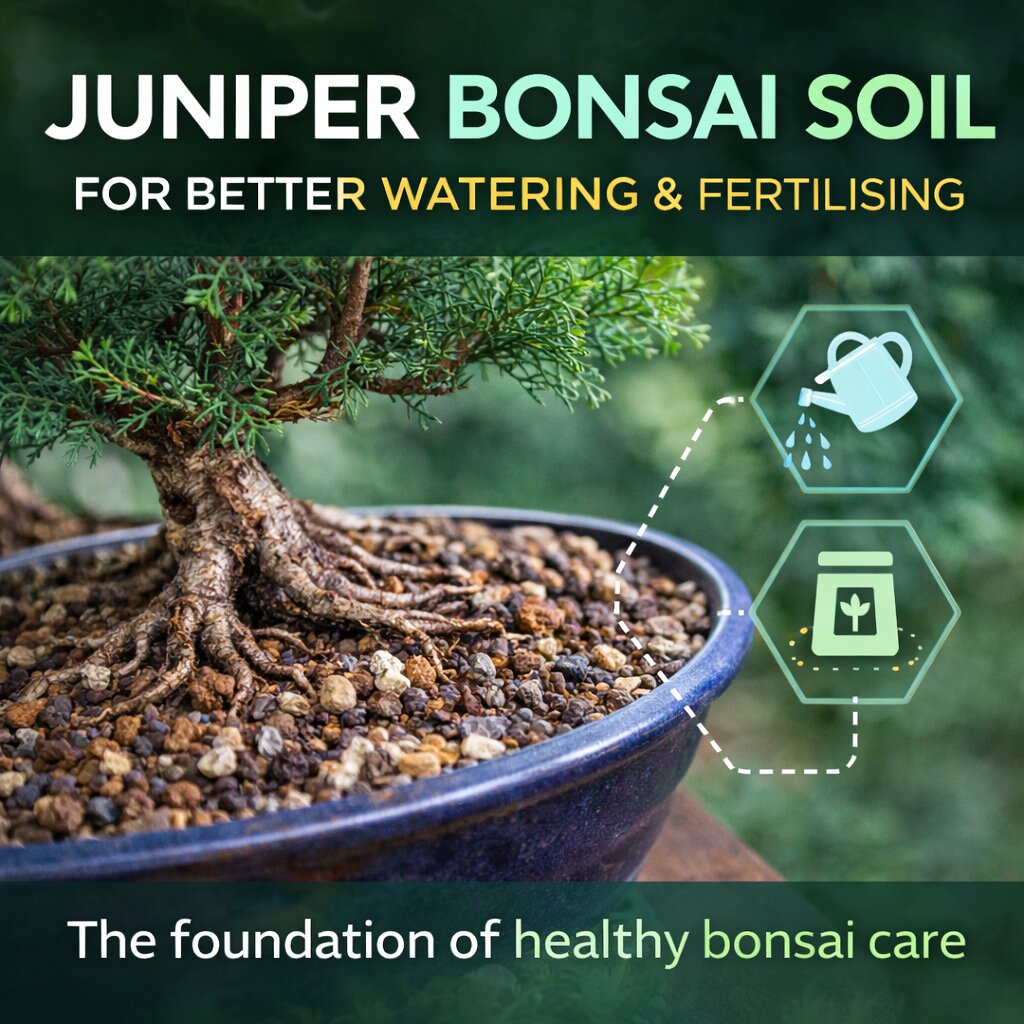
Choosing the right juniper bonsai soil is one of the most important decisions you will make for your tree. While light, pruning, and shaping define appearance, soil determines health. Without proper juniper bonsai soil, watering becomes unpredictable and fertiliser becomes ineffective.
Junipers are hardy, but they do not tolerate heavy, compacted conditions in shallow bonsai containers. Their roots need oxygen, controlled moisture, and consistent drainage. When juniper bonsai soil is structured correctly, the entire care routine becomes easier to manage and far more reliable.
This guide connects juniper bonsai soil directly to your watering and fertiliser strategy, ensuring all three elements work together as one system.
Why Juniper Bonsai Soil Cannot Be Ordinary Potting Mix
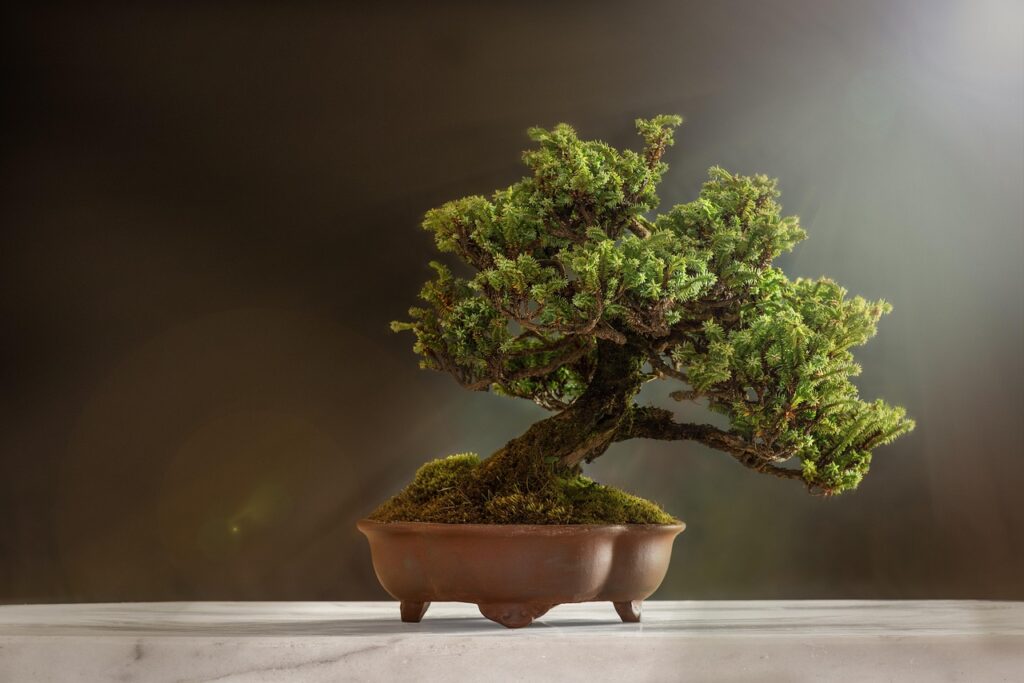
Standard potting soil is too fine and retains too much moisture for bonsai cultivation. In a deep garden bed, excess water can disperse naturally. In a shallow bonsai container, it cannot. That is why specialised juniper bonsai soil is essential.
Proper juniper bonsai soil allows water to flow freely through the pot while still holding enough moisture for root absorption. This balance prevents root rot and reduces the risk of fungal disease. It also promotes stronger, more fibrous root systems that support compact growth.
In climates like Cape Town, where summers are hot and water restrictions may apply, the structure of juniper bonsai soil becomes even more critical. A well-draining mix gives you greater control over watering frequency and prevents overheating at the root level.
Core Characteristics of Effective Juniper Bonsai Soil
Good juniper bonsai soil is not about a single ingredient. It is about structure and particle size working together to support airflow and drainage.
An effective mix should:
- Drain quickly after thorough watering
- Maintain air pockets within the root zone
- Retain moderate moisture without becoming soggy
- Resist rapid breakdown over time
Materials such as akadama, pumice, and lava rock are commonly used because they provide stability and aeration. In slightly drier climates, a small organic component may help moderate moisture retention. The goal is always balance, not heaviness.
Avoid fine sand or dense compost. These materials restrict airflow and compromise the purpose of proper juniper soil for bonsais.
How Juniper Bonsai Soil Influences Watering
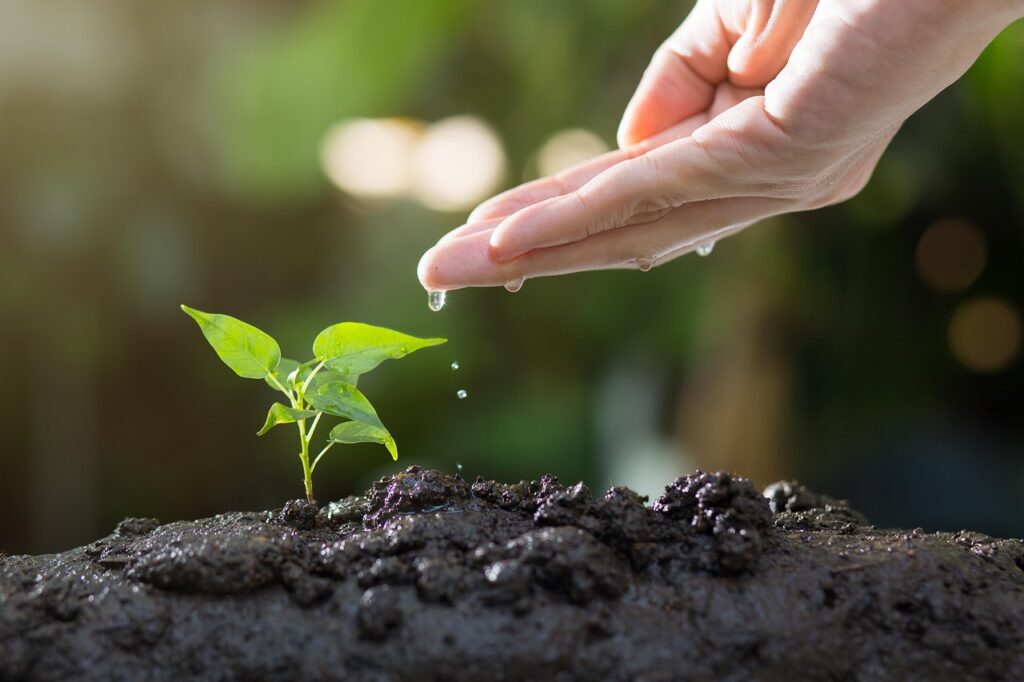
The structure of your juniper bonsai soil directly affects your watering rhythm. In a fast-draining mix, you can water thoroughly until runoff appears from the drainage holes. The soil then dries gradually, encouraging roots to grow deeper in search of moisture.
If juniper bonsai soil is too compact, water lingers around the roots. This leads to weak growth, yellowing foliage, and potential root damage. Over time, the tree becomes less resilient.
When following your juniper bonsai watering guide, remember that soil determines frequency. Well-structured juniper bonsai soil allows you to water confidently without fear of over-saturation.
Juniper Soil for Bonsais and Fertiliser Performance
Nutrient Flow and Drainage
Healthy juniper bonsai soil ensures that fertiliser is distributed evenly throughout the root zone. When water moves freely, nutrients travel with it, allowing consistent absorption.
Preventing Salt Build-Up
In poorly draining soil, fertiliser salts accumulate and damage roots. Proper juniper soil for bonsais prevents this by allowing excess nutrients to flush out during watering.
Supporting Active Growth
When roots receive oxygen and balanced moisture, they respond better to feeding. This means your juniper bonsai fertiliser routine becomes more efficient and predictable.
By aligning juniper soil for bonsais with your fertiliser schedule, you create a stable environment for steady, controlled growth.
Refreshing Juniper Bonsai Soil Over Time
Even the best juniper soil for bonsais breaks down gradually. Particles become smaller, drainage slows, and airflow reduces. That is why periodic repotting is essential.
Younger trees often require more frequent repotting, while mature specimens can remain stable for longer periods. During repotting, removing compacted material and replacing it with fresh juniper bonsai soil restores proper drainage and aeration.
This refresh resets your watering and fertiliser balance, allowing the tree to continue thriving without stress.
Creating a Complete Care System
Juniper soil for bonsais is not an isolated topic. It connects directly to watering technique and fertiliser timing. When soil structure is correct, watering becomes consistent and feeding becomes effective.
By reviewing your juniper bonsai watering and juniper bonsai fertiliser guides alongside this soil foundation, you build a complete care system. Strong roots lead to strong foliage, and strong foliage leads to a resilient, beautiful juniper bonsai.
Healthy growth always begins below the surface. And it begins with the right juniper bonsai soil.