
Common Juniper bonsai is a popular choice for outdoor bonsai enthusiasts due to its hardiness, long lifespan, and naturally rugged appearance. As a species adapted to harsh climates and poor soils, the common juniper responds well to bonsai techniques when its fundamental needs are understood and respected.
This care guide focuses specifically on Common Juniper bonsai care, outlining how to care for this species in a bonsai setting rather than in the landscape. While Juniperus communis is resilient, successful bonsai care depends on proper light exposure, controlled watering, appropriate soil, and seasonal maintenance. Understanding these factors helps prevent common issues and allows the tree to develop strength, character, and longevity over time.
The sections below provide clear, species-specific guidance on how to care for a Common Juniper bonsai, covering essential care practices as well as styling considerations and identification tips. This guide is designed to support both developing growers and experienced bonsai practitioners seeking reliable, structured care information.
Table of Contents
TL:DR Quick Common Juniper Bonsai Care Overview
This quick overview provides a concise snapshot of Common Juniper bonsai care for readers who want essential information at a glance. It summarises the core requirements for keeping a Juniperus communis bonsai healthy and stable before moving into the detailed care sections below.
| Care aspect | Details |
|---|---|
| Scientific name | Juniperus communis |
| Common name | Common juniper |
| Bonsai type | Outdoor bonsai |
| Light | Full sun |
| Watering | Moderate, allow soil to partially dry between watering |
| Soil | Free-draining bonsai soil mix |
| Fertiliser | Balanced fertiliser, NPK 10–10–10 or 12–12–12 |
| Pruning | Best done in spring and late summer |
| Wiring | Suitable, apply with care due to stiff branches |
| Difficulty | Intermediate |
| Rarity | Uncommon in commercial bonsai stock |
| Climate sensitivity | Cold-hardy, tolerant of frost and wind |
| Growth habit | Upright, spreading, or prostrate forms |
Common Juniper Bonsai Care Guide
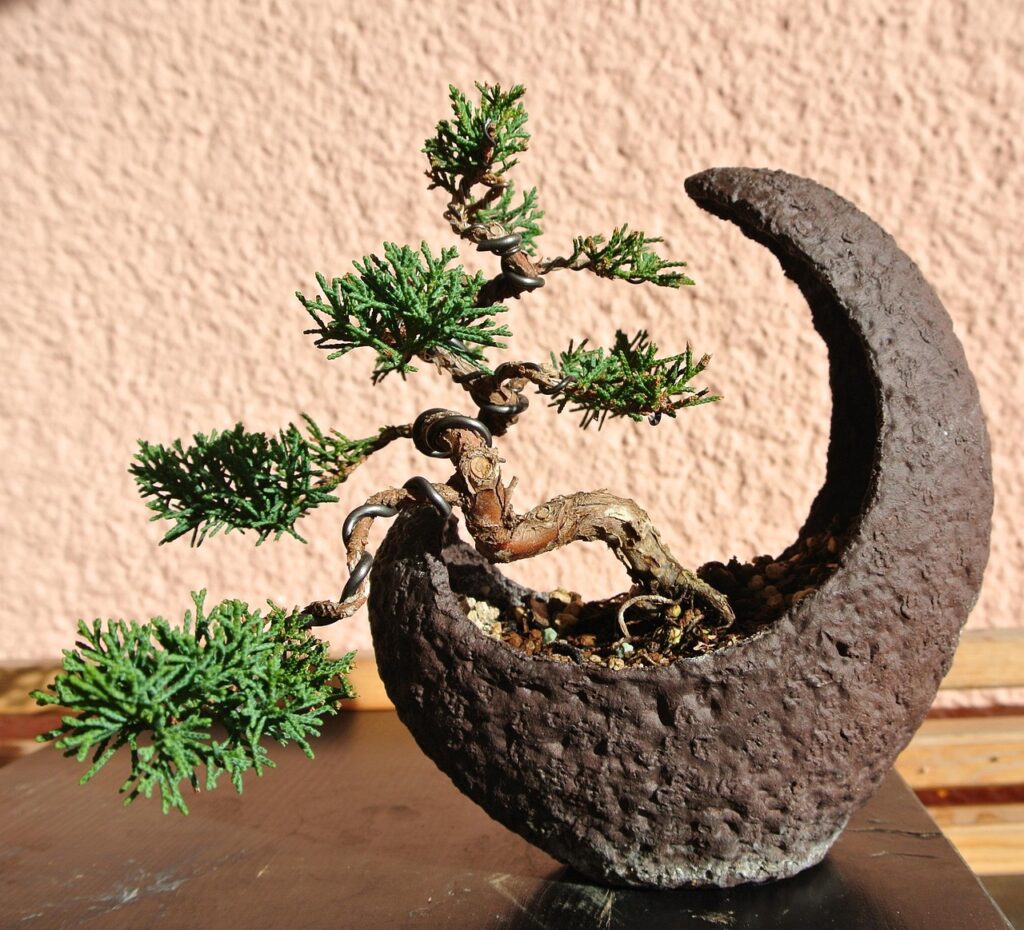
Caring for a Common Juniper bonsai requires an understanding of how the species behaves in nature and how those traits translate into container cultivation. While the Common Juniper bonsai is a hardy and resilient species, bonsai care demands consistency, patience, and respect for its slow growth and sensitivity to certain practices. The following sections outline the core elements of Common Juniper bonsai care, providing practical guidance that aligns with the species’ biology rather than generic juniper advice.
Light
Common juniper is a full-sun species and should be grown outdoors year-round. Strong, direct sunlight is essential for maintaining compact growth, healthy needle colour, and overall vigour. Insufficient light leads to weak growth, elongated shoots, and increased susceptibility to pests and disease.
Ideally, the tree should receive several hours of direct sunlight daily. In extremely hot climates, some light afternoon shade may be beneficial, but prolonged shade should be avoided.
Watering
Watering is one of the most critical aspects of bonsai care for common juniper. The species prefers a moist but well-aerated root environment and does not tolerate waterlogged soil. Allow the soil surface to dry slightly between watering, then water thoroughly until excess drains from the pot.
Overwatering is a common cause of decline, especially in cool or humid conditions. Underwatering for short periods is generally tolerated better than consistently wet roots.
Pruning
Pruning should be carried out with restraint and timing in mind. Structural pruning is best done in spring or late summer when the tree is actively growing but not under seasonal stress. Removing entire shoots is preferable to pinching needle tips, which can lead to browning and weakened growth.
Regular pruning helps maintain shape and encourages interior growth, but excessive removal of foliage can reduce the tree’s energy reserves.
Shaping
Shaping a Common Juniper bonsai should reflect its natural growth habits. The species responds best to styles that emphasise ruggedness and age, such as informal upright, slanting, windswept, or prostrate forms.
Branch positioning should be gradual and deliberate. Due to the stiffness of older wood, shaping is most effective on younger branches. Heavy bending should be avoided, as the Common Juniper bonsai is less flexible than many other juniper species.
Soil
Free-draining soil is essential for successful Common Juniper bonsai care. A well-balanced bonsai soil mix that allows rapid drainage while retaining sufficient moisture is ideal. The species tolerates relatively poor soils, but compaction must be avoided.
Soil mixes should prioritise aeration, especially in wetter climates, to prevent root rot and fungal issues.
Repotting
Repotting should be done sparingly, typically every three to five years, depending on growth rate and root condition. Spring is the preferred time, just before active growth begins. Root pruning should be conservative, as the species does not respond well to aggressive root reduction.
After repotting, protect the tree from extreme weather and avoid fertilising until new growth is observed.
Wiring
Wiring is possible but requires care. Branches of the Common Juniper bonsai are often stiff and brittle, particularly as they age. Wiring should be applied during periods of active growth and monitored closely to prevent wire bite.
Using guy wires or gradual repositioning techniques is often safer than tight wiring, especially for older branches.
Fertiliser
Fertilising supports steady, controlled growth in Common Juniper bonsai without encouraging excessive extension or coarse foliage. The species responds best to moderate feeding that prioritises long-term health over rapid growth.
During the growing season, from spring through early autumn, use a balanced fertiliser with an approximate NPK ratio of 10–10–10 or 12–12–12. This provides equal support for foliage development, root strength, and overall vigour. Organic fertilisers or slow-release formulations are particularly well-suited, as they deliver nutrients gradually and reduce the risk of root burn.
Avoid high-nitrogen fertilisers, especially in late summer or autumn, as they can produce soft growth that is vulnerable to cold damage. Fertilising should be paused during winter dormancy and withheld for several weeks after repotting, resuming only once new growth is clearly visible.
Consistent, moderate feeding aligned with seasonal growth cycles is more effective than heavy or irregular fertilisation and helps maintain refined structure and needle health over time.
Propagation
Propagation is most commonly achieved through cuttings, taken from healthy, semi-hardwood shoots. Success rates can be variable, and rooting is often slow. Seed propagation is possible but impractical for bonsai due to long germination times and unpredictable results.
Propagation is best approached as a long-term project rather than a quick method of producing bonsai material.
Seasonal care
Seasonal care is essential for maintaining long-term health. Common juniper is cold-hardy and requires winter dormancy, making outdoor overwintering necessary in most climates. Protection from extreme cold may be required in very harsh conditions, particularly for potted trees.
In summer, ensure adequate watering and airflow during hot periods, while reducing stress during heatwaves.
Pests
Common pests include spider mites, aphids, and scale insects. Regular inspection is important, as early detection makes treatment far easier. Healthy trees grown in appropriate light and airflow are less likely to suffer infestations.
Pests are often a sign of underlying stress rather than a primary problem.
Diseases
Root rot and fungal infections are the most serious disease concerns, usually linked to poor drainage or excessive watering. Needle browning may occur if roots are compromised or if the tree experiences prolonged stress.
Preventative care, including proper soil, watering practices, and seasonal management, is the most effective defence against disease.
How to identify a Common Juniper bonsai
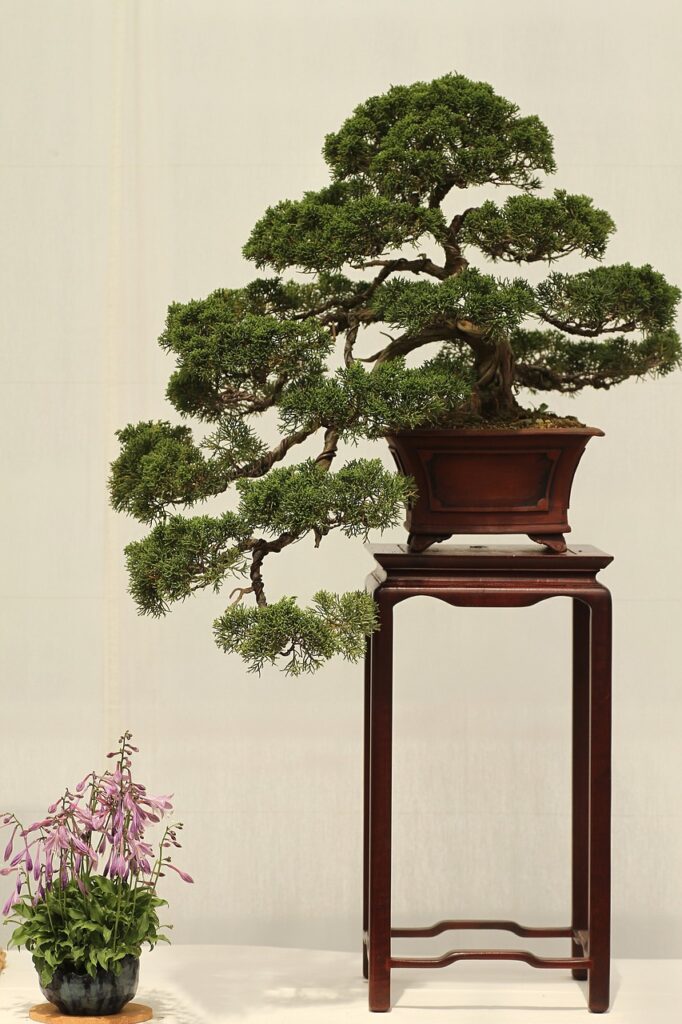
Correct bonsai identification is essential when working with juniper bonsai, as care requirements and styling responses can vary significantly between species. The Common Juniper bonsai has several distinctive features that allow it to be identified reliably, even in a bonsai setting where size and growth are controlled.
The following characteristics focus on observable traits that remain consistent across growth forms and help distinguish a Common Juniper bonsai from other juniper species commonly used in bonsai.
Leaf identification
Common juniper is easily recognised by its needle-like foliage, which remains in this juvenile form throughout the plant’s life. Leaves are arranged in whorls of three and are stiff, sharp, and pointed. Each needle typically has a single, broad white stomatal band running along the inner surface.
Unlike many junipers used in bonsai, the Common Juniper bonsai does not develop scale-like foliage as it matures. This permanent needle structure is one of the most reliable identification markers, especially when compared with species such as Juniperus chinensis.
Flower gallery
The Common Juniper bonsai does not produce flowers in the conventional sense. As a conifer, it reproduces through cones rather than petals or blooms. In bonsai, reproductive structures are often subtle and easily overlooked.
Male plants produce small, yellow pollen cones in late winter to early spring, usually at the tips of short shoots. These cones are temporary and disappear soon after pollen release. Female plants do not display visible flowers but instead develop cone structures that later mature into berry-like fruits.
Fruit identification
The fruit of the Common Juniper bonsai is a fleshy seed cone commonly referred to as a juniper berry. On female plants, these cones are initially green and gradually mature over approximately 18 months.
When fully ripe, the cones turn purple-black with a bluish waxy coating. They are spherical and relatively small, usually between 4 and 12 millimetres in diameter. The long maturation period often results in green and dark cones being present on the tree at the same time.
Seeds and pods
Each mature juniper cone typically contains three hard, unwinged seeds enclosed within fused fleshy scales. These seeds are not released by the cone splitting open, as seen in some other conifers. Instead, they are dispersed when birds consume the cones and later pass the seeds in their droppings.
In bonsai, seed production may be limited due to pruning and container growth, but the structure of the cones and seeds remains consistent with wild specimens.
Bark textures
The bark of the Common Juniper bonsai is thin, fibrous, and exfoliating. As the tree ages, the bark peels away in narrow strips, revealing grey-brown to reddish-brown tones beneath. This texture contributes to the aged appearance valued in bonsai and becomes more pronounced on older trunks and branches.
The bark is not deeply fissured, even in very old specimens, which helps distinguish it from some other juniper species with heavier, more rugged bark.
Seasonal changes
Seasonal changes in the Common Juniper bonsai are subtle but informative. Needle colour may deepen to darker green or develop a slight bronze tint during winter, particularly in cold climates. This colour shift is normal and reverses in spring as growth resumes.
Growth slows significantly during winter dormancy, with new shoots appearing in spring and early summer. The presence of both immature and mature cones across seasons can also aid identification when examining female trees.
Bonsai styles suited to this species
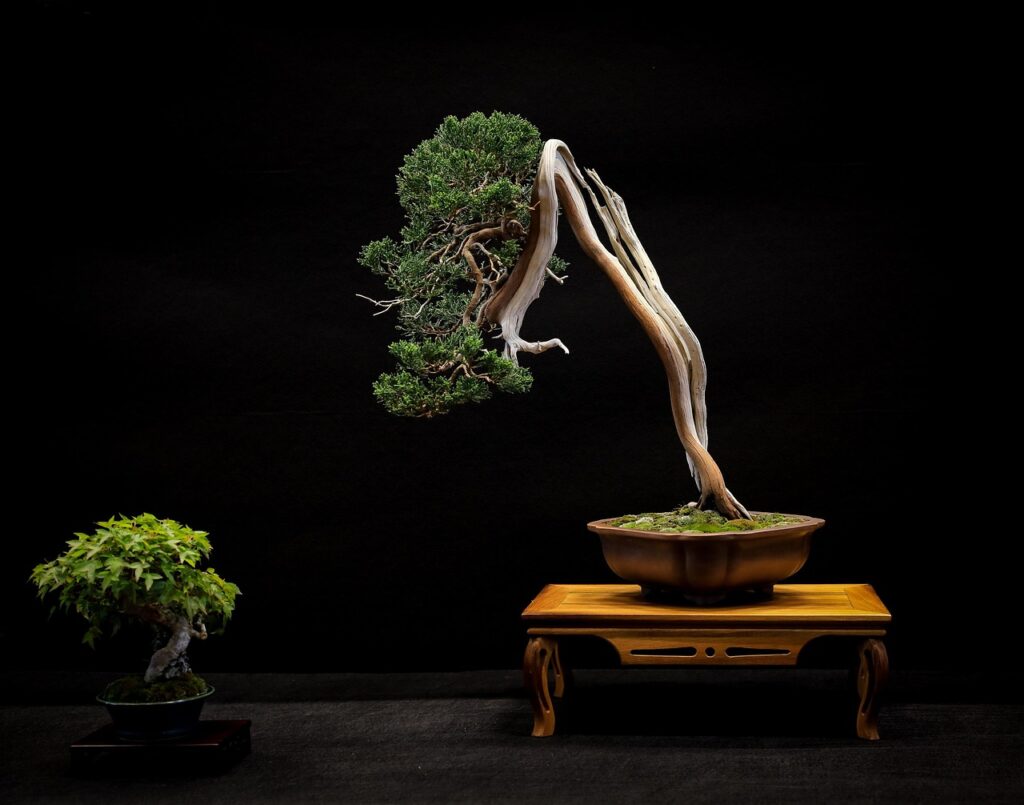
The natural growth habits and environmental adaptations of the Common Juniper bonsai make it well-suited to bonsai styles that emphasise age, resilience, and exposure to the elements. Rather than forcing highly refined or ornamental forms, this species is best expressed through designs that reflect its rugged character and slow, deliberate growth.
The following bonsai styles align particularly well with the structure and behaviour of a Common Juniper bonsai.
Informal upright: Informal upright styles work well for upright forms of the Common Juniper bonsai found in sheltered environments. Gentle trunk movement, irregular branching, and a natural taper allow the tree’s age and character to develop without appearing overly formal or constrained.
Slanting: Slanting styles reflect trees shaped by wind, slope, or uneven terrain. This style suits the species’ tendency to adapt to environmental pressure and allows for strong visual movement while maintaining a grounded, natural appearance.
Windswept: The windswept style is particularly appropriate for common juniper, especially when working with material that naturally shows directional growth. Sparse foliage pads, exposed deadwood, and a unified flow of branches reinforce the impression of long-term exposure to harsh conditions.
Prostrate and semi-cascade: Prostrate and semi-cascade styles are ideal for alpine and ground-hugging forms of the Common Juniper bonsai. These styles emphasise horizontal movement and low profiles, closely mirroring how the species grows in high-altitude and subarctic regions.
Deadwood features: While not a standalone style, the use of deadwood elements such as jin and shari complements many of the above forms. The species’ fibrous wood lends itself well to subtle deadwood features that enhance the sense of age and survival rather than dramatic contrast.
Overall, the most successful bonsai designs for the Common Juniper bonsai are those that respect its natural tendencies. Styles that prioritise realism, environmental storytelling, and long-term development allow the species to express its character most convincingly in bonsai form.
Symbolism and cultural significance
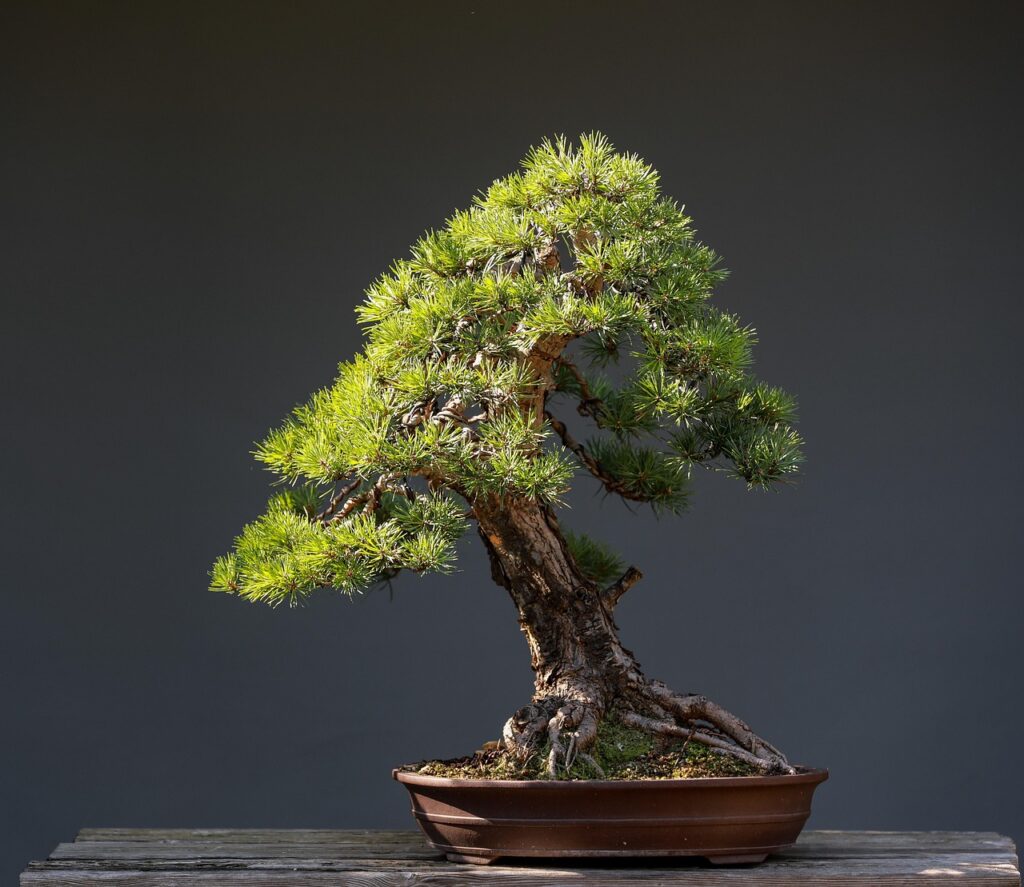
The Common Juniper bonsai has held symbolic and cultural importance across many societies due to its longevity, resilience, and distinctive aromatic qualities. Its ability to survive in harsh environments has shaped how it has been perceived and valued throughout history, often associating the species with endurance, protection, and continuity.
In European folklore, common juniper was widely regarded as a protective plant. Branches were traditionally burned or hung in homes to ward off illness and negative influences, while juniper smoke was used in cleansing rituals. These practices were rooted in both spiritual belief and the plant’s natural antiseptic properties.
The species has long been associated with purification and renewal. In several northern and alpine cultures, juniper was used in ceremonial contexts to mark seasonal transitions or to cleanse spaces before important events. Its evergreen nature reinforced symbolism connected to life, persistence, and survival through winter.
Culinary and medicinal uses further elevated its cultural significance. The aromatic cones, known as juniper berries, became closely linked to preservation, flavouring, and traditional remedies. Their role in the production of gin and regional spirits strengthened the plant’s association with craftsmanship, heritage, and regional identity.
In bonsai, these symbolic meanings translate naturally into design philosophy. A Common Juniper bonsai is often viewed as a representation of endurance and quiet strength rather than ornamental beauty. Its aged appearance, rugged bark, and resilient growth echo themes of survival, patience, and harmony with nature, making it a meaningful subject beyond its horticultural value.
Companion plants and wildlife attraction
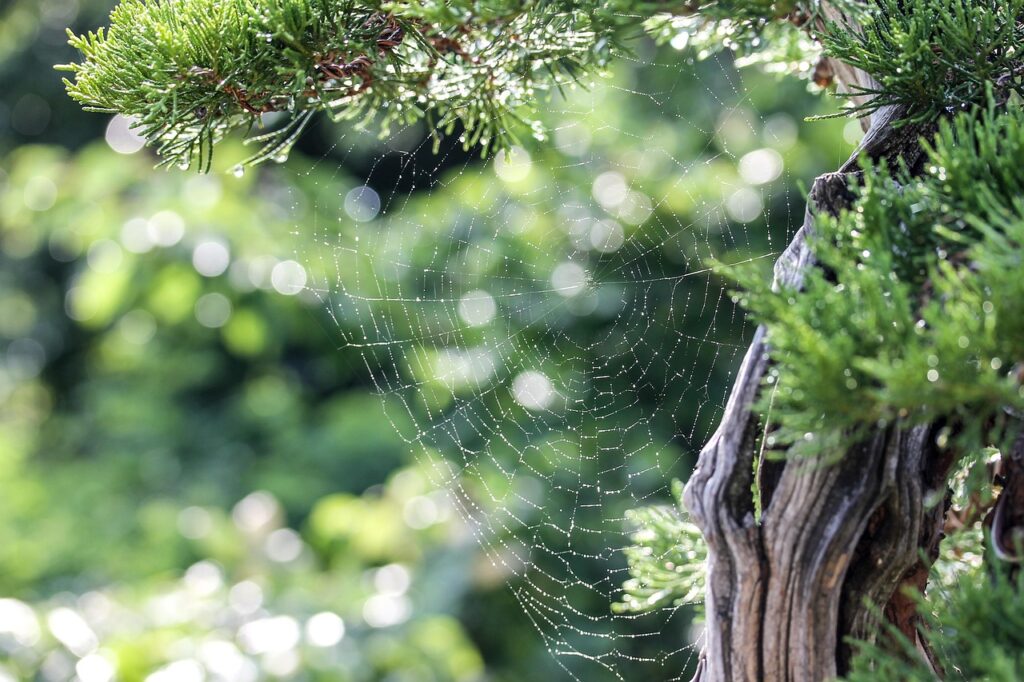
Choosing appropriate companion plants and understanding wildlife interactions can enhance both the visual impact and ecological value of a Common Juniper bonsai display. While bonsai is often presented as a standalone art form, thoughtful pairing with accent plants and an awareness of beneficial wildlife can reinforce seasonal context, scale, and a naturalistic aesthetic.
This section focuses on suitable companion plants and the types of wildlife commonly associated with healthy outdoor juniper bonsai, distinct from pest considerations.
Moss
Moss is a natural companion for the Common Juniper bonsai, particularly in temperate and cooler climates. Species such as Hypnum moss, Bryum moss, and sheet moss (Hypnum cupressiforme) are well-suited due to their fine texture and tolerance of outdoor conditions.
These mosses help create a sense of age and scale while retaining surface moisture and moderating soil temperature. Moss should be encouraged selectively rather than allowed to dominate the soil surface, with care taken to keep the trunk base dry and well ventilated.
Flowers
Flowering accent plants can be used sparingly to introduce seasonal cues into a juniper display. Small, low-growing species are most effective, reinforcing scale without competing visually with the tree.
Suitable flowering companions include Bellis perennis (common daisy), Viola species, and Arenaria (sandwort). These plants offer subtle blooms and compact growth habits that complement the rugged character of the Common Juniper bonsai.
In formal bonsai presentation, flowering accents are often temporary and used to reflect the season rather than planted permanently.
Herbs
Certain small herbs can function as companion plants when used thoughtfully, particularly in outdoor display settings. Compact, fine-textured herbs that tolerate similar light and soil conditions are best suited.
Recommended options include Thymus serpyllum (creeping thyme), Origanum vulgare (oregano) in miniature forms, and Chives (Allium schoenoprasum), which offer vertical accents without overwhelming the composition. These herbs should be kept well-trimmed to maintain balance and scale.
Wildlife attraction
A healthy Common Juniper bonsai can attract beneficial wildlife when grown outdoors. Birds are drawn to the dense branching structure, which provides shelter and perching opportunities, and may occasionally forage around the tree.
Butterflies may be attracted by nearby flowering companions, while beneficial predatory insects such as praying mantises, ladybirds, and lacewings help maintain ecological balance by preying on harmful insects. Spiders may also establish themselves within the branches, contributing to natural pest control.
Encouraging beneficial wildlife supports a balanced growing environment and reinforces the connection between bonsai cultivation and natural ecosystems.
Care summary and practical notes
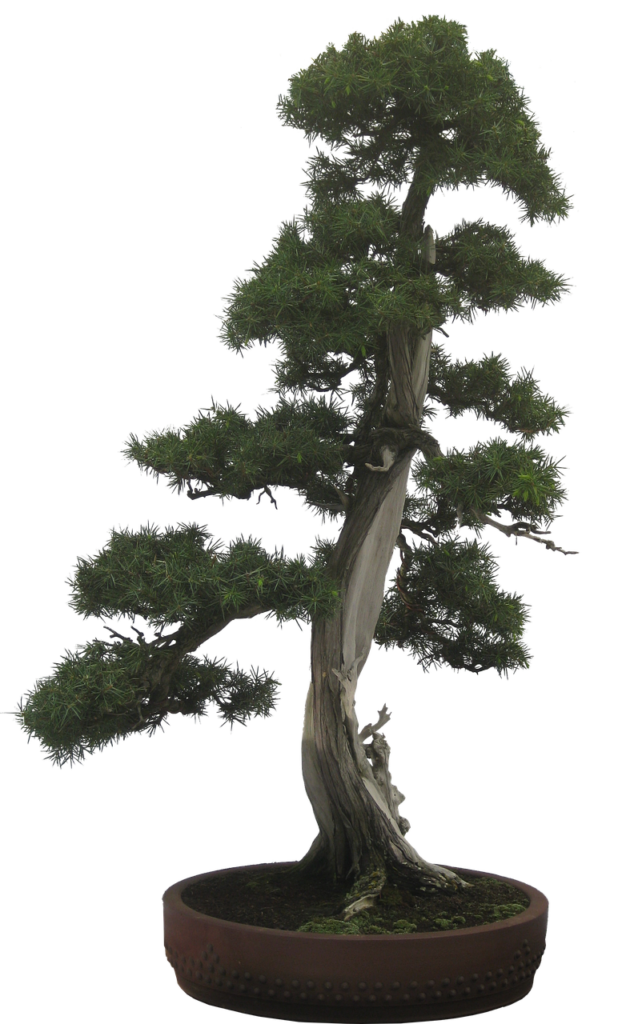
The Common Juniper bonsai is a resilient, long-lived species that rewards patience and consistency rather than rapid intervention. Its natural tolerance for cold, wind, and poor soils makes it well-suited to outdoor bonsai cultivation, but its slow growth and stiff structure require a measured, observant approach to care.
Successful bonsai care is built on a few key principles. Full sun exposure, free-draining soil, and careful watering form the foundation of long-term health. Pruning and shaping should respect the species’ natural growth habits, favouring gradual development over heavy styling. Wiring and repotting should always be done conservatively, with attention to seasonal timing and recovery.
Common Juniper bonsai responds best when its natural character is allowed to guide design choices. Styles that emphasise age, exposure, and environmental struggle are more convincing than highly refined or ornamental forms. Subtle deadwood, open structure, and restrained foliage contribute to a realistic and enduring appearance.
Above all, this species benefits from a long-term mindset. Growth is slow, changes are incremental, and progress is often measured over years rather than seasons. When cared for with restraint and respect, the Common Juniper bonsai develops strength, character, and a timeless presence that reflects both its natural resilience and its place in bonsai tradition.