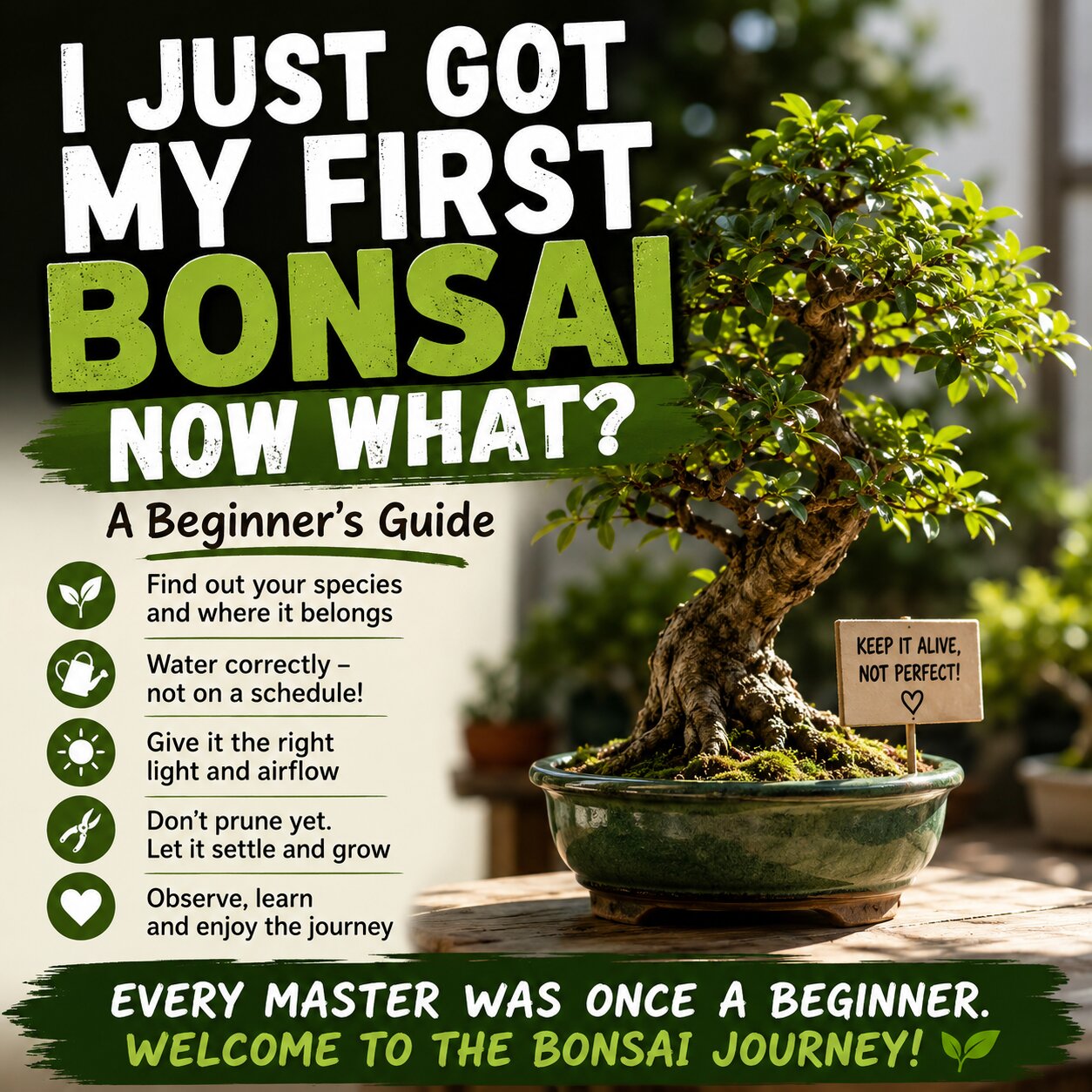
Congratulations! You’ve bought your first bonsai.
Maybe you found a beautiful little tree at your local nursery. Perhaps someone gave you one as a gift. Maybe you spotted one at a market, fell in love with it and brought it home without having the faintest idea what you’re supposed to do with it.
Now it’s sitting somewhere in your home or garden while you’re wondering:
What do I do with it now?
Welcome to starting a new bonsai!
The good news is that you don’t need to become a bonsai master overnight. In fact, one of the biggest mistakes beginners make is trying to do too much immediately.
Your first responsibility isn’t creating an award-winning bonsai.
It’s keeping your new little tree happy and healthy while you learn about it.
First: Find Out What Bonsai You Have
Before reaching for the pruning scissors, fertiliser or watering can, there’s something much more important you need to do.
Identify your tree.
“Bonsai” isn’t a species of plant. Bonsai is the practice of cultivating trees and shrubs in containers while using techniques that create the appearance and proportions of mature trees.
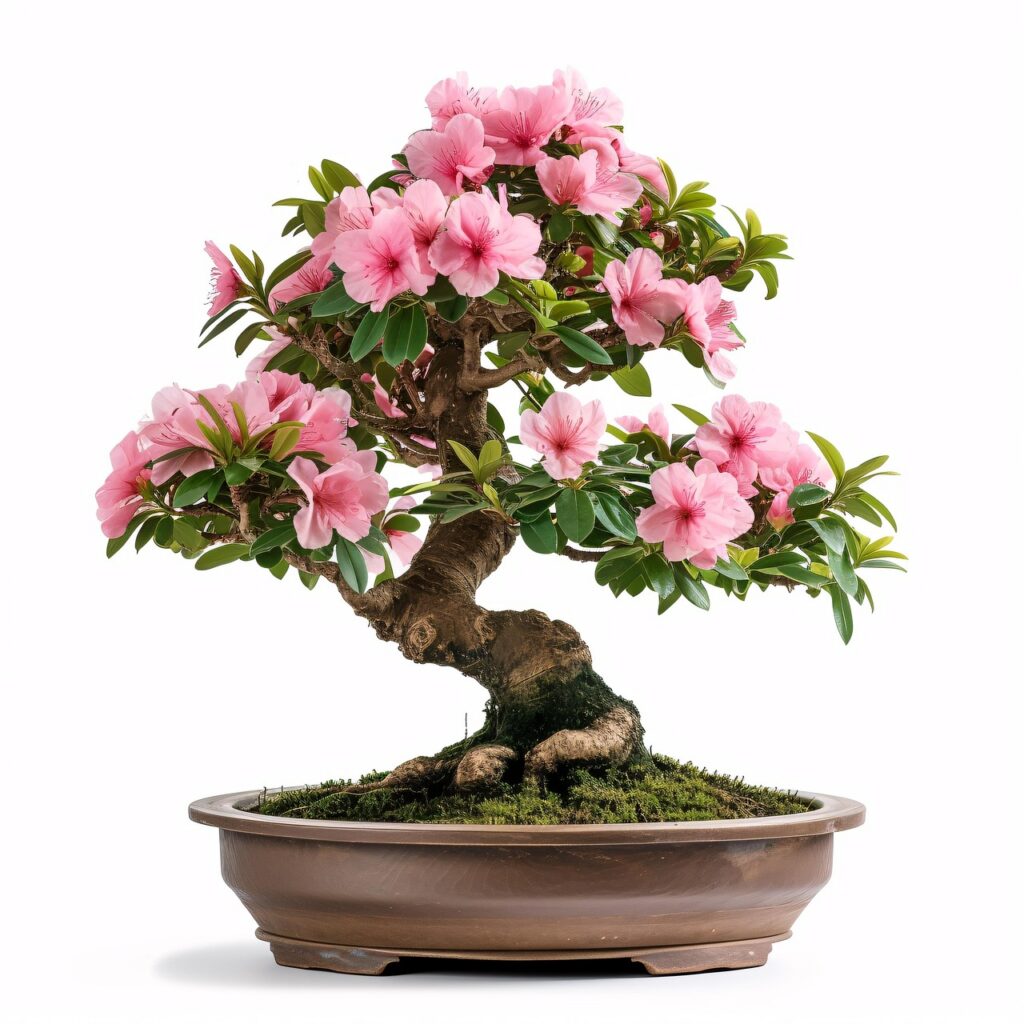
Your new bonsai could therefore be a juniper, ficus, Chinese elm, maple, azalea, olive or one of many other species.
And they don’t all want the same things.
Some require plenty of outdoor sunlight. Others tolerate indoor environments better. Certain species lose their leaves during winter, while others remain evergreen.
If your bonsai came with a label, that’s your starting point.
If it didn’t, take clear photographs of the leaves, trunk and overall tree and try identifying the species before making major care decisions.
Does Your Bonsai Belong Indoors or Outdoors?
Here’s one of the first surprises awaiting many new bonsaists:
Most bonsai aren’t houseplants.
That beautiful little juniper bonsai tree you bought may look fantastic sitting beside your television, but that doesn’t mean it wants to live there.
Many traditional bonsai species are outdoor trees. They need natural sunlight, seasonal temperature changes and proper airflow.
Tropical and subtropical species such as certain ficus varieties can generally cope much better with indoor environments, provided they receive sufficient light.
This is another reason identifying your bonsai is so important.
Don’t decide where the tree should live based purely on where it looks prettiest.
Put it where the tree needs to be.
Your First Bonsai Mission: Keep It Alive, Not Make It Perfect
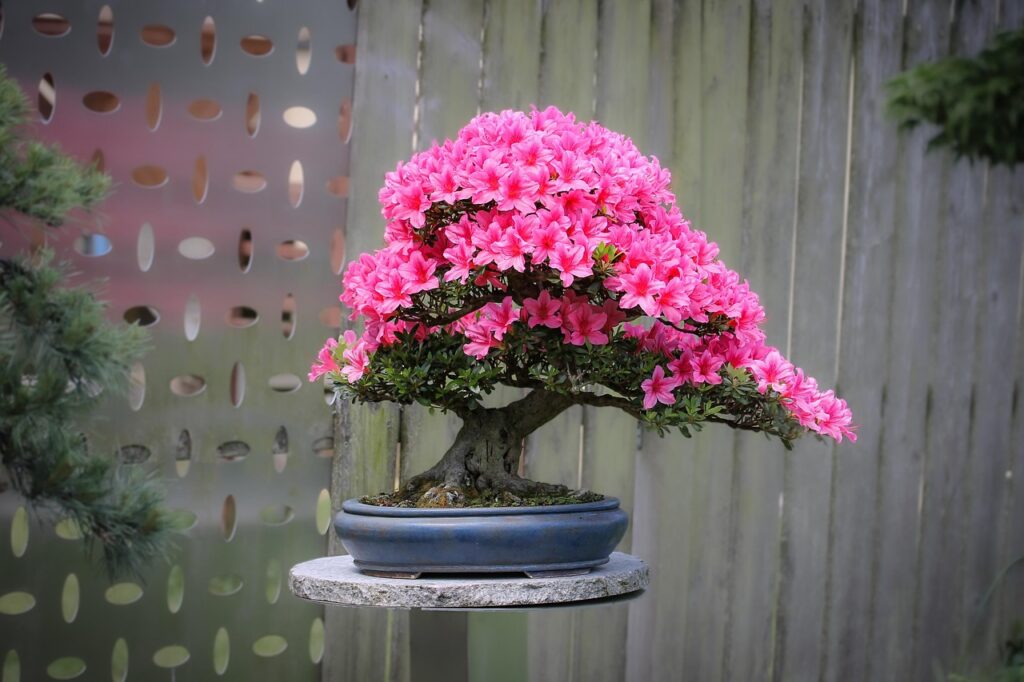
You’ve probably already looked at photographs of spectacular bonsai online.
Ancient-looking trunks.
Perfectly shaped branches.
Tiny foliage.
Beautiful ceramic pots.
And now you’re looking at your little tree thinking, I can do that.
Eventually, perhaps!
But please don’t spend your first afternoon cutting off half the branches, wrapping everything in wire, changing the pot and attacking the roots.
Your bonsai has just experienced a change in environment. It may have travelled from a grower to a retailer before eventually coming home with you.
Give it time to settle.
For now, concentrate on:
Identifying the species, finding the correct location, learning its watering requirements, checking its health and observing how it responds to its new environment.
There will be plenty of time for styling later.
Bonsai rewards patience.
You may as well start practising it now.
Please Don’t Water It Every Day Just Because Someone Told You To
One of the most common pieces of beginner bonsai advice is also potentially dangerous:
“Water it every day.”
Please don’t follow a watering schedule blindly.
Your bonsai doesn’t know what day it is.
How quickly the soil dries depends on numerous factors, including the species, pot size, soil composition, temperature, sunlight, wind and season.
A bonsai sitting outside during a hot Cape Town summer may need considerably more frequent watering than the same tree during cooler weather.
Instead of automatically watering according to the calendar, check the soil.
Learn what your tree’s soil looks and feels like when it begins drying. When watering is necessary, water thoroughly so the root system receives moisture rather than merely wetting the surface.
And make sure excess water can escape through the drainage holes.
Check the Pot and Soil
Take a look underneath your bonsai pot.
You should see drainage holes.
Water needs somewhere to go. Roots constantly sitting in water can develop serious problems, while compacted soil that drains poorly can make managing moisture extremely difficult.
You don’t necessarily need to repot your bonsai immediately if the soil isn’t ideal.
In fact, repotting at the wrong time or unnecessarily disturbing the roots can cause additional stress.
For your first few days, simply inspect what you’re working with.
Does water drain properly?
Does the soil remain soaking wet for days?
Does it become rock-hard?
Are roots growing excessively through the drainage holes?
These observations will help you decide what the tree might need later.
Don’t Panic Over Every Yellow Leaf
You’ve had your bonsai for three days.
A leaf turned yellow.
THE TREE IS DYING!
Probably not.
Trees lose leaves. Plants respond to environmental changes. Some species naturally shed older foliage.
What you’re looking for is a pattern.
One yellow leaf isn’t necessarily alarming. Rapidly yellowing foliage across the entire tree deserves investigation.
Check for obvious signs of trouble such as pests, damaged branches, unusual spots, mould, continuously wet soil or extremely dry soil.
Most importantly, don’t respond to every perceived problem by throwing fertiliser, water and chemicals at the tree simultaneously.
Observe first.
Then respond appropriately.
When Can I Start Pruning and Styling?
Once you’ve identified your species, understand its basic requirements and allowed it to settle into its new environment, you can begin learning about styling.
This is where bonsai becomes incredibly rewarding.
You’ll start studying the trunk and branches differently. You’ll learn about potential fronts, branch placement, pruning, wiring, growth direction and the visual balance of the tree.
But you don’t need to master everything during your first week.
Your first bonsai can teach you an enormous amount simply by watching it grow.
Welcome to the Bonsai Journey
Your first bonsai probably won’t be perfect.
You’ll make mistakes.
You’ll worry about leaves.
You’ll probably water it and then wonder whether you watered it too much.
You’ll stare at a branch for twenty minutes trying to decide whether you should cut it.
That’s all part of learning.
Every experienced bonsaist started somewhere, and somewhere usually involved owning a small tree while having considerably more enthusiasm than knowledge.
For now, learn your tree’s name.
Give it the right environment.
Learn when it needs water.
Watch how it grows.
Keep it healthy.
The styling, wiring, repotting and more advanced techniques can come later.
And congratulations.
You’re officially a bonsaist now.
Just one final warning from Budding Backyard Bonsaist:
You may think you’ve bought your first bonsai.
What you’ve probably actually done is make room for your second one.
And your third.
And your fourth…
Welcome to the addiction. 🌳