
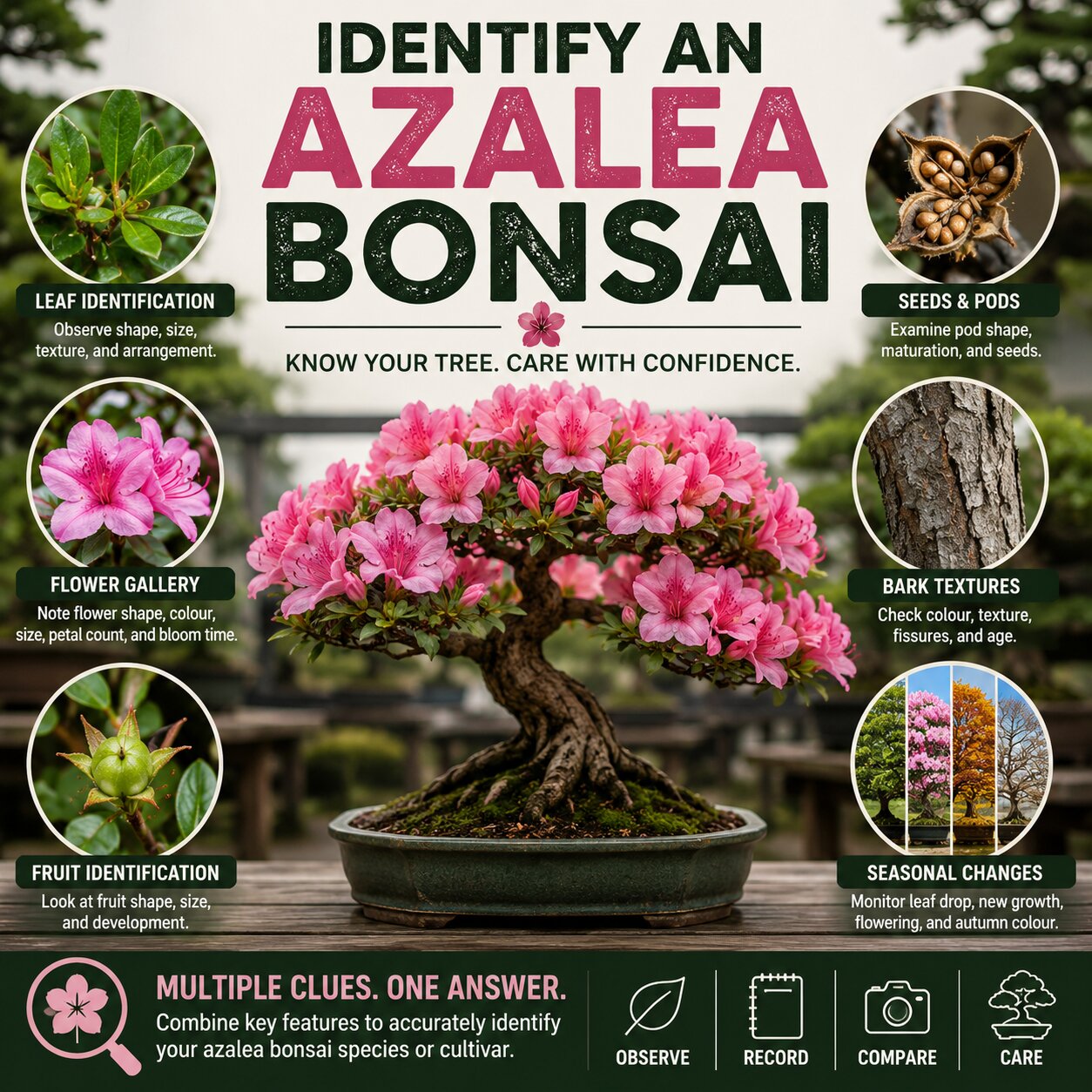
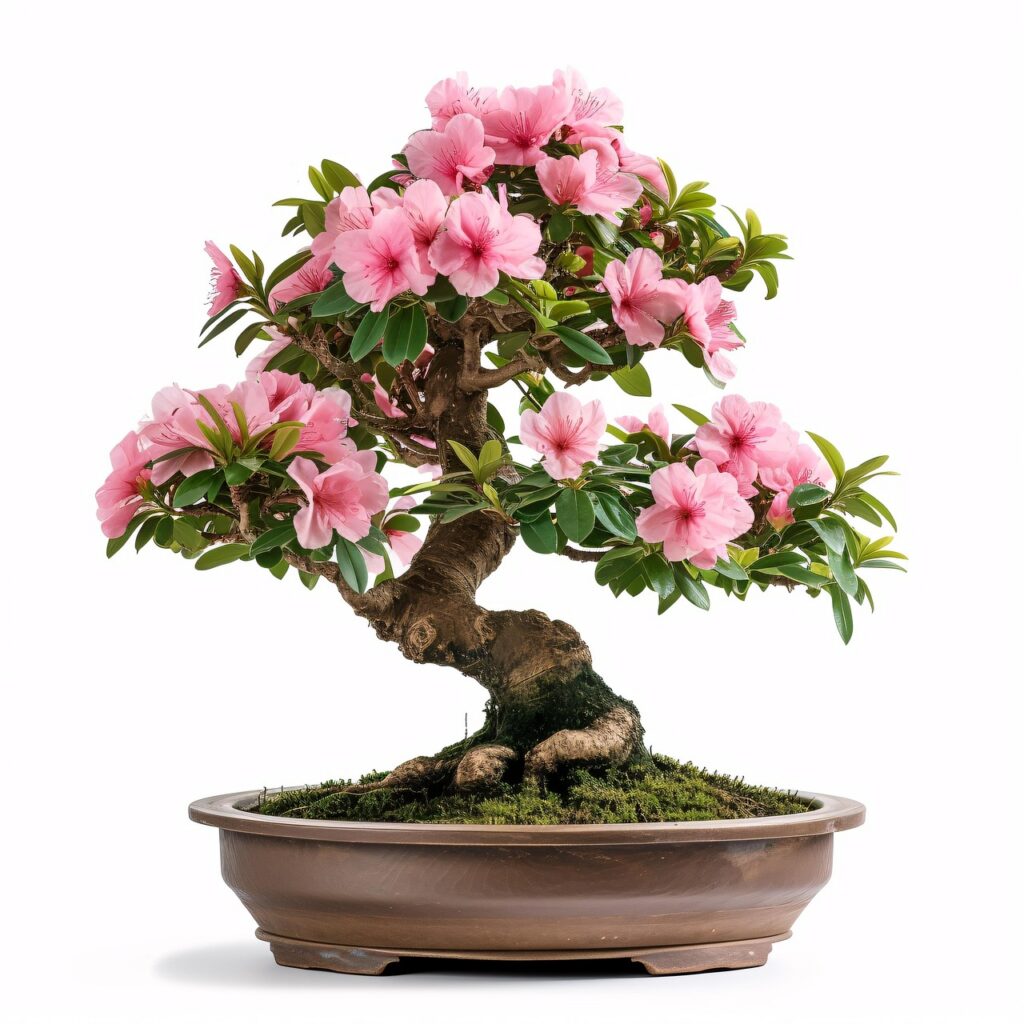
If you want to identify an azalea bonsai, you’ll quickly discover there are hundreds of species and thousands of cultivated varieties available. While many look similar at first glance, careful observation of the leaves, flowers, bark, seeds, and seasonal growth can reveal valuable clues about your tree’s identity.
Whether you’ve inherited an established bonsai, purchased one without a label, or collected an azalea from a nursery, learning how to identify an azalea bonsai will help you understand its care requirements, flowering habits, and long-term development.
This guide explores the key characteristics used by enthusiasts and growers to narrow down the species or cultivar of an azalea bonsai.
Leaf Identification
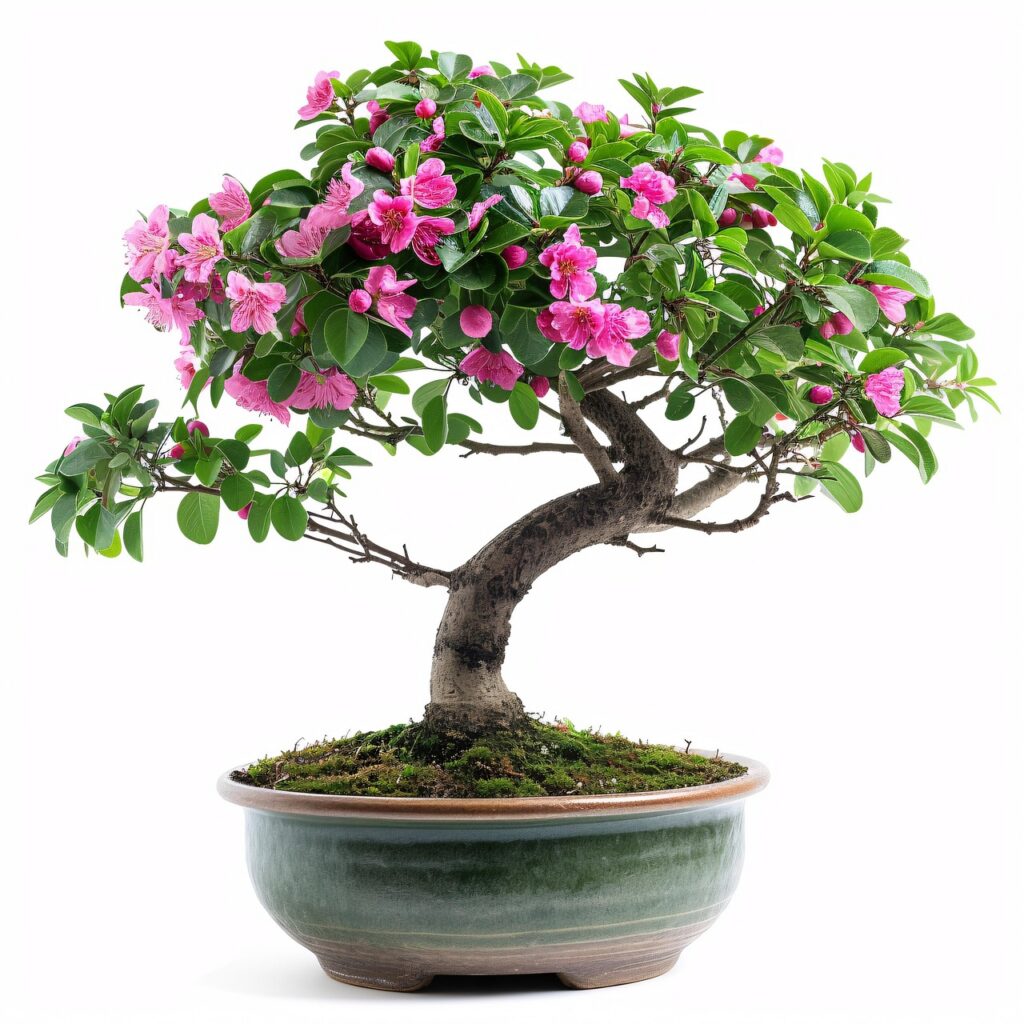
One of the first steps to identify an azalea bonsai is examining its foliage. Azalea leaves vary considerably between species and hybrids.
Pay attention to:
- Leaf length and width
- Overall shape (oval, elliptical, lance-shaped, or rounded)
- Glossy or matte surfaces
- Hairy or smooth leaves
- Dark green, light green, or bluish-green colouring
- Arrangement along the stems
For example, many Satsuki azaleas produce relatively small, glossy leaves, while Kurume varieties often develop even finer foliage suitable for miniature bonsai. Evergreen species generally retain most of their leaves throughout winter, whereas deciduous azaleas lose theirs each autumn.
Looking at several branches rather than a single leaf provides a more reliable comparison.
Flower Gallery
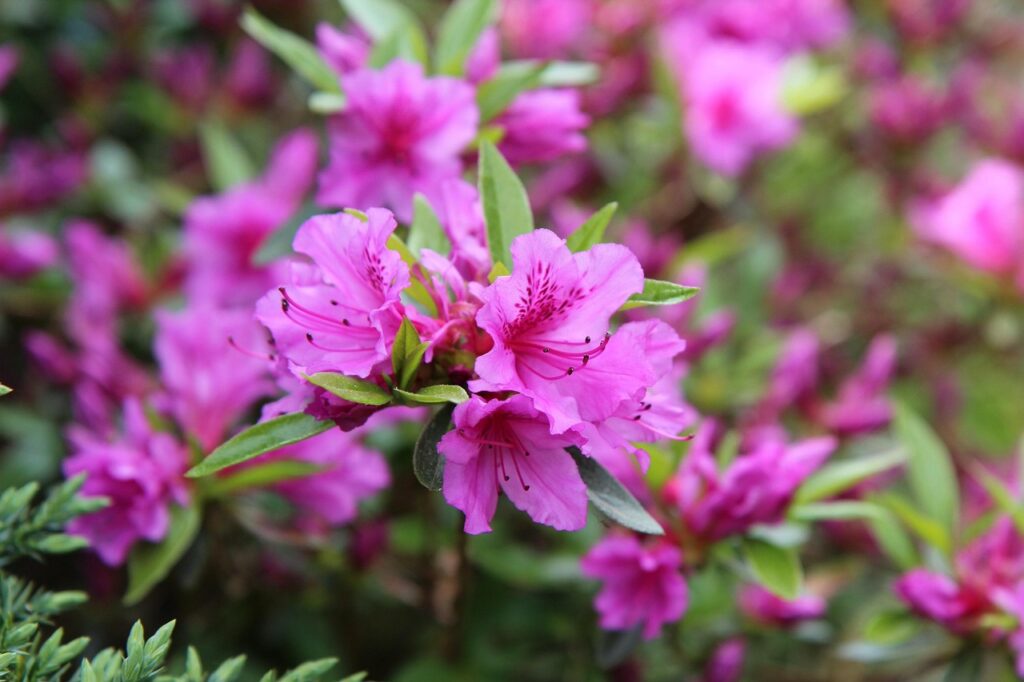
Flowers provide some of the strongest clues when attempting to identify an azalea bonsai. Bloom size, colour, shape, and flowering season can all point towards particular species or cultivars.
Observe characteristics such as:
- Single, semi-double, or double flowers
- Funnel-shaped or ruffled petals
- Flower diameter
- Number of petals
- Bloom colour
- Presence of stripes, speckles, or blended colours
Satsuki azaleas are especially famous for producing multiple flower patterns on the same plant, making identification both fascinating and challenging.
Keeping photographs each flowering season allows comparisons with specialist azalea databases and cultivar catalogues.
Fruit Identification
After flowering, some azaleas produce small seed capsules that offer additional identification clues.
These fruits are generally dry capsules that gradually mature before splitting open naturally. Their size, shape, and development vary slightly between species.
While fruit alone rarely provides a definitive answer, combining capsule characteristics with leaf and flower observations strengthens identification.
Many cultivated bonsai have flowers removed after blooming to encourage healthy growth, so fruit may not appear every year.
Seeds & Pods
Examining mature seed pods offers another useful way to identify an azalea bonsai.
When fully mature, the capsules split into several sections, releasing numerous tiny seeds. The shape of the pod, the timing of seed release, and even the size of the seeds can vary between different azalea groups.
Although these features are subtle, experienced growers often include them alongside other observations when identifying unknown trees.
Collecting photographs of seed pods before they split can provide useful references for future comparison.
Bark Textures
As azaleas mature, their bark develops distinctive characteristics that may help narrow down possible species to help you identify an azalea bonsai.
You should observe:
- Bark colour
- Smooth or rough texture
- Peeling behaviour
- Presence of fissures
- Thickness on older trunks
Young azaleas typically have smooth grey or brown bark, while older specimens may develop rougher textures with subtle cracking.
Environmental conditions also influence bark appearance, so bark should always be considered alongside foliage and flowers rather than as a standalone feature.
Seasonal Changes
Watching your tree throughout the year is one of the most effective ways to identify an azalea bonsai.
Different species display unique seasonal behaviours, including:
- Timing of new leaf growth
- Flowering period
- Autumn colour changes
- Winter leaf retention
- Growth vigour during summer
- Dormancy patterns
Some azaleas bloom in early spring, while Satsuki varieties flower much later, often during late spring or early summer. Deciduous species may display spectacular autumn colours before dropping their leaves, whereas evergreen varieties remain green throughout much of the year.
Recording these seasonal patterns over several years creates a valuable identification record.
Combine Multiple Characteristics for Accurate Identification
No single feature can reliably identify an azalea bonsai. Instead, successful identification comes from combining evidence gathered from leaves, flowers, fruit, seeds, bark, and seasonal growth habits.
By carefully documenting these characteristics with notes and photographs, you can compare your tree against nursery catalogues, botanical references, and specialist azalea societies. Over time, you’ll become more confident in recognising the subtle differences that distinguish one species or cultivar from another, helping you provide the most appropriate care for your bonsai.
Discover Your Azalea’s True Identity
Still trying to identify an azalea bonsai? Explore our growing collection of azalea species guides to compare leaves, flowers, bark, seeds, and seasonal characteristics. They can help you narrow down your bonsai’s species or cultivar and provide the specialised care it needs to thrive. Start exploring our guides today and take the guesswork out of identifying your azalea bonsai.