
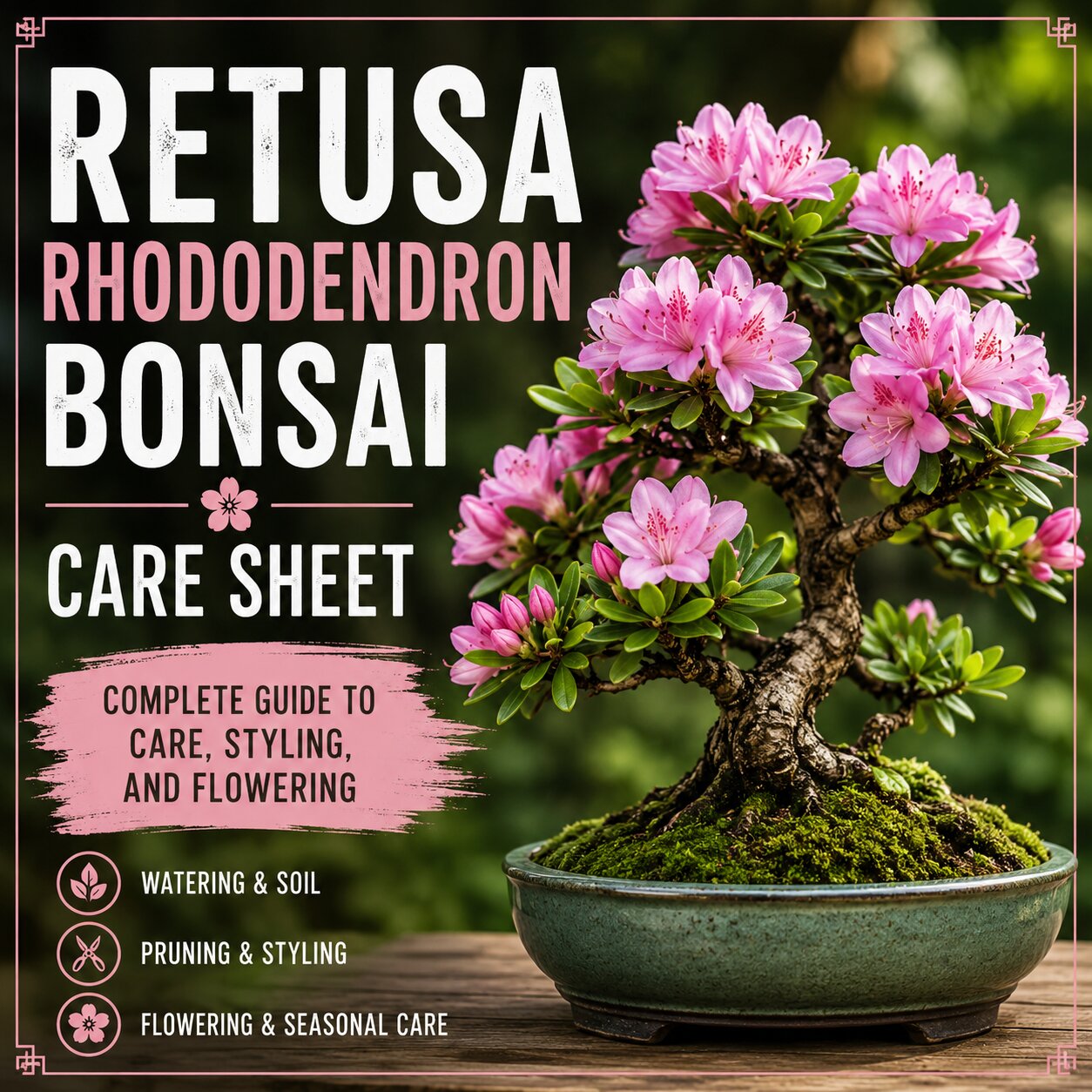
The Retusa Rhododendron bonsai is a beautiful evergreen flowering bonsai that combines elegant foliage with spectacular seasonal blooms. Prized by collectors for its compact growth habit and ornamental appeal, this rhododendron rewards patient growers with a refined miniature tree that can become a true centrepiece in any bonsai collection. Although it requires more specialised care than many beginner-friendly species, understanding its growing requirements will help ensure healthy development and abundant flowering year after year.
In this Retusa Rhododendron bonsai care sheet, you’ll discover everything you need to know about cultivating this attractive species. We’ll cover watering, lighting, soil composition, fertilising, pruning, wiring, repotting, pest management, and seasonal care, giving you the practical knowledge needed to keep your Retusa Rhododendron bonsai thriving throughout the seasons.
TL;DR: Quick Rhododendron Retusum Bonsai Care Overview
Before diving into the complete care sheet, here is a quick-reference guide for the Rhododendron retusum bonsai. Native to parts of East Asia, Retusa Rhododendron bonsai is an evergreen rhododendron admired for its compact growth, attractive foliage, and beautiful spring flowers. It prefers cool to mild conditions, acidic soil, and consistent moisture, making it an excellent choice for enthusiasts willing to provide attentive care. When cultivated correctly, it develops into a refined flowering bonsai with excellent seasonal interest.
| Care Aspect | Retusa Rhododendron Bonsai |
|---|---|
| Scientific name | Rhododendron retusum |
| Common name | Retuse Rhododendron |
| Bonsai type | Evergreen flowering shrub |
| Light | Bright indirect light to partial sun. Morning sun is ideal, with protection from harsh afternoon heat, especially during summer. |
| Watering | Keep the soil consistently moist but never waterlogged. Do not allow the root ball to dry out completely. Higher humidity is beneficial. |
| Soil | Acidic, free-draining bonsai mix containing kanuma, fine pine bark, pumice, and sphagnum moss. |
| Fertiliser | Apply an acid-loving fertiliser such as NPK 10-5-5 or 12-6-6 during active growth. Reduce feeding during winter and immediately before flowering. |
| Pruning | Prune after flowering to maintain shape, encourage ramification, and remove spent flower trusses. |
| Wiring | Young shoots can be wired carefully, while older branches are brittle and are usually better trained using guy wires. |
| Difficulty | Moderate to advanced. Requires careful watering, acidic soil, and protection from extreme temperatures. |
| Rarity | Uncommon. More often available through specialist rhododendron nurseries, bonsai growers, or botanical collections than general garden centres. |
| Climate sensitivity | Sensitive to prolonged frost, hot dry conditions, and alkaline soils. Performs best in cool, humid environments with good airflow. |
| Growth habit | Compact evergreen shrub with small glossy leaves and clusters of colourful flowers, making it well suited to informal upright, clump, and flowering bonsai styles. |
Retusa Rhododendron Bonsai Care Sheet
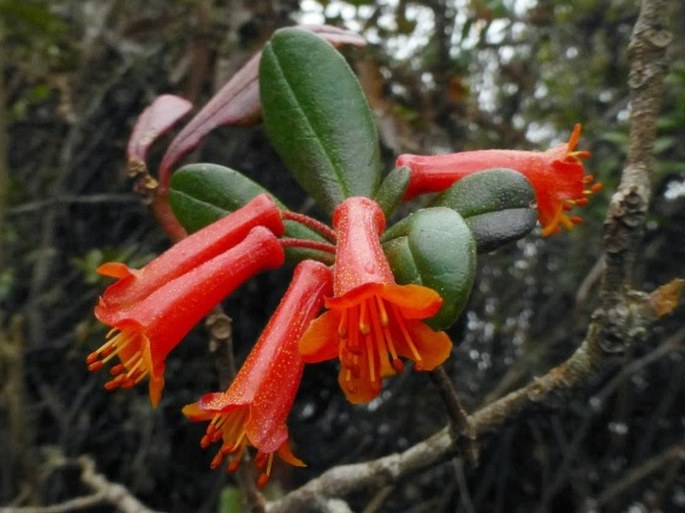
Caring for a Retusa Rhododendron bonsai requires an understanding of the cool, humid woodland environments in which this species naturally thrives. Unlike tropical rhododendrons, Rhododendron retusum prefers mild temperatures, consistently acidic soil, and filtered light that mimics the conditions beneath forest canopies. Successfully cultivating this species as a bonsai means recreating these natural conditions as closely as possible while providing careful seasonal maintenance.
The Retusa Rhododendron bonsai flourishes when given high humidity, excellent drainage, and protection from prolonged heat, drought, and severe frost. Although it can be more demanding than many beginner bonsai species, dedicated growers are rewarded with dense evergreen foliage, compact branching, and spectacular floral displays that make it an outstanding specimen in any bonsai collection.
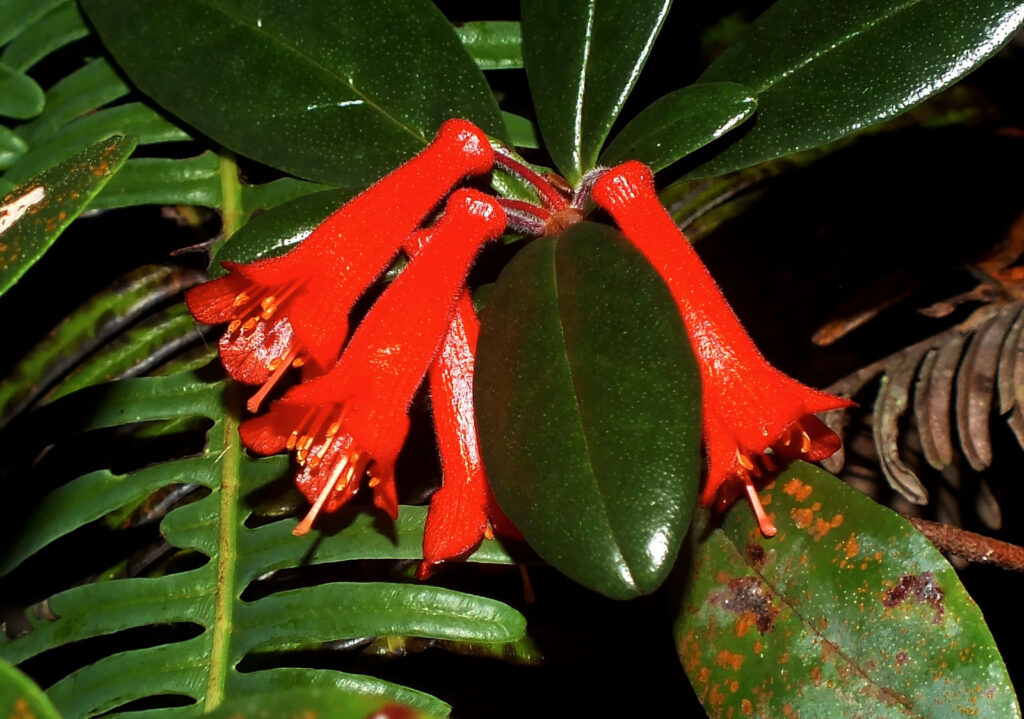
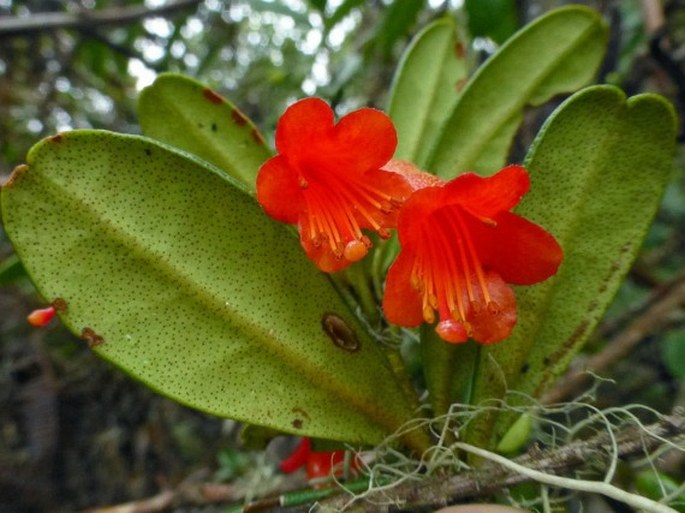
One of the most attractive features of a Retusa Rhododendron bonsai is its abundance of colourful blooms during the flowering season. Depending on the cultivar and growing conditions, flowers may appear in shades of white, pink, purple, or lavender, creating a stunning contrast against the glossy green leaves. With proper care, this species develops into an elegant flowering bonsai that offers year-round beauty.
Below is a detailed breakdown of how to care for your Retusa Rhododendron bonsai throughout the year.
Light
A Retusa Rhododendron bonsai performs best in bright, filtered light or partial shade. Gentle morning sun encourages healthy growth and abundant flowering, while protection from the intense afternoon sun helps prevent leaf scorch and excessive moisture loss.
In its natural habitat, Rhododendron retusum often grows beneath taller trees where it receives dappled sunlight throughout the day. Replicating these conditions promotes healthy foliage and reduces environmental stress during warmer months.
Watering
Consistent moisture is essential for maintaining a healthy Retusa Rhododendron bonsai. The growing medium should remain evenly moist without becoming waterlogged. Poor drainage can quickly lead to root problems and fungal diseases.
Unlike drought-tolerant bonsai species, this rhododendron should never be allowed to dry out completely. During warmer weather or active growth, frequent monitoring is essential. Rainwater or low-mineral water is ideal where available, as it helps maintain the acidic soil conditions the species prefers.
Pruning
Pruning should be carried out soon after flowering has finished. This timing allows the bonsai to direct its energy into producing healthy new shoots while preserving the following season’s flower buds.
Spent flower trusses should be removed promptly to prevent unnecessary energy loss. Regular trimming of new shoots encourages finer ramification and helps maintain a balanced, compact canopy.
Shaping
A Retusa Rhododendron bonsai naturally develops a dense, rounded growth habit that lends itself well to refined bonsai styling. Shaping should enhance the tree’s natural appearance rather than forcing dramatic forms.
Routine maintenance pruning improves branch structure and overall balance. With patience, selective shaping creates an aged appearance while preserving the species’ ornamental flowering characteristics.
Soil
The ideal soil for a Retusa Rhododendron bonsai is acidic, airy, and free-draining. Healthy roots require plenty of oxygen while still retaining sufficient moisture throughout the growing season.
A recommended bonsai mix includes kanuma, fine pine bark, pumice, and sphagnum moss. Heavy, compacted, or alkaline soils should be avoided, as they reduce nutrient uptake and can weaken the tree over time.
Repotting
Repotting is generally required every two to three years, depending on the age and vigour of the bonsai. Younger trees typically require more frequent repotting than mature specimens.
The best time to repot is in late winter or early spring, just before active growth resumes. Root pruning should be performed conservatively, as Rhododendron retusum does not respond well to excessive disturbance. Fresh growing medium helps maintain proper drainage and soil acidity.
Wiring
Wiring can be used to shape a Retusa Rhododendron bonsai, but care is required because mature branches become brittle with age.
Young shoots remain flexible and respond well to light wiring. Many experienced growers prefer guy wires when repositioning thicker branches, as they provide gradual movement while reducing the risk of cracking.
Fertiliser
Regular feeding supports healthy foliage, vigorous root development, and reliable flowering. Fertilisers designed for acid-loving plants are generally the most suitable choice.
Balanced fertilisers such as NPK 10-5-5 or 12-6-6 can be applied throughout the active growing season. Feeding should be reduced during winter and immediately after flowering. Over-fertilising should be avoided, as excessive nutrients can damage sensitive roots.
Propagation
Propagation is most commonly achieved through semi-hardwood cuttings taken during the growing season. Cuttings root best in warm, humid conditions using an acidic, well-draining propagation medium.
Air layering is also possible on mature plants, although it generally requires more patience. Propagation allows growers to preserve desirable characteristics and expand their collection of flowering rhododendrons.
Seasonal Care
Rhododendron retusum experiences seasonal growth cycles that should be reflected in its care. Spring and early summer are the primary periods of growth and flowering, while activity slows during autumn and winter.
Increase watering and feeding during active growth, while reducing both during the cooler months. Protect the bonsai from severe frost, drying winds, and prolonged heat to ensure healthy year-round development.
Pests
Common pests affecting a Retusa Rhododendron bonsai include aphids, spider mites, lace bugs, scale insects, and mealybugs. If left untreated, these pests can weaken the tree and reduce flowering performance.
Routine inspections allow problems to be identified early. Organic insecticidal soaps, horticultural oils, and maintaining healthy growing conditions are usually sufficient to keep infestations under control.
Diseases
Root rot remains the most significant disease threat to a Retusa Rhododendron bonsai and is almost always linked to poor drainage or excessive watering. Using an airy, well-draining soil mix is the most effective preventative measure.
Leaf spot diseases, powdery mildew, and other fungal infections may occasionally occur when humidity is high and air circulation is poor. Removing affected foliage, improving ventilation, and maintaining proper watering practices will greatly reduce the likelihood of disease.
How To Identify A Retusa Rhododendron Bonsai
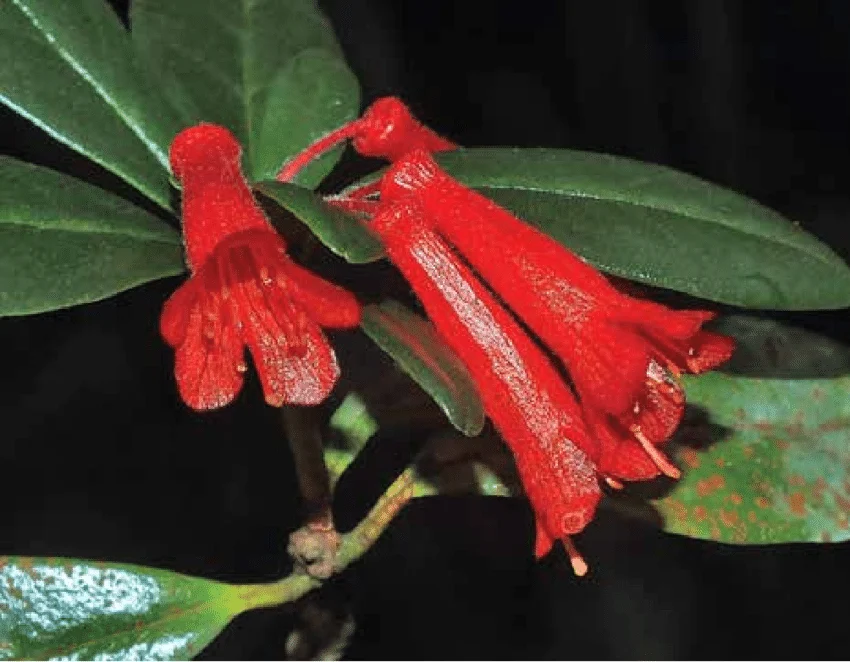
Correctly identifying a Retusa Rhododendron bonsai is important for providing the specialised care this beautiful flowering species requires. Although Rhododendron retusum shares many characteristics with other evergreen rhododendrons, it has several distinctive features that help distinguish it from related species. Its compact growth habit, glossy foliage, attractive flowers, and refined branching make it a popular choice for enthusiasts seeking an elegant flowering bonsai.
By examining the leaves, flowers, fruiting structures, seeds, and bark, you can confidently identify a Retusa Rhododendron bonsai and better understand the environmental conditions that help it thrive.
Leaf Identification
The leaves of a Retusa Rhododendron bonsai are evergreen, glossy, and leathery, providing year-round ornamental appeal. They are generally elliptical to oblong in shape, with smooth margins and a slightly rounded or subtly notched tip that reflects the species name retusum, meaning “blunt” or “retuse.”
The foliage grows in dense clusters near the ends of branches, creating compact pads that are ideal for bonsai styling. Healthy leaves display a rich green colour and remain attractive throughout the year when grown under suitable conditions.
Flower Gallery
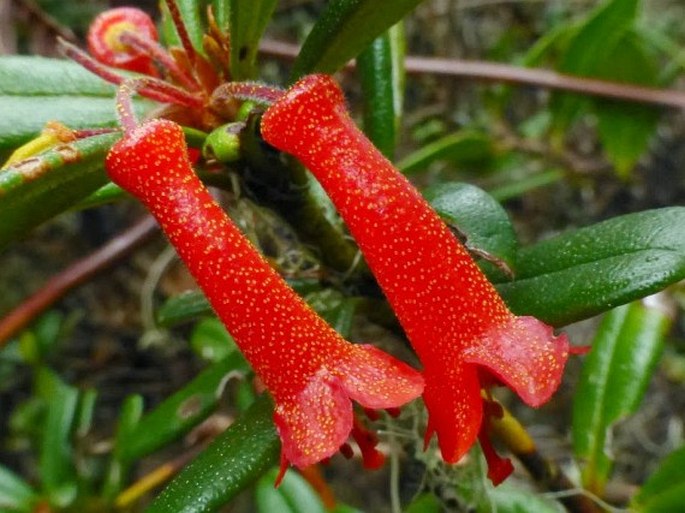
The flowers are one of the defining features of a Retusa Rhododendron bonsai. Rhododendron retusum produces attractive funnel- to trumpet-shaped blooms that typically appear in shades of white, pink, lavender, purple, or pale violet, depending on the cultivar and growing conditions.
Flowers develop in rounded clusters at the tips of branches during the flowering season, creating spectacular displays that contrast beautifully with the evergreen foliage. These colourful blooms are one of the primary reasons collectors value this species as a flowering bonsai.
Fruit Identification
Following successful pollination, a Retusa Rhododendron bonsai may develop elongated seed capsules where the flowers were previously attached. These capsules gradually mature throughout the growing season before drying and splitting open.
Although they add little ornamental value, the capsules help confirm successful pollination and natural reproduction. Many bonsai growers remove them to allow the tree to direct more energy into foliage development and future flowering.
Seeds And Pods
The seed pods of a Retusa Rhododendron bonsai consist of slender, elongated capsules that release numerous tiny seeds once fully mature. In nature, these lightweight seeds are dispersed by wind to establish new plants in suitable woodland habitats.
While propagation from seed is possible, it is a slow process and is less commonly used than propagation from cuttings. Successful germination requires stable humidity, acidic growing media, and considerable patience.
Bark Textures
The bark of a young Retusa Rhododendron bonsai is typically smooth, with greyish-brown colouring that complements its refined appearance. As the tree matures, the bark gradually becomes slightly rougher and develops subtle texture, although it rarely becomes deeply fissured like many traditional bonsai tree species.
This smooth bark enhances the graceful character of the tree and allows the colourful flowers and evergreen foliage to remain the primary visual features. Older specimens develop gentle signs of age that add maturity without losing the elegant appearance that makes Rhododendron retusum such an attractive bonsai subject.
Bonsai Styles Suited To Retusa Rhododendron Bonsai
The Retusa Rhododendron bonsai naturally develops into a dense, rounded shrub with compact branching and abundant seasonal flowers, making it well suited to several classic bonsai styles. Rather than forcing dramatic shapes, most growers focus on enhancing the species’ naturally graceful form while showcasing its attractive foliage and colourful blooms. Selecting the right bonsai style helps maintain both the tree’s health and its ornamental appeal.
Informal Upright (Moyogi)
The Informal Upright style is one of the most suitable designs for a Retusa Rhododendron bonsai. Gentle curves in the trunk create a natural appearance while allowing the rounded canopy and flowering clusters to become the focal point.
This style closely resembles how mature rhododendrons grow in woodland environments and provides excellent balance between structure and seasonal displays.
Clump Style (Kabudachi)
Many Retusa Rhododendron bonsai specimens naturally produce multiple stems from the base, making the Clump Style an ideal choice. Several trunks of varying thicknesses create the appearance of a mature shrub that has developed over many years.
During flowering season, the multiple canopies become covered with blossoms, producing a spectacular visual effect.
Twin Trunk (Sokan)
The Twin Trunk style works particularly well when two healthy stems emerge from a common root system. One trunk serves as the dominant feature while the secondary trunk complements the overall composition.
The dense evergreen foliage and colourful flowers create harmony between the two trunks, giving the bonsai a mature and balanced appearance.
Broom Style (Hokidachi)
Although more commonly associated with deciduous trees, the Broom Style can suit a Retusa Rhododendron bonsai with naturally fine branching. A straight trunk supporting a rounded canopy creates an attractive silhouette while providing space for abundant flowering.
Regular pruning encourages the fine ramification needed to maintain this elegant form.
Group Planting (Yose-ue)
Planting several Retusa Rhododendron bonsai together creates the impression of a miniature woodland. Using trees of different heights and trunk diameters adds depth and realism to the composition.
Group plantings become particularly impressive during flowering, when multiple trees bloom simultaneously to create a colourful seasonal display.
Cascade and Windswept Styles
Full Cascade and Windswept styles are generally less suitable for a Retusa Rhododendron bonsai. The species naturally forms upright, rounded growth rather than long, flexible branches that lend themselves to dramatic movement.
While subtle movement can be introduced through careful pruning and wiring, preserving the tree’s natural growth habit usually produces a healthier and more aesthetically pleasing bonsai.
Choosing the Best Style
The best bonsai styles for a Retusa Rhododendron bonsai are those that complement its natural characteristics rather than fight against them. Informal Upright, Clump, Twin Trunk, Broom, and Group Planting styles all allow the tree’s evergreen foliage, refined branching, and spectacular flowers to take centre stage.
With patient pruning and thoughtful styling, a Retusa Rhododendron bonsai can develop into an elegant flowering specimen that provides beauty throughout the year while remaining true to the species’ natural growth habit.
Symbolism And Cultural Significance
The Retusa Rhododendron bonsai represents beauty, resilience, and the quiet strength that comes from steady growth. Like many flowering rhododendrons, it reminds growers that patience and consistent care are rewarded with spectacular seasonal displays. Its evergreen foliage symbolises endurance and stability, while its vibrant flowers reflect renewal, hope, and the arrival of a new growing season.
In bonsai cultivation, the Retusa Rhododendron bonsai is often appreciated for balancing elegance with resilience. Although it requires attentive care, the tree responds by producing a refined structure and abundant blossoms that showcase the harmony between horticultural skill and nature. This relationship embodies one of bonsai’s core philosophies: nurturing a living work of art through observation, discipline, and respect.
Across East Asia, rhododendrons have long been admired in gardens for their ornamental value and association with spring. Their colourful blooms are frequently seen as symbols of happiness, prosperity, and new beginnings after the quieter months of winter. In many cultures, flowering shrubs also represent appreciation for the natural world and the changing of the seasons.
The evergreen nature of the Retusa Rhododendron bonsai further reinforces themes of perseverance and longevity. Even when not in flower, the tree retains its lush green foliage, serving as a reminder that beauty exists beyond brief moments of spectacular bloom. This enduring character makes it a meaningful addition to any bonsai collection.
For many enthusiasts, cultivating a Retusa Rhododendron bonsai is about more than creating an attractive miniature tree. It is an exercise in patience, mindfulness, and continuous learning. Watching the tree develop over many years, from careful pruning to the first appearance of flower buds each season, creates a lasting connection between the grower and the living artwork they have shaped.
Companion Plants And Wildlife Attraction
Selecting suitable companion plants for a Retusa Rhododendron bonsai can enhance both its visual appeal and growing environment. Because Rhododendron retusum thrives in acidic, well-draining soil with consistent moisture and partial shade, companion plants should ideally share these growing requirements. Carefully chosen companions create a natural woodland aesthetic while helping maintain humidity around the bonsai.
In addition to companion planting, encouraging beneficial wildlife can improve pollination, increase biodiversity, and support natural pest control. Together, these elements transform a simple bonsai display into a miniature woodland ecosystem inspired by the habitats where Rhododendron retusum naturally grows.
Moss
Moss is one of the best companions for a Retusa Rhododendron bonsai. It helps retain surface moisture, protects shallow roots, suppresses weeds, and creates the appearance of a mature forest floor.
Suitable moss species include:
- Hypnum cupressiforme (Cypress-leaved Plait Moss)
- Leucobryum glaucum (Pincushion Moss)
- Dicranum scoparium (Broom Moss)
- Thuidium delicatulum (Fern Moss)
These mosses thrive in cool, humid conditions and complement the refined appearance of Rhododendron retusum while helping maintain consistent soil moisture.
Flowers
Small woodland flowering plants provide seasonal colour without distracting from the Retusa Rhododendron bonsai itself. Species that tolerate acidic soils and partial shade make ideal companions.
Recommended flowering companions include:
- Primula vulgaris (Primrose)
- Viola odorata (Sweet Violet)
- Cyclamen hederifolium (Hardy Cyclamen)
- Anemone nemorosa (Wood Anemone)
These plants provide additional interest throughout the growing season while harmonising with the bonsai’s colourful blooms.
Herbs
Compact herbs that enjoy moist, well-drained soil can also complement larger bonsai displays, particularly in woodland-themed arrangements.
Suitable herb companions include:
- Mentha requienii (Corsican Mint)
- Galium odoratum (Sweet Woodruff)
- Thymus serpyllum (Creeping Thyme)
- Origanum vulgare ‘Compactum’ (Compact Oregano)
These low-growing herbs add texture, fragrance, and seasonal variety without overwhelming the bonsai.
Wildlife Attraction (Bees, Butterflies, And Beneficial Insects)
Creating a healthy environment around a Retusa Rhododendron bonsai encourages pollinators and beneficial insects that contribute to ecological balance.
Plants that attract helpful wildlife include:
- Lavandula angustifolia (Lavender) – attracts bees and butterflies
- Borago officinalis (Borage) – highly attractive to pollinators
- Achillea millefolium (Yarrow) – supports beneficial insects
- Foeniculum vulgare (Fennel) – attracts predatory insects
- Cosmos bipinnatus (Cosmos) – encourages bees, butterflies, and other pollinators
Although these companion plants are generally grown nearby rather than in the bonsai pot itself, they help create a garden environment that supports natural pollination and biological pest control.
By selecting compatible companion plants and encouraging beneficial wildlife, a Retusa Rhododendron bonsai becomes more than an ornamental tree. It becomes the focal point of a thriving miniature woodland ecosystem that celebrates biodiversity while supporting healthy, sustainable bonsai cultivation.
Care Summary And Practical Notes
The Retusa Rhododendron bonsai is a rewarding species for growers who appreciate elegant flowering bonsai and are willing to meet its specific care requirements. Its evergreen foliage, refined branching, and colourful seasonal blooms make it a standout specimen that offers year-round interest. Although it demands more attention than many beginner-friendly bonsai trees, the results are well worth the effort.
Success with a Retusa Rhododendron bonsai depends on recreating the conditions it naturally enjoys. Acidic, free-draining soil, consistent moisture, bright filtered light, and good humidity all contribute to healthy growth and reliable flowering. Careful pruning after blooming, conservative wiring, and regular feeding with fertiliser formulated for acid-loving plants will help the tree develop into a mature and balanced bonsai over time.
Regular observation is one of the most valuable skills when growing this species. Monitoring soil moisture, checking for pests, and responding quickly to changes in the tree’s health will prevent many common problems before they become serious. Patience is equally important, as the finest Retusa Rhododendron bonsai specimens are developed gradually through years of careful cultivation rather than dramatic styling.
Whether you are adding one to an established collection or exploring flowering bonsai for the first time, the Retusa Rhododendron bonsai offers a unique combination of beauty, refinement, and seasonal colour. With consistent care and attention, it can become a living work of art that continues to reward its grower with healthy growth and spectacular blooms for many years to come.