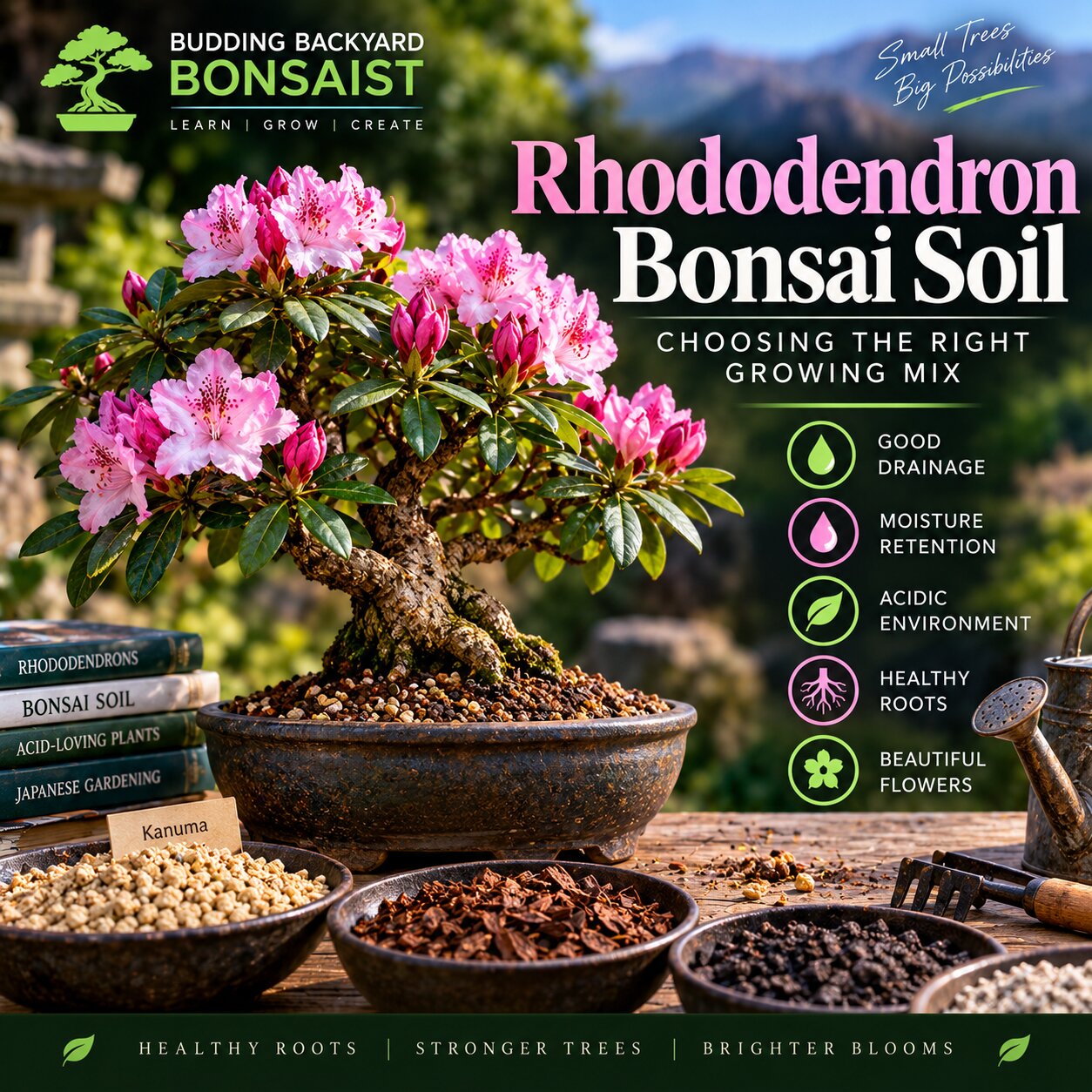
Rhododendron bonsai soil needs excellent drainage, moisture retention and an acidic environment to support the fine roots these flowering bonsai depend on.
Rhododendrons can produce spectacular bonsai, particularly when their dense foliage and colourful flowers are combined with a carefully developed trunk and branch structure. However, much of that beauty depends on something hidden beneath the surface: the roots.
Choosing suitable rhododendron bonsai soil is therefore one of the most important parts of maintaining a healthy specimen. Rhododendrons have relatively fine root systems and naturally favour acidic growing conditions. Using a poorly suited bonsai mix can result in weak growth, nutrient problems and root damage.
Fortunately, understanding what these plants require makes choosing the right substrate considerably easier.
Why Rhododendron Bonsai Soil Is Different
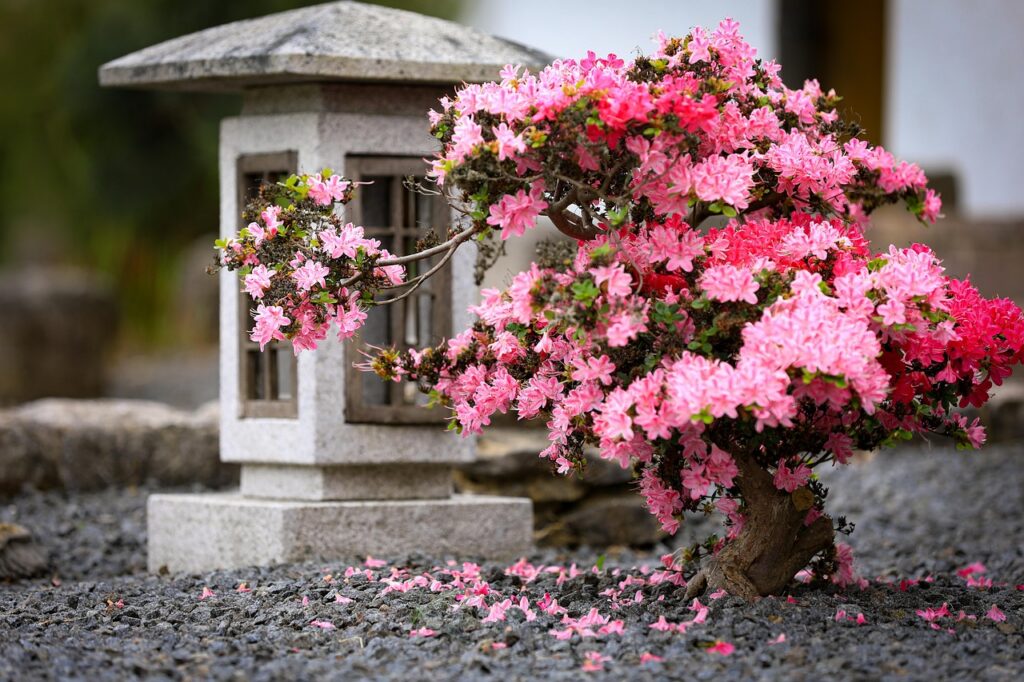
Many popular bonsai species tolerate a relatively broad range of growing media. Rhododendrons, including the many azalea species and cultivars commonly grown as bonsai, are more particular.
They are acid-loving plants. Consequently, rhododendron bonsai soil should generally provide an acidic root environment rather than the neutral or alkaline conditions tolerated by some other bonsai species.
The structure of the substrate is equally important.
A bonsai container holds relatively little growing medium, so roots need access to both water and oxygen within a restricted space. Dense garden soil can compact inside the pot, reducing aeration and preventing water from moving through the root system effectively.
A suitable bonsai substrate needs to avoid those problems.
Kanuma for Rhododendron Bonsai
One of the best-known substrates for azaleas and other acid-loving bonsai is Kanuma.
Kanuma is a lightweight, acidic Japanese growing medium traditionally associated with plants such as azaleas. Its combination of moisture retention and drainage makes it particularly useful for their delicate root systems.
It can be used alone or incorporated into a broader rhododendron bonsai soil mixture depending on the species, climate, watering routine and preferences of the grower.
Its colour can also provide a useful visual indication of moisture. Wet Kanuma becomes noticeably darker, helping growers determine how quickly the substrate is drying.
Availability and cost can make it impractical for some bonsai enthusiasts, however. Fortunately, the principles behind a good rhododendron substrate matter more than using one specific imported material.
What Should a Rhododendron Soil Mix Provide?
Rather than concentrating entirely on a particular recipe, consider what the root system actually needs.
Good rhododendron bonsai soil should provide:
- An acidic environment suitable for rhododendrons
- Excellent drainage to prevent prolonged waterlogging
- Enough moisture retention to protect fine roots from drying
- Air spaces that allow oxygen to reach the root system
- A stable structure that doesn’t rapidly compact
- Consistent particle sizes appropriate for the bonsai and container
Materials can then be selected according to what is locally available.
Depending on your growing conditions, suitable components might include Kanuma, fine pine bark and other appropriately acidic, free-draining materials. Whatever combination you choose should remain open enough for water and air to move through it.
Balancing Drainage and Moisture
One of the challenges with rhododendron bonsai soil is achieving the right balance between drainage and moisture retention.
Rhododendrons generally appreciate consistent moisture, but that doesn’t mean their roots should remain saturated. Waterlogged substrate can deprive roots of oxygen and encourage deterioration.
At the opposite extreme, an excessively coarse mixture may dry too quickly.
This becomes especially important during warm weather when a shallow bonsai container can lose moisture rapidly. A mixture that works beautifully in a cool, humid environment might require considerably more frequent watering in a hot, dry climate.
Your watering routine and soil mixture therefore need to work together.
Soil pH and Water Quality
Using acidic rhododendron bonsai soil doesn’t automatically guarantee that conditions will remain ideal.
Water quality can gradually influence the root environment. Hard or alkaline water may raise the substrate’s pH over time, potentially interfering with the plant’s ability to access certain nutrients.
Yellowing leaves while the veins remain greener can sometimes indicate nutrient availability problems associated with unsuitable pH, although similar symptoms can have other causes.
For this reason, growers should consider both their substrate and irrigation water when troubleshooting persistent problems.
Rainwater can be useful where it is safe and practical to collect.
Repotting Rhododendron Bonsai
The condition of the substrate should be checked whenever repotting becomes necessary.
Old rhododendron bonsai soil can gradually break down, reducing the air spaces that once allowed water and oxygen to move freely around the roots. Drainage becoming noticeably slower can be one indication that the substrate is deteriorating.
Rhododendrons also develop dense masses of fine roots. Careful root work during repotting can help restore an effective balance between the root system and fresh substrate.
Avoid treating repotting as an opportunity to remove excessive amounts of roots unnecessarily. The objective is to maintain a healthy root system while replacing degraded growing material and preserving good drainage.
Healthy Roots Support Beautiful Flowers
The flowers may receive most of the attention when a rhododendron bonsai reaches its seasonal display, but those blooms begin with healthy roots.
Selecting appropriate rhododendron bonsai soil provides the foundation for water uptake, nutrient availability, root aeration and vigorous growth. The ideal mixture should remain acidic, retain sufficient moisture and still drain freely after watering.
Whether you rely heavily on Kanuma or create a mixture from suitable locally available materials, pay attention to how the substrate behaves rather than simply following a universal recipe.
Give the roots the environment they need, and your rhododendron bonsai will have a much stronger foundation for the foliage, ramification and spectacular flowers developing above the soil.