
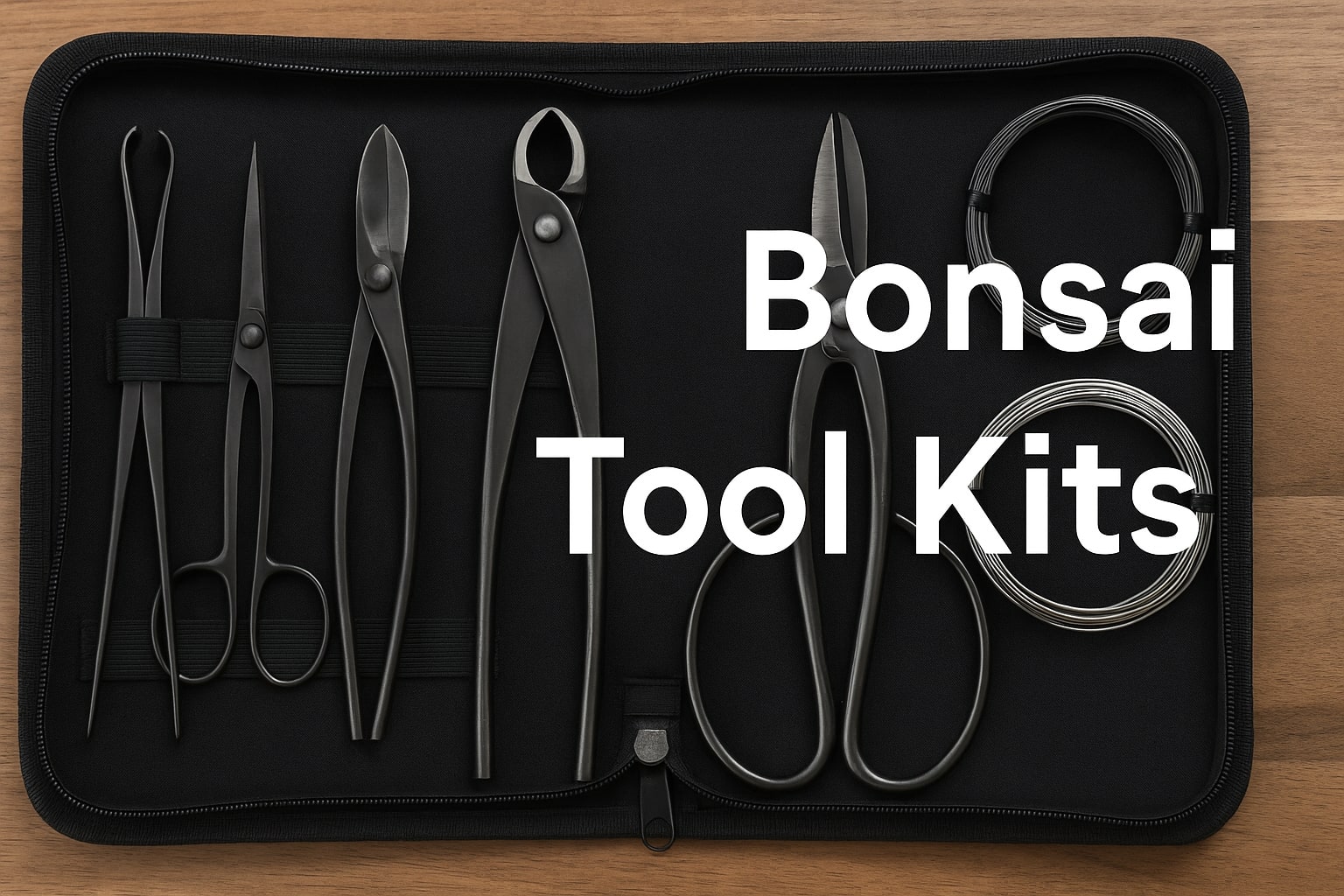
Bonsai tool kits are essential for beginners and experienced growers who want to maintain healthy, well-shaped trees. A well-selected kit gives you the precision needed for pruning, styling and day-to-day care.
With so many sets available, it can be difficult to know which tools you truly need and which ones can wait until later. This guide explains what bonsai tool kits usually include, how to choose the right one for your level and what each tool is designed to do.
Table of Contents
Why bonsai tool kits are useful
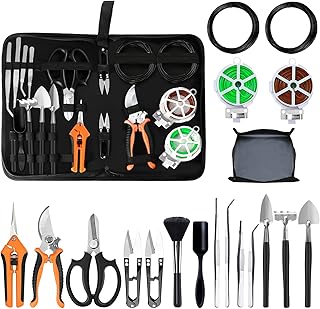
When working on a bonsai, accuracy matters. General gardening tools are often too large and can damage delicate branches or roots. Bonsai tool kits are designed to give you full control with tools that suit the scale of miniature trees. Whether you are pruning new shoots, shaping the canopy or repotting during the growing season, having a proper kit makes all the difference.
A good set can also save you money. Buying individual tools can become expensive, while bonsai tool kits usually offer a well-balanced selection at a better overall price.
The essential tools in bonsai tool kits
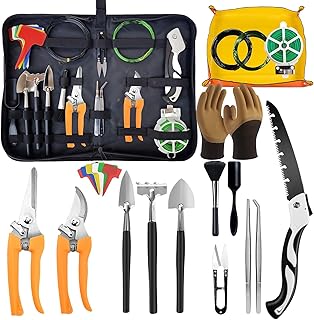
Concave branch cutter
This is one of the most important tools in any kit. It removes branches cleanly and leaves a slight indentation that heals flush with the trunk, creating a natural appearance.
Knob cutter
Useful for removing thicker branches or old knobs left behind after pruning. It allows deeper cuts that reduce scarring.
Bonsai scissors
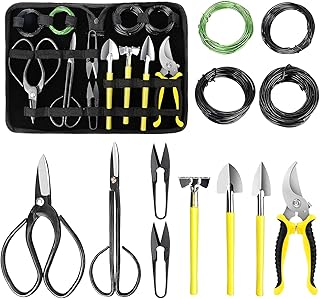
These are designed for fine pruning of shoots, leaves and twigs. They come in several sizes, allowing you to work on different species and growth stages.
Root rake
Used when repotting, the root rake helps untangle the root mass gently without tearing the fibres.
Wire cutter
Essential for shaping branches. These cutters are designed to cut bonsai wire cleanly without damaging the bark or the branch itself.
Bonsai wire
Most kits include aluminium or copper wire for training branches into new positions.
Tweezers
Ideal for removing dead leaves, weeds and debris while working closely around the trunk and soil surface.
Additional tools that advanced kits may include
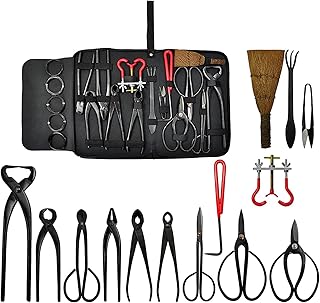
Some bonsai tool kits come with extra tools that are useful once you gain more experience. These can include jin pliers, grafting knives, soil scoops and trunk splitters. Although helpful, they are not necessary when you are just starting out.
How to choose the right bonsai tool kit for your needs
Start with your current skill level
Beginners often need only a basic set with scissors, a concave cutter, wire cutter, tweezers and bonsai wire. A simple kit helps you learn proper techniques without overwhelming you.
Consider the material quality
Carbon steel tools hold a very sharp edge and are ideal for detailed cuts. Stainless steel tools are more resistant to rust, making them low-maintenance. Choose based on how much care you are willing to put into your tools.
Think about the tree species you grow
Different species may require slightly different tools. For example, thick trunk conifers may benefit from a kit with stronger cutters, while delicate flowering species need fine scissors.
Look for comfortable handles
If you spend long periods shaping your trees, ergonomic handles and smooth motion make a noticeable difference.
Long-term value of investing in bonsai tool kits
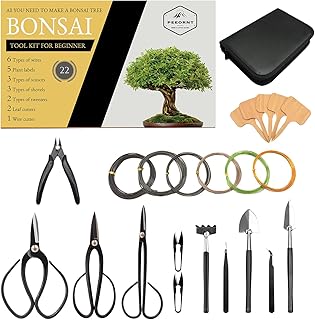
Buying a well-made kit ensures you have tools that will last many years. Proper maintenance, including sharpening and cleaning, helps preserve their quality. A strong kit supports your growth as a bonsai artist and allows you to work with confidence as your collection expands.
Final thoughts on choosing bonsai tool kits
The right bonsai tool kit gives you the precision and control needed to maintain healthy, beautiful trees. Start with the essentials, choose quality tools that fit your level and expand your kit as your skills grow. A reliable set becomes an important part of your bonsai journey, guiding you through pruning, shaping and seasonal care with ease.